In the basement of a nondescript office building in Tokyo’s Kasumigaseki district, the air smells faintly of recycled oxygen and high-grade floor wax. There are no sirens. No flashing red lights. But on the digital monitors lining the walls, the numbers are shifting in a way that makes the room feel smaller. For the bureaucrats at the Ministry of Economy, Trade and Industry (METI), the world is no longer a map of nations and cultures. It is a map of tankers.
Somewhere in the Strait of Hormuz, a massive vessel sits low in the water, carrying two million barrels of crude oil. It is a floating fortress of energy. If that vessel stops moving, a factory in Nagoya stops humming. A delivery driver in Osaka pulls over because the cost of a full tank now exceeds his daily wage. An elderly woman in Hokkaido turns down her heater, watching her breath mist in the living room as the yen loses its fight against the surging price of a global conflict.
Japan is a nation built on a miracle of processing, yet it possesses almost none of the raw ingredients required to sustain that miracle. It is an island of high-tech marvels tethered to the volatile soil of the Middle East by a very thin, very fraying umbilical cord. As tensions between the West and Iran sharpen into the jagged edge of potential war, that cord is vibrating.
Japan has decided it will not wait for the snap.
The Great subterranean Insurance Policy
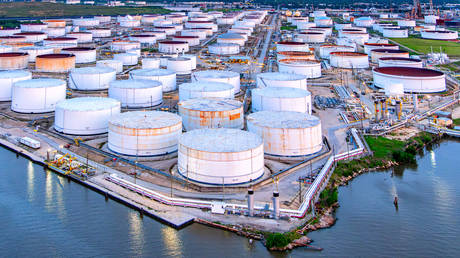
To understand the scale of what is happening, you have to look beneath the surface. Deep in the salt caverns of places like Kushikino and the massive steel vats of Shibushi, Japan hides its secret strength. This is the Strategic Petroleum Reserve. It is not just oil; it is time.
Currently, Japan holds enough oil to sustain its entire economy for roughly 160 days without a single drop of new imports. That is nearly half a year of borrowed stability. For decades, these reserves were the "break glass in case of emergency" option, a final line of defense against a total global collapse.
But the rules of the game have changed. The traditional protocol was to wait for an actual disruption—a physical blockage of the strait or a direct strike on a refinery—before tapping into the hoard. Now, the Japanese government is signaling a shift toward "acting first." They are moving from a reactive stance to a preemptive one.
Why? Because in the modern economy, the fear of a shortage is often more destructive than the shortage itself. When the markets smell smoke, the price of oil doesn't just climb; it teleports. By releasing reserves before the first shot is fired, Japan is attempting to perform a kind of financial alchemy: turning physical oil into psychological calm.
The Invisible Ghost of 1973
Every senior official in the Japanese energy sector carries a ghost with them. It is the ghost of the 1973 oil crisis. Back then, the country learned a brutal lesson about vulnerability. Photos from that era show panicked crowds hoarding toilet paper and darkened neon signs in Ginza. The Japanese "Economic Miracle" almost hit a brick wall.
Consider a hypothetical citizen named Hiroshi. In 1973, Hiroshi was a young father. He remembers the sudden, sharp chill of a country that realized it didn't own its own future. Today, Hiroshi is retired, but he watches the news from the Persian Gulf with a familiar tightness in his chest. He knows that if Iran follows through on threats to close the Strait of Hormuz—the narrow chasm through which 20% of the world’s oil flows—the ripple effect will reach his local grocery store within days.
When the Japanese government talks about releasing reserves "ahead of time," they are talking to Hiroshi. They are trying to ensure that the panic of the seventies remains a history lesson rather than a repeat performance.
The Logistics of a Preemptive Strike
Releasing oil isn't as simple as turning a faucet. It is a coordinated maneuver involving private companies and state-owned stockpiles. Under the current plan, the government can lower the mandatory reserve requirements for private distributors. This effectively "unlocks" millions of barrels that were previously frozen by law, allowing them to flow into the market to suppress price spikes.
The math is cold.
$$Price = \frac{Demand}{Supply + Expectation}$$
If the "Expectation" part of that equation becomes a nightmare scenario of war, the "Supply" side must be artificially inflated to keep the "Price" from exploding. Japan is betting that by flooding the market early, they can drown out the speculators who profit from chaos.
However, there is a risk. If you use your insurance policy too early and the crisis lasts longer than 160 days, you are left standing in the rain without an umbrella. It is a high-stakes poker game where the chips are the very lifeblood of the nation's industry.
The Geopolitical Tightrope
Japan finds itself in an agonizing position. On one hand, it is a staunch ally of the United States, which has led the charge in sanctioning Iran. On the other, Japan has historically maintained a unique, almost delicate diplomatic relationship with Tehran. They have tried to be the bridge-builders, the ones who talk when everyone else is shouting.
But bridges burn easily in the heat of a looming war.
If Iran feels backed into a corner, the Strait of Hormuz becomes their greatest lever. By announcing a willingness to tap reserves early, Japan is sending a dual message. To Washington, it says: We are prepared to support the pressure campaign by stabilizing the energy markets. To Tehran, it says: Your leverage is not as absolute as you think.
It is a quiet, bloodless form of deterrence.
The Human Cost of a Cent
We often talk about oil in terms of "dollars per barrel," a metric so abstract it feels like a score in a video game. But for the owner of a small trucking fleet in Saitama, a ten-cent rise in fuel prices is the difference between a profitable quarter and laying off his cousin.
For the logistics managers of the global supply chain, oil is the friction of the world. When it gets expensive, everything slows down. The cost of a head of lettuce, the price of a laptop, the feasibility of a summer vacation—it all pivots on the stability of those 160 days.
The Japanese government’s move is an admission of a harsh reality: we live in a world where the "just-in-time" delivery system is incredibly fragile. We have optimized our world for efficiency, but we have sacrificed resilience. These oil reserves are the last remaining fragments of that lost resilience.
The Weight of the Silence
Back in that Tokyo basement, the technicians watch the satellite feeds. They see the wakes of the tankers carving white lines through the deep blue of the Indian Ocean. Every one of those ships is a heartbeat.
The decision to release the reserves is not a sign of strength, but a calculated response to a profound vulnerability. It is a recognition that in the modern age, a country's sovereignty is not defined by its borders, but by its access to the energy that keeps its lights on.
As the sun sets over the Tokyo skyline, the millions of people below are largely unaware of the subterranean shift occurring beneath their feet. They don't see the valves turning or the spreadsheets being recalculated. They only know that when they flip the switch, the light comes on. They only know that the bus arrived on time.
That silence is what the government is buying. It is the most expensive silence in the world.
The tankers keep moving, for now. But the hand is hovering over the "release" button, waiting for a signal from a horizon that looks increasingly dark. In the end, 160 days is a long time to prepare for a war, but it is a very short time to rethink how a civilization survives when the fire goes out.
The valves are ready. The numbers are set. The world holds its breath, hoping the borrowed time is enough.