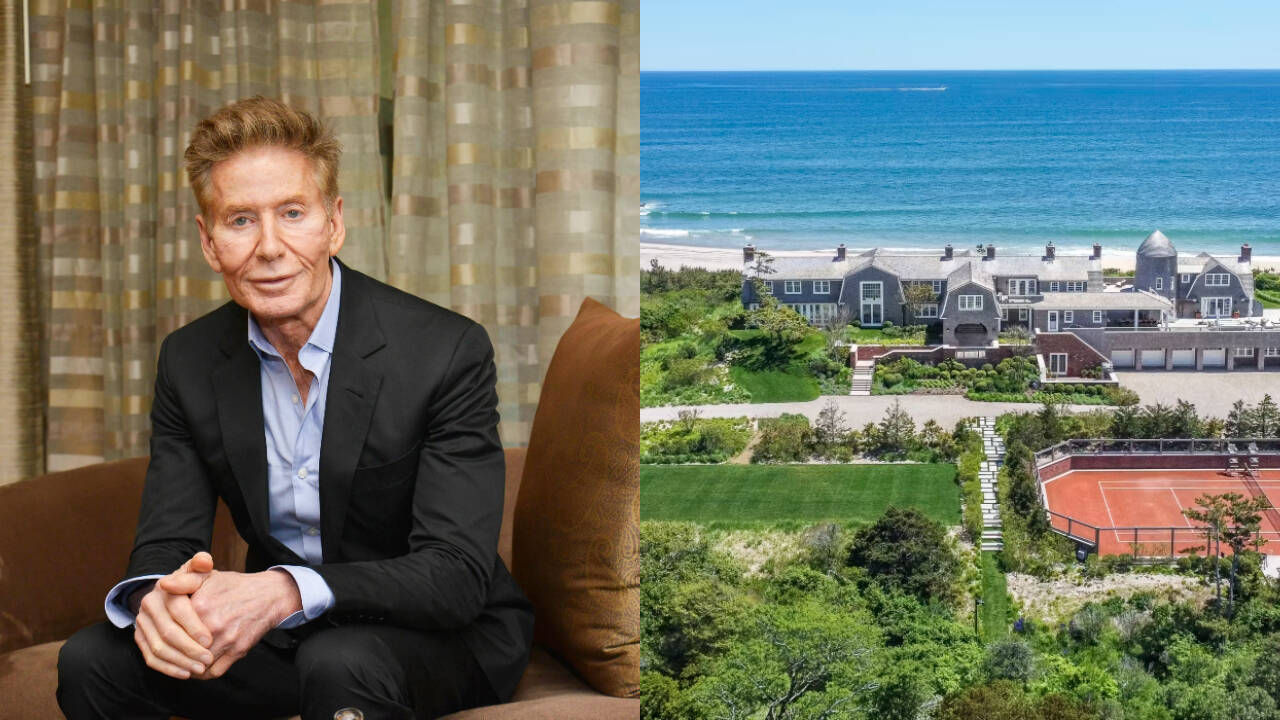
The real estate commentariat is hyperventilating again. Every property portal and weekend supplement has spent the past week treating the listing of Calvin Klein’s former East Hampton compound at 165 million dollars as an oracle of economic health. They point to the 8.22-acre dual-waterfront perimeter, the Thierry Despont restoration, and the nostalgic ghost of mid-century minimalism. They tell you it represents the invincible ascent of ultra-prime wealth.
They are entirely, dangerously wrong. Meanwhile, you can find other stories here: The Mechanics of Monetary Tightening and Capital Allocation Under Federal Reserve Rate Hikes.
I have spent two decades watching high-net-worth liquidity migrate through global coastal corridors, and I have seen developers blow millions on the assumption that sentimental provenance and architectural pedigree create an unshakeable price floor. They do not. A price tag like 165 million for an estate that changed hands at 85 million just a few years prior is not a reflection of intrinsic asset appreciation. It is a desperate liquidity stunt wrapped in vanity metrics.
Let us look at the actual mechanics of the transaction instead of reading the glossy brochure. To see the full picture, we recommend the recent report by Investopedia.
The Illusion of Compounding Pedigree
The lazy consensus in luxury real estate journalism assumes that historical names act as financial multipliers. Juan Trippe founded Pan Am; Calvin Klein defined American minimalism; Thierry Despont sculpted the interior. Therefore, the narrative goes, the square footage commands an exponential premium.
This ignores the brutal physics of the ultra-luxury buyer pool. At the 100-million-plus tier, the number of qualified buyers globally can fit inside a private Gulfstream. These individuals are not buying art history; they are allocating capital across global portfolios where fixed-income yields and alternative assets compete aggressively with dormant coastal acreage.
When a property doubles its transaction price in a handful of years without a proportional leap in underlying productive utility, you are not witnessing organic market demand. You are witnessing a speculative high-water mark designed to test whether a greater fool with a fresh liquidity event exists.
Imagine a scenario where a hedge fund manager purchases this asset at full asking price. To service the capital drag, maintenance, property taxes, and security for an estate of this magnitude, they are burning millions annually just to keep the lights on. The asset does not produce cash flow. It incinerates it.
The Flawed Premise of the Buildable Parcel
Much is made of the separate, vacant 1.89-acre oceanfront parcel bundled into the deal, complete with blueprints for a three-story secondary structure. Brokers frame this as bonus equity—an internal hedge that sweetens the nine-figure pill.
This betrays a profound misunderstanding of modern zoning psychology and coastal erosion realities in the Hamptons. Local environmental restrictions, setbacks, and coastal commission approvals are tightening by the month. Selling a parcel with theoretical permitting potential is very different from holding a fully realized, occupiable certificate of occupancy. By baking the speculative value of an unbuilt footprint into the current asking price, the sellers are forcing the buyer to pay retail for future risk.
Furthermore, consider the physical reality of the site. A dual-waterfront perimeter sandwiched between the Atlantic Ocean and Georgica Pond sounds romantic in a press release. In practice, it means exposure to aggressive maritime weathering, soaring insurance premiums, and vulnerability to severe weather patterns that have increasingly punished the Atlantic seaboard.
Redefining True Luxury Liquidity
If you want to understand where ultra-prime real estate is actually heading, stop looking at celebrity compounds on West End Road. Look at liquidity velocity. Properties priced past 150 million sit on the books for extended periods because they are priced for ego, not equilibrium.
The smart money is quietly moving away from oversized trophy compounds that require an army of estate managers and toward hyper-efficient, technologically integrated coastal footprints that minimize operational drag. Calvin Klein understood minimalism in fashion; ironically, the market surrounding his former home has maximalist dementia.
When you see a headline celebrating a record-breaking ask, remember what is actually happening behind the velvet rope. It is an audition. And the market is running out of actors willing to pay the admission price.
Inside Calvin Klein's Former $165M Hamptons Estate
This video provides an inside look at the historical East Hampton estate and its massive valuation.