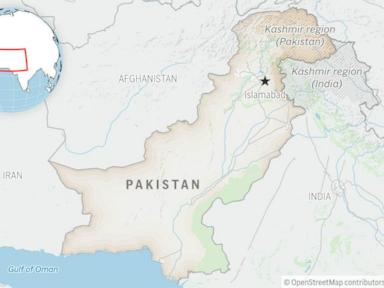
History has a funny way of repeating itself in South Asia, but the stakes just keep getting higher. Today marks exactly one year since the 2025 "Marka-e-Haq" conflict—a four-day military explosion that saw India and Pakistan teetering on the edge of a full-scale nuclear exchange. While the rest of the world has mostly moved on to the next news cycle, the tension in Islamabad and New Delhi is thick enough to cut with a knife.
Pakistan’s military didn’t pull any punches in its anniversary statement this morning. They aren’t just remembering the May 2025 clash; they’re issuing a blunt warning. The Inter-Services Public Relations (ISPR) made it clear that any "hostile design" against Pakistan will be met with force that dwarfs what India saw last year. It’s a classic display of brinkmanship that reminds us why this border remains the most dangerous place on earth.
The May 2025 Spark and the Battle of Truth
You can’t understand the current threats without looking at the chaos of last May. It started with a brutal attack in Pahalgam, where 26 people, mostly Hindu tourists, were killed. India didn't wait for a long-winded investigation. They pointed the finger at Pakistan-backed groups and launched "Operation Sindoor" on May 7, 2025.
What followed wasn't just a minor skirmish. It was a multi-domain mess. India crossed the border with strikes they claimed hit militant infrastructure. Pakistan’s response, which they dubbed "Operation Bunyan-un-Marsoos," involved drones, missiles, and heavy artillery. Islamabad even claimed they downed seven Indian aircraft, including a Rafale. India, as expected, disputed those numbers but admitted to losses.
The fighting only stopped on May 10 after some intense, behind-the-scenes arm-twisting by the U.S. and other global powers. But a ceasefire isn't a peace treaty. It’s a pause button.
Why Pakistan is Doubling Down on the Rhetoric
Islamabad’s current stance isn't just about bravado. It’s about a massive shift in how they view modern warfare. The PAF (Pakistan Air Force) has been obsessed with "operational reorientation" over the last twelve months. They've shifted their focus toward:
- Electronic Warfare Integration: They aren't just flying jets; they're trying to blind the enemy before the first missile is even fired.
- Drone Swarms and Unmanned Systems: The 2025 conflict proved that cheap drones can do as much damage as expensive fighter jets.
- Cyber and Space Domains: The military is talking more about "multi-domain operations," which basically means they want the ability to cripple Indian infrastructure without ever crossing the physical border.
The message is simple: don't think 2025 was a one-off. If you come at us again, the "precision and resolve" will be significantly higher. Honestly, it’s a terrifying prospect for a region where both sides have nuclear silos on standby.
The Indian Perspective and Operation Sindoor
New Delhi isn't exactly sitting quiet. While Pakistan celebrates its "Battle of Truth," India’s Ministry of External Affairs (MEA) marked the anniversary by reiterating its "right to defend." They view the 2025 strikes as a necessary, "befitting reply" to cross-border terrorism.
There's a fundamental disconnect here. India sees its actions as defensive policing; Pakistan sees them as an act of war. This gap in perception is exactly how mistakes happen. Look at the Indus Waters Treaty. India has basically kept it in abeyance, citing Pakistan’s support for militants. When you start messing with water rights in a region prone to drought, you’re playing with fire.
The Shadow of 2019 and Operation Swift Retort
It’s impossible to ignore that this isn't the first time we’ve been here. Only a few months ago, in February 2026, Pakistan marked the seventh anniversary of the 2019 dogfight where Wing Commander Abhinandan Varthaman was captured.
That 2019 incident set the template. It showed that India was willing to launch airstrikes inside sovereign Pakistani territory (Balakot), and Pakistan was willing to retaliate in broad daylight. The 2025 conflict just took that template and turned the volume up to eleven. We’re seeing a new "normal" where cross-border strikes are the first tool out of the box rather than the last resort.
What This Means for Regional Stability
If you're looking for a silver lining, you won't find it in the official press releases. The rhetoric is designed to satisfy domestic audiences—voters in India and the public in Pakistan—but it leaves very little room for diplomatic maneuvering.
The 2026 anniversary statements show that neither side has learned to de-escalate. Instead, they’ve learned how to fight better. Pakistan is investing in "niche and disruptive technologies" to counter India's larger conventional military. India is doubling down on its "punitive response doctrine." It’s a feedback loop of aggression.
The Next Steps for Survival
The reality is that South Asia is stuck in a cycle where every anniversary is a reminder of a grudge, not a lesson in peace. If you're tracking this, don't just watch the troop movements. Watch the technology. The next clash won't look like the last one; it’ll likely start in the cyber realm or through a massive drone incursion that bypasses traditional radar.
Stay updated on the official ISPR and MEA channels, but read between the lines. When a military starts talking about "smart inductions" and "future-ready air power," they’re telling you exactly where the next fight will happen. The 2025 ceasefire was a band-aid on a gunshot wound. Until both nations find a way to discuss the underlying Kashmir issue without reaching for the missile trigger, these anniversaries will continue to be warnings rather than commemorations.