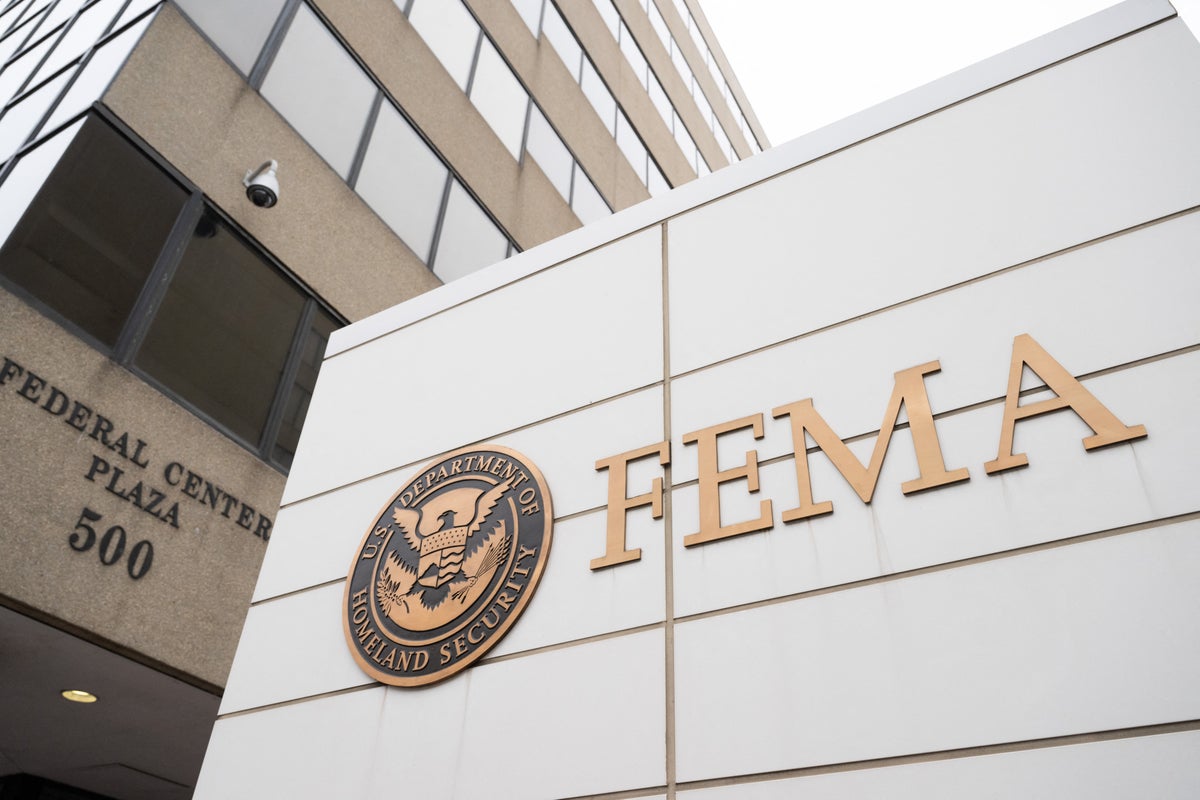
A major legal battle over federal funding is underway. A coalition of 25 states and the District of Columbia has filed a lawsuit against the Federal Emergency Management Agency (FEMA) and the Department of Homeland Security (DHS). The lawsuit challenges new federal requirements that tie disaster response and homeland security grants to state-level changes in election administration and immigration enforcement.
The dispute centers on $148 million or more in federal grant awards under the Homeland Security Grant Program. According to agency guidelines issued on July 9, FEMA planned to withhold 20% of these allocated funds unless states complied with specific mandates. These mandates require states to verify voter citizenship using the federal Systematic Alien Verification for Entitlements (SAVE) database, transition toward hand-marked paper ballots, run state-level election audits, and assist federal agencies with immigration enforcement. If you found value in this post, you should look at: this related article.
The lawsuit, filed in federal court in Rhode Island, argues that using disaster readiness funds as policy leverage violates the Administrative Procedure Act and the U.S. Constitution's Spending Clause.
The Legal Arguments Against Conditional Grants
The states leading the lawsuit argue that Congress appropriated these funds specifically for public safety, emergency preparedness, and counterterrorism. Under the U.S. Constitution, Congress holds the power of the purse. The executive branch lacks the authority to attach unrelated policy demands to money already approved by lawmakers. For another angle on this development, check out the latest coverage from The Washington Post.
Rhode Island Attorney General Peter F. Neronha, who is co-leading the coalition, noted that executive agencies cannot hold disaster relief hostage to force changes in local governance. Pennsylvania Governor Josh Shapiro echoed this sentiment, stating that emergency preparedness money shouldn't depend on whether a state agrees to alter its election laws.
The complaint highlights several core issues:
- Lack of Statutory Authority: Congress did not give FEMA or DHS the power to rewrite election laws or enforce immigration policies through grant conditions.
- Discretionary Termination: The new policy allows DHS to cancel grants at any point if state policies don't match executive branch priorities, creating financial instability for state budget planning.
- Interference with Local Policing: Requiring state and local officers to assist in federal immigration enforcement undermines public trust in local police departments.
The Federal Position on Grant Requirements
Federal officials defend the conditions as necessary measures to secure national infrastructure. A FEMA spokesperson described the requirements as essential steps to protect election integrity and ensure national security.
The agency argued that voting processes, data security, and voter registration integrity are directly tied to national security interests. From the administration's perspective, verifying voter citizenship via the SAVE database and auditing voting equipment are practical steps to safeguard critical infrastructure.
Precedent and Previous Court Rulings
This isn't the first time courts have weighed in on executive efforts to condition federal funding. Federal judges have repeatedly struck down similar attempts to withhold transport, education, and law enforcement grants over political disagreeements.
Previous rulings in similar cases established clear limits on executive branch authority:
- Grants passed by Congress cannot be altered by executive agencies without explicit statutory permission.
- Financial penalties imposed on states cannot be so severe that they become coercive.
- Conditions placed on federal funds must directly relate to the purpose of the specific grant program.
Because Homeland Security Grant Program funds cover cybersecurity, bomb squads, and emergency communications for first responders, state attorneys general argue that tying this aid to voter roll management fails the test of direct relationship.
Impact on State Emergency Preparedness
If the funds remain blocked, state emergency management agencies face immediate operational deficits. The withheld grants fund equipment for first responders, flood mitigation, wildfire management, and regional cyber-defense systems.
State officials warn that losing a fifth or more of these funds directly undermines local readiness during peak disaster seasons. Emergency managers cannot reliably plan multi-year infrastructure or public safety projects if grant money can be pulled arbitrarily.
The coalition of states includes Arizona, California, Colorado, Connecticut, Delaware, Hawaii, Illinois, Maine, Maryland, Massachusetts, Michigan, Minnesota, Nevada, New Jersey, New Mexico, New York, North Carolina, Oregon, Pennsylvania, Rhode Island, Vermont, Virginia, Washington, Wisconsin, and the District of Columbia.
The court is expected to rule on a preliminary injunction in the coming weeks to determine whether FEMA can enforce these grant conditions while the broader legal challenge proceeds through the federal court system.