Walk down the quiet, tree-lined streets of a Pennsylvania suburb on an ordinary Tuesday morning, and you will not hear the ticking of a clock. You will hear the sound of kitchen tables cluttered with unopened utility bills. You will hear the heavy sigh of a mother standing in the grocery aisle, calculating whether she can afford both fresh vegetables and the fuel needed to get her children to school.
Numbers in Washington are usually written in the clean, sterile ink of political memos. They are spoken by pundits wearing expensive makeup beneath blinding studio lights, treated like weather patterns to be tracked and forgotten. But a number like thirty-seven percent is not a weather pattern. It is a wall.
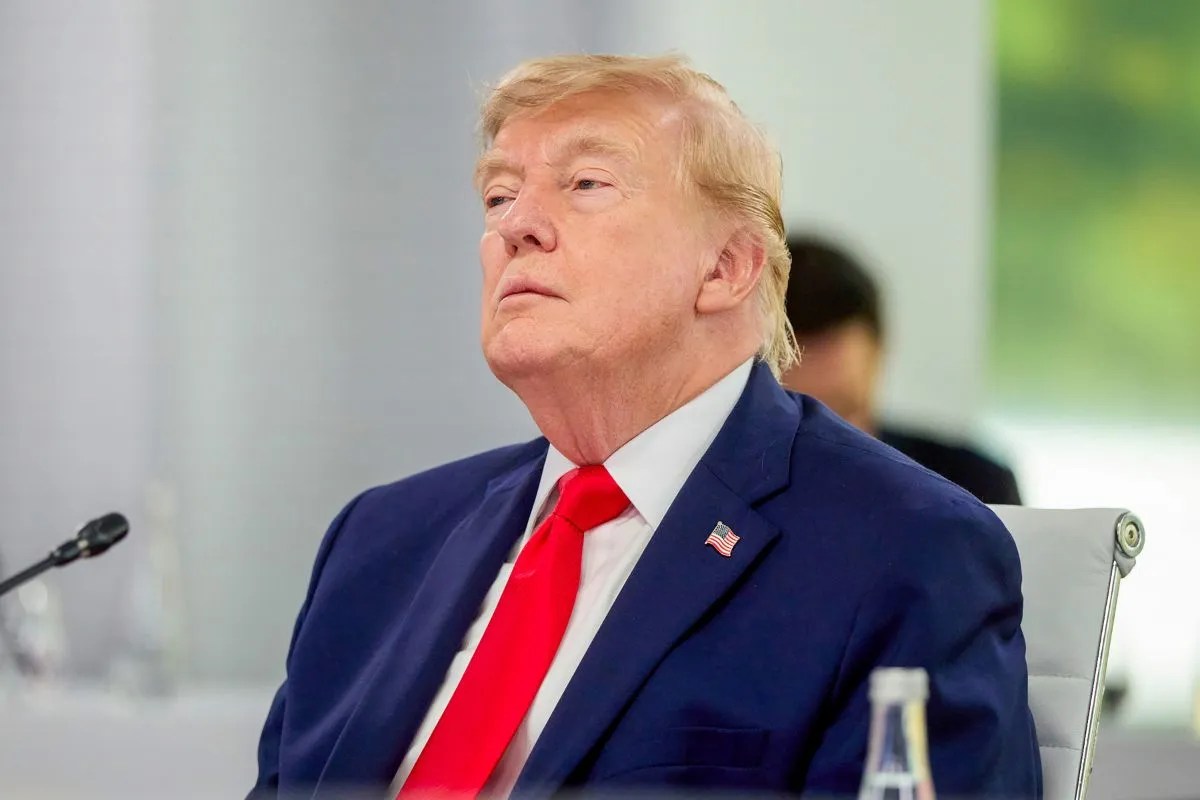
It is the percentage of American voters who still look at the current administration and see a reflection of their own hopes. And for Donald Trump, as the shadow of the midterm elections stretches long and cold across the legislative map, that number represents a perilous descent.
To understand why thirty-seven percent matters, you have to leave the beltway. You have to step outside the architecture of spin and look at the raw mechanics of belief.
Think of a small business owner in Ohio named Arthur. For four decades, Arthur has kept a hardware store open on Main Street. He knows the names of his customers’ grandchildren. He knows when the local factory is hiring and when it is laying off. When Arthur looks at national politics, he does not care about ideological purity tests or late-night cable news shouting matches. He cares about the price of copper wire, the cost of commercial freight, and whether his customers have enough disposable income left over at the end of the month to fix a leaky faucet themselves instead of calling a professional.
When political approval ratings slide down into the thirties, it is because thousands of Arthurs have quietly decided to close their wallets, cross their arms, and withhold their trust.
The descent to thirty-seven percent did not happen overnight. Gravity never works that way. It was a slow accumulation of friction. Every time a promise collided with the immovable object of inflation, a few more pebbles broke free from the cliffside. Every time a partisan battle overshadowed the mundane, grinding work of keeping local economies stable, another voter packed up their optimism and moved it to the sidelines.
Political gravity is relentless. It does not care about rallies or social media algorithms. It cares about purchasing power. It cares about the quiet panic that sets in when a family realizes their savings account is shrinking faster than a melting ice cube in July.
Consider what happens next in the electoral calculus. Midterm elections are rarely won by the party that holds the White House. They are referendum machines. They are fueled by enthusiasm, and enthusiasm is an extraordinarily fragile commodity. When a president's approval rating hovers in the upper thirties, the psychological effect on down-ballot candidates is devastating. Local congressional hopefuls, mayors, and state legislators suddenly find themselves swimming upstream in a river of public exhaustion.
The foot soldiers of a political campaign—the volunteers who knock on doors on rainy Saturday afternoons—need a narrative of momentum to sustain them. They need to feel that they are pushing a boulder up a hill toward a triumphant summit. But when the national leader is struggling to hold even four out of ten voters, those volunteers look down at their clipboards and wonder if they are merely bailing water out of a sinking ship.
This is the invisible architecture of political decline. It is not defined by a single catastrophic headline. It is defined by erosion. It is the gradual realization among ordinary citizens that the people steering the ship are looking at a completely different map.
We have seen this psychological shift before in American history. It is a recurring fever dream of modern governance. A leader rises on a wave of populist fervor, promising a return to an idealized past or a leap into a prosperous future. The energy is intoxicating. Millions project their personal grievances and highest aspirations onto that single figure. But reality is a harsh editor. Reality does not negotiate with slogans.
When the friction of governing meets the friction of everyday life, the illusion begins to fracture. The faithful remain, of course—that is the thirty-seven percent core. They are locked in, bound by a shared identity and a deep-seated distrust of the alternative. But the margin for error vanishes entirely. In politics, losing the middle is like losing your footing on a glass slope. There is nothing left to catch your fall.
As the midterm showdown approaches, the calculations in campaign war rooms have shifted from ambition to triage. How do you motivate a fractured electorate? How do you convince people who are tired, skeptical, and economically squeezed that their vote is anything more than a cry into an empty canyon?
The answers will not be found in polished television commercials or focus-tested soundbites. They will be forged in the quiet spaces where voters quietly make up their minds, far away from the cameras, weighing the promises of yesterday against the reality of today.
The numbers will continue to shift. The pundits will continue to argue. But out there on the quiet streets, beneath the fading autumn light, the only thing that truly echoes is the sound of a country holding its breath, waiting to see what happens when the wall finally gives way.