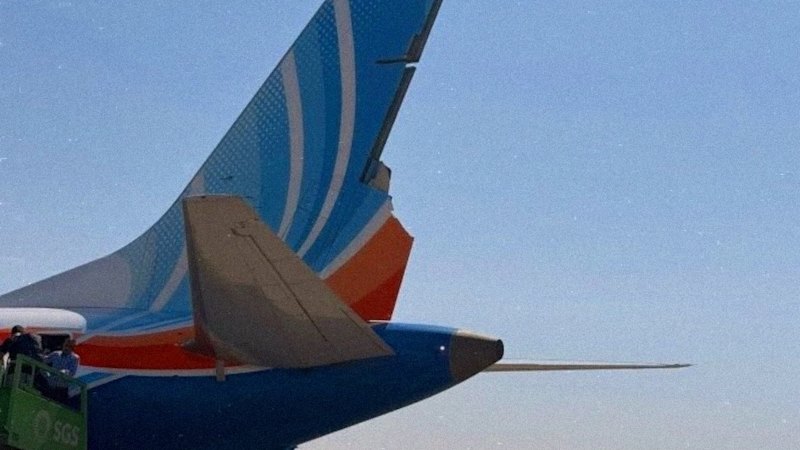
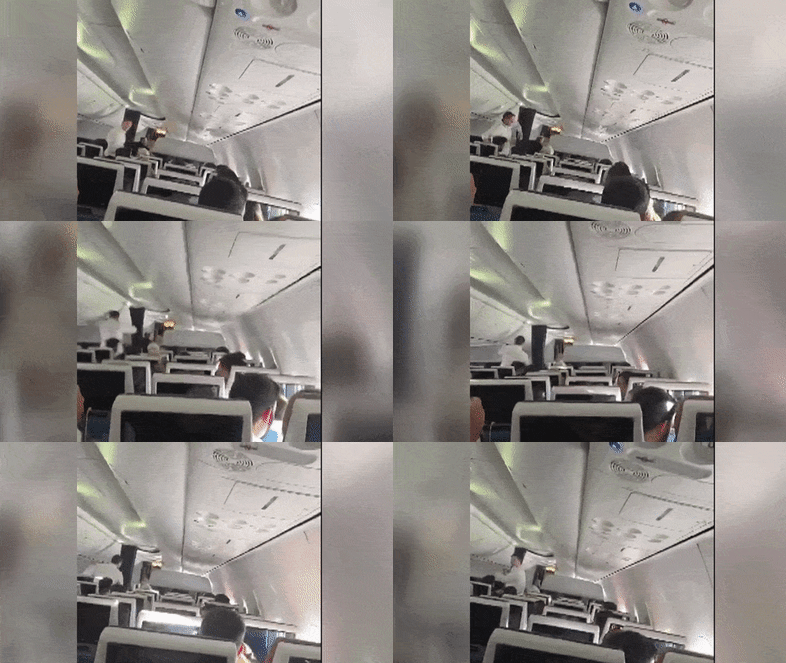
The passport is already damp from sweat. The boarding pass, crumpled in a fist that has squeezed it for four hours straight, reads a gate number that no longer exists on the departures board. Around you, thousands of miles away from your own bed, a foreign terminal hums with the electric indifference of a machine that does not know your name.
You crossed an ocean to taste a different air, to walk through cobblestone streets that smelled of woodsmoke and old stone, to remember what it felt like to be untethered from routine. But vacations have an expiration date. And when that date arrives, you expect the return mechanism to kick in. You expect the metal tube with wings to take you back to your driveway, your coffee mug, your life. Meanwhile, you can explore related stories here: The Ridge That Broke Our Hubris On The Corsican Trail.
Instead, you are standing in a suffocating queue at Charles de Gaulle or Heathrow, listening to an automated gate chime while a gate agent with tired eyes mouths words you have heard three times already: Operational constraints. Weather inbound. Crew timeout.
Air Canada got you there. That part was easy. The sleek fuselage cut across the Atlantic on schedule, the gin and tonics were poured, the tiny plastic cups of water were collected, and you stepped out into Europe with your luggage intact. The outbound flight is a promise. It is the easy half of the transaction. To explore the full picture, we recommend the recent article by Condé Nast Traveler.
The return flight is the test of whether an airline views you as a human being or an inventory item that has already fulfilled its revenue quota.
Consider what happens when that test fails.
You step out of the jetway in a foreign hub, only to find the connection has vanished. Not delayed by an hour. Erased. Gone. The customer service counter is a distant mirage behind a wall of four hundred panicked bodies. Your phone battery is blinking red at four percent. Roaming data is bleeding your bank account at twelve dollars a day. And somewhere behind a glass wall, an aircraft sits empty on the tarmac because the company's rostering software failed to align two pilots with one cockpit three time zones away.
This is not a vacation anymore. This is an administrative hostage situation.
To understand why this happens, you have to look past the shiny brochures and look directly into the cold machinery of modern global aviation. Airlines operate on margins so razor-thin they would make a Wall Street day trader sweat. Every plane must fly, every hour of every day, or the economic house of cards wobbles. To achieve this, carriers run their fleets and their crews with almost zero slack. There is no cushion. There is no spare captain sitting in a hotel room drinking coffee, waiting for an engine light to flicker on a transatlantic Boeing 777.
When a thunderstorm rolls over Montreal, or a minor maintenance hiccup grounds a jet in Toronto, the ripple effect does not stay in Canada. It cascades. It travels across the jet stream at five hundred miles per hour and lands directly on your shoulders in Europe.
The airline's mathematical models tell them that passengers are fungible. If Flight 849 is canceled, you can simply be placed on Flight 851 tomorrow. The spreadsheet balances. The cost of a hotel voucher and meal stipend is factored into the quarterly loss projections as an acceptable friction cost.
What the spreadsheet leaves out is you.
It leaves out the fact that you have a dog boarding in Calgary that needs to be picked up by Tuesday. It leaves out the crucial presentation you were supposed to lead on Wednesday morning. It leaves out the quiet, creeping panic of realizing that your credit card is approaching its limit because you had to pay out-of-pocket for a last-minute rail ticket just to find a hotel room that wasn't forty miles outside the city center.
When passengers find themselves stranded abroad by Air Canada or any major global carrier, the immediate reaction is usually disbelief. We have been conditioned to trust the ticket. We treat the printed barcode as a modern secular covenant—a guarantee that space and time will bend to get us home on schedule. When that covenant breaks, the psychological shock is profound.
You realize with sudden clarity that you are entirely alone. The airline's app becomes a black hole. Refreshing the screen yields only a spinning wheel of despair. The chat bot tells you that all agents are busy. The phone line plays a looped recording of smooth jazz that feels less like hold music and more like a psychological experiment designed to test your will to live.
Let us be entirely honest about what happens next, because every experienced traveler knows the script.
You have two choices. You can stand in that monstrous queue for six hours, shuffling forward two inches at a time behind a family whose toddler has been crying since the descent, hoping against hope that the exhausted agent at the desk has the magic authority to put you on a competing carrier's direct flight. Or you can take matters into your own hands.
Taking matters into your own hands is expensive, stressful, and entirely necessary.
The hidden architecture of international air travel is governed by international treaties and consumer protection laws that airlines would often prefer you didn't memorize. If you are flying out of a European Union airport, Regulation EC 261/2004 is your invisible shield. If your flight is canceled or delayed by more than three hours due to reasons within the airline's control, you are not just entitled to a sympathetic nod. You are owed statutory compensation that can reach up to six hundred euros, alongside mandatory care—meals, refreshments, and hotel accommodations.
Yet, getting the airline to hand over that compensation voluntarily is roughly as easy as convincing a cat to take a voluntary bath. They will invoke extraordinary circumstances. They will blame a rogue cloud, a phantom air traffic control restriction in a country you have never visited, or a mechanical fault that they will legally classify as an act of God, even if the part that broke was manufactured forty years ago and neglected during routine maintenance.
This is where the narrative shifts from a travel inconvenience to a test of endurance.
Imagine checking into a bleak airport hotel at two in the morning. The room smells faintly of bleach and stale carpet. The window looks out over a concrete service road where baggage carts rattle past in the dark. You sit on the edge of the double bed, your clothes wrinkled from thirty hours of travel, staring at your reflection in the dark television screen.
You are thousands of miles from the kitchen where you left your coffee mug on the counter.
The next morning, you fight your way back through security. You find a new boarding pass printed on flimsy thermal paper. You strap yourself into a middle seat in row forty-two, wedged between a sleeping businessman and a teenager listening to distorted pop music through leaking headphones.
As the wheels finally leave the European asphalt and tuck themselves into the belly of the aircraft, you feel no triumphant surge of adventure. Just a hollow, echoing exhaustion.
Airlines will continue to push the limits of their scheduling. They will continue to run lean, optimize routes, and outsource customer support to digital algorithms that cannot look you in the eye. That is the reality of the global transit economy.
The antidote to that vulnerability is not blind trust in the logo on the tail fin. It is preparation, aggressive documentation, and the quiet, stubborn refusal to accept a generic customer service brush-off. Keep every receipt. Photograph every departure board. Screenshot every notification of delay. Know your rights better than the gate agent does.
Because when the aluminum shell touches down back home, and you finally drag your battered suitcase across the pavement of your own driveway, you realize the ultimate truth of modern travel.
The journey doesn't end when the plane lands. It ends when you take back control.