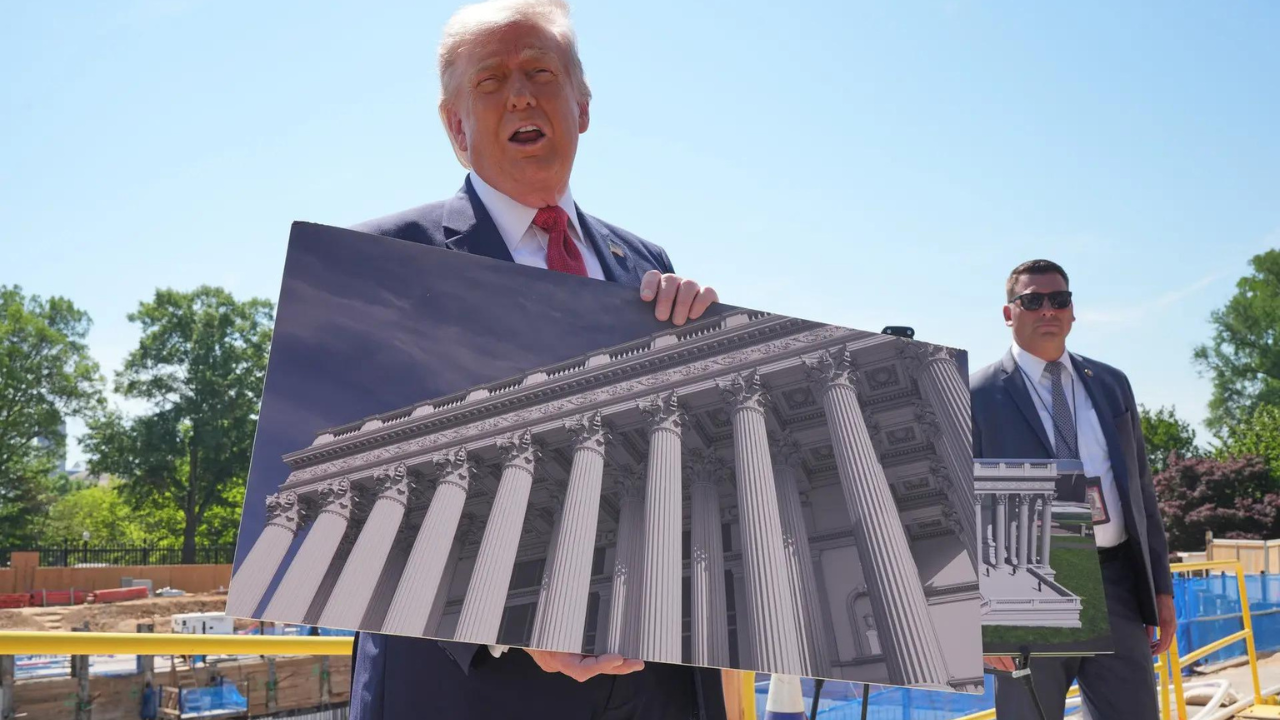
The media is having a collective meltdown over a $600 million price tag.
Recent reports are screaming about a proposed White House ballroom, clutching their pearls because taxpayers might foot half the bill. The narrative is as predictable as it is lazy: greedy politicians, wasted public funds, and a luxury vanity project built on the backs of everyday citizens.
It is a neat, emotionally charged story. It is also entirely wrong.
When you look at the mechanics of federal infrastructure, public-private partnerships, and real estate valuation, a different reality emerges. This project isn’t a fiscal disaster. It is a blueprint for how modern government asset development should actually work. The outrage machine is asking the wrong questions because it doesn’t understand how big-ticket infrastructure operates.
The Compounding Cost of Security Infrastructure
Let’s dismantle the $600 million sticker shock immediately.
The immediate reaction from pundits is to compare this to commercial real estate. They look at a luxury hotel ballroom in Manhattan or Las Vegas, see a price tag of $50 million, and assume the remaining $550 million is pure graft.
This is a fundamental misunderstanding of high-security federal construction.
When you build a structure within the secure perimeter of the White House, you are not just pouring concrete and hanging chandeliers. You are building a hardened, blast-resistant command facility disguised as a social venue.
- TEMPEST Shielding: Every square inch of the structure must be insulated against electromagnetic interference and electronic eavesdropping.
- Subterranean Logistical Networks: High-profile state events require secure, subterranean access points for heads of state, separate from standard White House traffic.
- HVAC and CBRN Defense: The air filtration systems must capable of isolating and neutralizing Chemical, Biological, Radiological, and Nuclear threats.
I have spent years analyzing capital expenditure budgets for high-security infrastructure. When you factor in the background checks for every single laborer, the secure supply chains required to vet every steel beam, and the specialized engineering, standard construction costs multiply by a factor of ten.
To call this a "ballroom" is like calling Air Force One a "propeller plane." It is a multi-purpose diplomatic asset engineered to withstand a military-grade assault.
Why a 50 Percent Taxpayer Split is a Winning Deal
The loudest critique focuses on the funding mechanism: "Taxpayers are footing half the bill!"
In the world of government procurement, a 50/50 split with private donors is an absolute victory. Typically, federal infrastructure is a 100% taxpayer liability. When the government builds a courthouse, a military base, or a departmental headquarters, the public bears the entire financial burden, along with 100% of the inevitable cost overruns.
Traditional Federal Funding vs. Proposed Hybrid Model
+---------------------------+---------------------------+
| Traditional Model         | Proposed Hybrid Model     |
+---------------------------+---------------------------+
| Taxpayer Share: 100%      | Taxpayer Share: 50%       |
| Private Capital: 0%       | Private Capital: 50%      |
| Risk Absorption: Public   | Risk Absorption: Shared   |
+---------------------------+---------------------------+
By leveraging philanthropic donations to cover half the cost, the government effectively cuts its capital expenditure in half for a permanent asset. The White House Historical Association and private donors frequently fund interior renovations and historical preservation. Extending this model to structural expansion is a logical evolution.
The downside to this approach? It grants private donors perceived cultural capital and influence. Yes, billionaires will get their names on plaques, and yes, it creates a optics nightmare regarding access. But if private ego can subsidize 300 million dollars of hard security infrastructure that the state would otherwise have to fund entirely through Treasury bonds, that is a compromise worth making.
Dismantling the People Also Ask Echo Chamber
The internet is flooded with variations of the same basic questions, all rooted in flawed premises. Let's answer them honestly.
Why can't the White House just use existing venues for state dinners?
Because renting out the Washington Hilton or the Kennedy Center every time a foreign dignitary visits is a logistical and financial nightmare.
Every time a President leaves the White House complex, the Secret Service must secure transit routes, sweep external venues, freeze local traffic, and coordinate with municipal police. The cost of external presidential movement runs into millions of dollars per event.
Bringing these events permanently inside a dedicated, secure venue on the White House grounds eliminates these recurring operational costs. It is a classic capital expenditure trade-off: spend more upfront to drastically lower operational expenses for the next fifty years.
Shouldn't this money go to roads, bridges, or schools instead?
This is a classic false dichotomy. Federal budgets do not work like a household checkbook.
Money allocated for executive branch security and diplomatic infrastructure does not get pulled from the Department of Education's school lunch budget. Furthermore, infrastructure spending isn't a zero-sum game. The United States government can simultaneously fund interstate highway repairs and secure its own executive headquarters. Pretending a single building project starves the nation's infrastructure is intellectually dishonest.
The Soft Power ROI of Diplomatic Space
We live in an era that undervalues soft power, preferring to measure national strength solely through defense budgets or GDP metrics. But diplomacy is theater, and theater requires a stage.
When the United States hosts a state dinner, it isn't just throwing a party. It is executing a geopolitical strategy. The environment matters. Hosting foreign leaders in cramped, temporary tents on the South Lawn—a common practice during larger state dinners—signals a lack of permanence and preparation.
A world-class, secure venue signals structural dominance. It is an architectural manifestation of American authority. You cannot quantify the return on investment of a successful bilateral negotiation that happens in a secure, dignified space, but you can certainly feel the cost when poor logistics or inadequate facilities disrupt high-stakes diplomacy.
Stop looking at the $600 million figure as money thrown out a window. Look at it as a capital investment in an asset that will depreciate over eighty years while providing continuous utility, security, and diplomatic leverage. The outrage is cheap. Good infrastructure isn't.