The Hundred was staring down a localized PR headache. Before Abrar Ahmed signed with Birmingham Phoenix, the tournament had a glaring gap that felt more like a political statement than a draft oversight. It’s no secret that the English Cricket Board (ECB) relies on the British South Asian community to fill seats and drive TV numbers. Yet, as the 2024 season approached, the distinct lack of top-tier Pakistani talent started to look like a deliberate pivot or a massive scouting failure. It wasn't just about the cricket; it was about the optics of a league that claims to be inclusive while missing half the heartbeat of Asian cricket fans in the UK.
Fans in Birmingham, Leeds, and Manchester don't just want "good cricket." They want to see the stars they grew up idolizing or the new guns they argue about on WhatsApp. When the initial draft results came out and Pakistani names were surprisingly scarce, the vibe shifted. People started asking if the "India-Pakistan concern"—the idea that the league was leaning too hard into one camp to keep potential IPL-linked investors happy—was actually real. Abrar Ahmed’s arrival didn't just add a world-class leg-spinner to the mix; it balanced the scales.
The Mystery Spinner Birmingham Desperately Needed
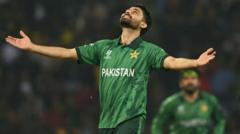
Birmingham Phoenix didn't pick Abrar just to check a box. They picked him because he’s a nightmare to play on a wearing Edgbaston pitch. If you've watched Abrar since his debut against England in Multan, you know he’s not your average leggie. He’s got that flick-of-the-wrist mystery that makes even the best openers look like they’re playing with a toothpick.
The Hundred is a brutal format for bowlers. You get no time to find a rhythm. You’re either on or you’re getting launched into the stands. Abrar thrives in that chaos. He uses his "finger-spun" leg-breaks to cramp batters for room. Most domestic English players haven't faced anything like him. They're used to traditional over-the-top leg-spin or flat darts. Abrar is a different beast entirely. He’s the kind of player who can turn a 100-ball game on its head in the space of five deliveries.
Why The Pakistani Absence Was Such A Big Deal
Cricket in the UK is deeply tribal. Go to a game at Headingley or Edgbaston and you’ll see the flags. The ECB knows this. They’ve spent millions on "South Asian Engagement" programs. So, when the draft initially missed out on several high-profile Pakistanis, it felt like a slap in the face to a huge chunk of the ticket-buying public.
There’s always been this quiet murmur in the background. Is the ECB trying to court the BCCI? Are they keeping the door open for Indian players by making the league "IPL-friendly"? Whether it's true or not doesn't matter as much as the perception. When Shaheen Afridi or Haris Rauf aren't the first names on the sheet, people talk. By bringing in Abrar, and later seeing other Pakistani players like Naseem Shah get their looks, the league managed to quiet the "India-Pakistan concern" that was threatening to overshadow the actual sport.
It's about representation. It's about making sure the kid in Small Heath sees someone who looks like him and plays for the national team his dad supports. That’s how you build a brand that lasts longer than a three-week summer window.
Taking Risks With Mystery Spin In Short Formats
Let’s be honest. Abrar is a risk. He hasn't played a massive amount of white-ball cricket on the international stage compared to his Test record. But that’s exactly why he works for Birmingham. Teams have mountains of data on every major T20 globetrotter. They have heat maps, exit velocity charts, and weakness profiles for everyone from Rashid Khan to Sunil Narine.
They don't have that for Abrar. Not in this format.
His action is hard to pick. He hides the ball well. In a 100-ball game, if a batter takes ten balls to "see" him, the game is already half over. That’s the tactical edge. While other teams were playing it safe with established names, Phoenix went for the wildcard. It's a gamble that pays off when the pressure is high and the crowd is screaming.
Beyond The Boundary The Commercial Reality
Money talks. The Hundred needs to be profitable. It’s currently a polarizing tournament that many traditionalists hate, which means it needs the "new" audience to show up in droves. A significant portion of that new audience comes from the British Pakistani diaspora.
If you don't have Pakistani stars, you lose those fans to the sofa. You lose the shirt sales. You lose the engagement on social media. The signing of Abrar was a strategic move to ensure the "concern" about excluding one half of the subcontinent’s rivalry didn't turn into a full-blown boycott. It sounds dramatic, but in the world of sports marketing, it’s just the truth. You cannot ignore the most passionate fanbases and expect to sell out stadiums on a Tuesday night in July.
How To Watch For The Abrar Effect
If you're heading to a game or watching on TV, don't just look at the wickets column. Watch the batters’ feet. If they’re staying pinned to the crease, Abrar is winning. If they’re lunging forward blindly, he’s got them.
The real test comes when he’s asked to bowl the final ten balls. That’s where the "mystery" meets the metal. If he can maintain his composure when some of the world’s cleanest hitters are trying to put him over the roof, he won't just be a "signing that ended a concern"—he’ll be the best player in the league.
Keep an eye on the Birmingham Phoenix social media channels for last-minute team sheets. If the pitch looks dry, Abrar is a lock. If you're a fan of tactical cricket, this is the guy you should be tracking this season. Get your tickets for the Edgbaston home games early; with Abrar in the squad, the local support is going to be louder than ever.