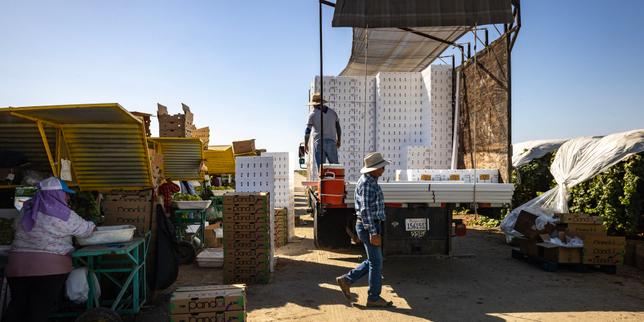
Immigration enforcement operations in California’s Central Valley directly disrupt the national food supply chain by inducing sudden labor absenteeism, triggering harvest bottlenecks, and inflating downstream consumer prices. When enforcement sweeps occur in Kern County—centered around Bakersfield, one of the most productive agricultural hubs in the United States—the immediate operational result is not merely a reduction in local headcount, but a cascading failure across time-sensitive biological harvesting windows.
Most coverage of immigration enforcement in agricultural regions relies on emotional narratives and historical literary parallels, such as John Steinbeck’s The Grapes of Wrath. While culturally resonant, that framing obscures the hard operational mechanics of modern agribusiness. To understand why enforcement raids in Bakersfield threaten domestic food security, analysts must examine the structural dependencies of specialty crop production, the elasticity of agricultural labor, and the rigid logistics of cold-chain distribution.
The Structural Vulnerability of Kern County Agribusiness
Kern County consistently ranks among the top agricultural-producing counties in the United States, generating billions of dollars annually in gross production value. Unlike the Midwest, where row crops like corn, soy, and wheat are heavily mechanized using GPS-guided combines, Bakersfield’s output is dominated by high-value specialty crops. Table grapes, citrus, almonds, pistachios, carrots, and stone fruits require intensive, delicate human handling to prevent bruising and maintain market-grade aesthetics.
This creates a fundamental asymmetry in production risk:
- Biological Inflexibility: A ripe crop cannot wait for a labor dispute or an enforcement sweep to subside. Table grapes and citrus have narrow harvest windows measured in days, not weeks. Missing that window results in over-ripening, rot, and total loss of the capital invested in irrigation, fertilizer, and pest management over the preceding year.
- Skill Specialization: Pruning, thinning, and hand-harvesting delicate fruit require trained physical technique. Experienced agricultural workers achieve harvesting speeds and quality-control standards that novice replacements cannot replicate within a single season.
- High Fixed-Cost Exposure: Growers carry substantial upfront debt for water rights, land leases, and inputs. Revenue is realized only during the compressed harvest window. A 20% drop in labor availability during peak harvest does not reduce profits by 20%; it frequently pushes the entire operation below its break-even threshold, turning a profitable season into a net loss.
The Three Mechanisms of Enforcement-Induced Labor Contraction
When federal enforcement agencies conduct sweeps or establish checkpoints in agricultural corridors like Highway 99 or the rural towns surrounding Bakersfield (such as Arvin, Lamont, and Delano), the labor supply contracts through three distinct operational channels.
1. Direct Detention and Deportation
The most visible mechanism is the physical removal of workers from the labor pool. While the absolute number of individuals detained in a single sweep may represent a small fraction of the county’s total workforce, targeted operations at transit hubs or packing houses remove key crew leaders and specialized harvesters. In crew-based agricultural operations, the loss of a single foreman or tractor operator can idle an entire twenty-person picking team until a qualified replacement is cleared and assigned.
2. Precautionary Absenteeism and Shadow Friction
The secondary effect is significantly larger than the primary detention count. Enforcement operations generate immediate information cascades through worker networks via messaging apps and community radio. Fear of detention—even among workers with valid work authorization or mixed-status households—causes immediate, widespread absenteeism.
During enforcement surges in Kern County, growers routinely report field attendance dropping by 30% to 50% within 24 hours. Workers stay home, avoid driving to remote orchards, and pull children from local schools, paralyzing household logistics. This precautionary friction creates an immediate labor vacuum even if zero workers from a specific farm were actually detained.
3. Geographic Displacement and Labor Flight
Unlike manufacturing plants, farms cannot relocate to chase labor. Workers, however, are mobile. Sustained enforcement pressure in the southern San Joaquin Valley drives undocumented and mixed-status workers to migrate north toward Salinas or Washington state, or to exit agriculture entirely for cash-based urban construction and service sectors where enforcement visibility is lower. Once a regional labor pool disperses, attracting workers back requires substantial wage premiums that thin-margin growers struggle to absorb.
The Myth of Domestic Labor Substitution
A persistent hypothesis in policy debates suggests that removing unauthorized workers will naturally draw native-born unemployed workers into agricultural roles through market wage adjustments. Operational data from California’s agricultural sector repeatedly refutes this assumption due to three structural barriers.
First, geographic mismatch separates unemployed urban populations from rural production zones. Bakersfield’s surrounding agricultural tracts lack the public transit infrastructure and affordable short-term housing required to absorb an influx of domestic workers from coastal cities.
Second, seasonal intermittency makes agricultural work financially unviable for workers with fixed urban living expenses. Even when hourly wages rise above state minimums, the work remains tied to weather cycles and crop maturity. A worker cannot sustain an annual household budget on ten weeks of intensive grape harvesting followed by months of underemployment.
Third, physical attrition among unconditioned domestic hires is exceptionally high. Agricultural field work in the San Joaquin Valley frequently occurs in ambient temperatures exceeding 100 degrees Fahrenheit (38 degrees Celsius). Growers who have attempted to recruit domestic urban labor consistently report turnover rates exceeding 70% within the first two weeks of harvest, long before new hires reach baseline productivity.
The Downstream Cold-Chain Cascade
The disruption in Bakersfield does not remain localized to the farm gate. Modern food distribution operates on a just-in-time inventory model that leaves minimal buffer capacity between field harvest and retail grocery shelves.
- Packing House Underutilization: Fruit and vegetable packing facilities in Kern County operate with massive fixed overhead in refrigeration, sorting machinery, and sanitation compliance. When field deliveries drop due to picking shortages, packing lines run below capacity, driving up the per-unit processing cost of every box that does make it through the facility.
- Freight and Logistics Bottlenecks: Refrigerated trucking networks (reefers) are scheduled weeks in advance to move produce from Bakersfield to distribution centers in Los Angeles, Chicago, and New York. Unfilled truckloads force carriers to either delay shipments—reducing the shelf life of perishable goods—or dispatch half-empty trailers, spiking freight costs per pound.
- Retail Price Inflation and Import Substitution: When domestic supply tightens, wholesale buyers immediately bid up prices on remaining inventory, passing inflation directly to consumers. Simultaneously, major grocery chains pivot to foreign suppliers in Mexico, Chile, and Peru to fulfill contractual volume commitments. Once retail shelf space is ceded to imported produce, domestic growers face severe difficulty reclaiming those distribution contracts in subsequent seasons.
Quantifying the Limits of Current Mitigation Strategies
Agribusiness operators in Bakersfield have attempted to insulate themselves from labor shocks using three primary strategies, yet each carries severe operational and financial constraints.
The H-2A Temporary Agricultural Worker Program
The federal H-2A visa program allows growers to legally import foreign nationals for seasonal agricultural work. While H-2A usage has expanded rapidly across California, it is not a frictionless substitute for local labor:
- Cost Prohibitions: Growers must pay the Adverse Effect Wage Rate (AEWR)—which in California exceeds standard minimum wage—while also covering international transportation, visa processing fees, and free, government-inspected housing for every worker.
- Bureaucratic Rigidity: H-2A petitions must be filed months in advance with fixed start and end dates. If an unseasonable heatwave accelerates crop ripening by ten days, H-2A workers cannot legally arrive early to save the harvest.
- Housing Bottlenecks: Kern County lacks sufficient compliant worker housing, forcing growers to build costly dormitories or lease entire motels, capital expenditures that smaller family farms cannot finance.
Agricultural Automation and Mechanization
Venture capital and engineering firms have poured billions into robotic harvesters, optical sorters, and automated weeders. In packing houses, optical sorting technology has successfully reduced labor dependency. However, in the field, robotics remain severely limited. Machines struggle to navigate uneven terrain, identify ripe fruit hidden behind dense foliage, and detach delicate crops like table grapes without crushing the skin. Full mechanization of fresh-market specialty crops remains at least a decade away from commercial viability at scale.
Wage Escalation
Raising piece-rate and hourly wages attracts workers from neighboring farms, creating a localized bidding war rather than expanding the total regional labor supply. When every grower in Kern County raises wages simultaneously, production costs climb without generating a single additional worker-hour, compressing margins until growers are forced to disk under unharvested crops—a practice known as "walk-by" abandonment.
Strategic Imperatives for Agribusiness and Supply Chain Operators
Relying on political stabilization or hoping for immediate immigration reform is a failed risk-management strategy. Agricultural executives, food processors, and institutional buyers sourcing from the Central Valley must treat labor enforcement shocks as a permanent structural feature of the operating environment.
To prevent catastrophic harvest losses and supply chain ruptures, operators must execute three immediate structural adjustments:
- Decouple Harvest Dependency Through Crop Mix Diversification: Over the next five-year capital cycle, Kern County growers must aggressively reallocate acreage away from high-touch fresh-market cultivars toward mechanically harvestable varieties (such as raisin grapes or processing tomatoes) and tree nuts (almonds and pistachios), where mechanical shakers and sweepers eliminate 90% of manual harvest labor.
- Establish Cooperative H-2A Housing Syndicates: Individual mid-sized farms cannot absorb the capital cost of H-2A housing compliance alone. Growers within the same irrigation districts must form agricultural housing cooperatives to co-finance modular worker housing and share labor crews across staggered crop harvest windows (e.g., shifting the same H-2A cohort from spring citrus to summer table grapes to autumn pomegranates).
- Restructure Supply Contracts with Force Majeure Labor Clauses: Growers and packers must eliminate rigid volume-penalty clauses in agreements with national grocery retailers. Supply contracts must explicitly incorporate regional labor-shortage triggers, allowing dynamic price adjustments and volume flexibility when verified enforcement actions reduce regional workforce availability below baseline thresholds.