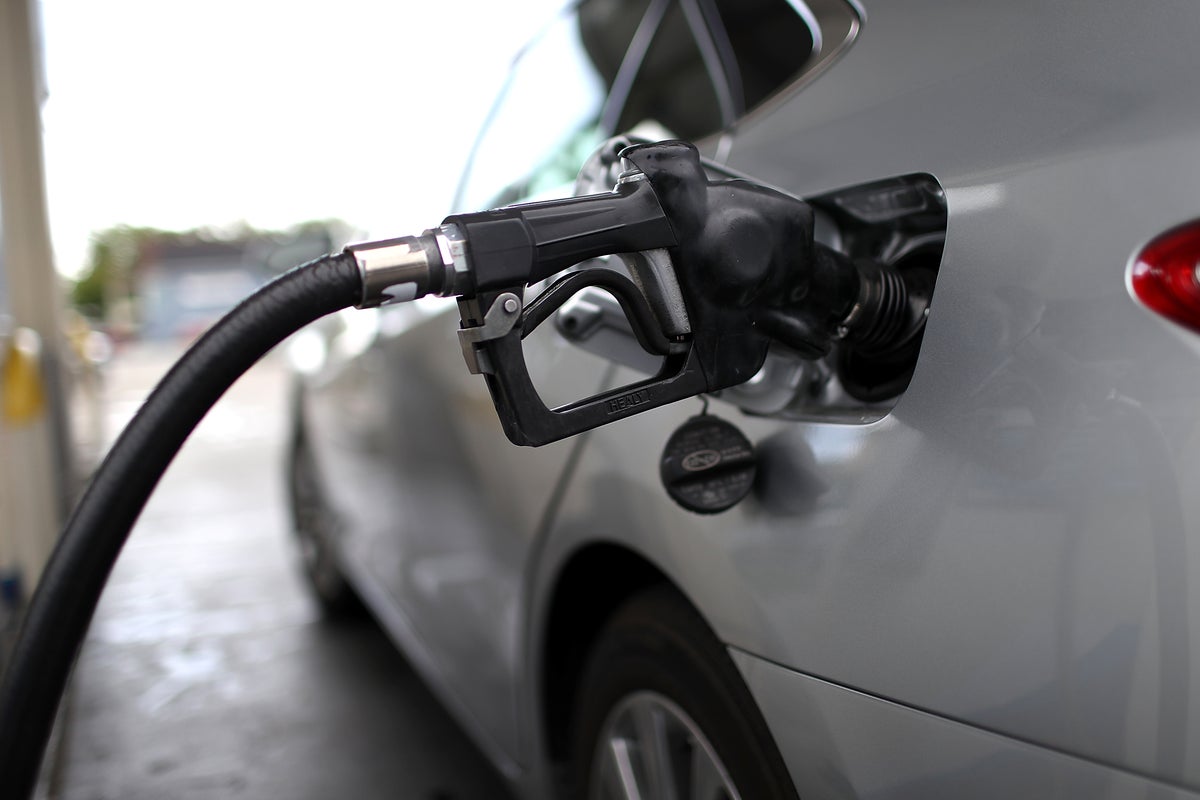
The headlines are practically screaming for your outrage. Class-action lawyers are suing major oil companies and software providers, claiming that algorithmic pricing models—otherwise known as the big, scary "AI"—are secretly colluding to keep gas prices artificially high. They want you to believe that a cabal of fuel executives is sitting in a darkened room, letting a rogue machine siphon extra dollars out of your wallet every time you fill up.
It is a beautiful narrative for a populist soundbite. It is also an absolute fantasy that fundamentally misunderstands how retail economics, commodity markets, and pricing software actually function. Meanwhile, you can find other events here: The Anatomy of Ultra Luxury Personalization A Brutal Breakdown of the Rolls Royce Sweptail.
Let’s dismantle the lazy consensus. The idea that algorithm-driven dynamic pricing equals illegal collusion is not just wrong; it reverses the reality of the market. These platforms do not kill competition. They accelerate it to a point that human operators can no longer handle.
The Myth of the Omnipotent Algorithm
The core argument of these antitrust lawsuits is built on a logical fallacy: because multiple gas stations in the same ZIP code use similar software to track market data and adjust prices, they must be conspiring to inflate margins. The legal theory treats software like a digital smoking gun. To see the complete picture, check out the detailed report by CNBC.
That is fundamentally incorrect. Tracking your competitors and matching their prices is not collusion; it is the textbook definition of a perfectly competitive market.
Before software took over, how did a gas station set its prices? The manager walked outside with a pair of binoculars, looked at the sign across the street, walked back inside, and changed the numbers on the plastic board. If the guy across the street dropped his regular unleaded by two cents, our manager dropped his by two cents to keep from losing his morning rush-hour traffic.
Software did not invent this behavior. It simply replaced the binoculars.
When a platform analyzes local fuel demand, historical traffic patterns, and real-time competitor prices to suggest an optimization strategy, it is processing public information. The prices on a gas station marquee are visible to every human being driving down the highway. Automating the observation of those public prices is no more illegal than using an Excel spreadsheet to track your competitor’s public advertising rates.
For illegal price-fixing to occur under the Sherman Antitrust Act, there must be a "meeting of the minds"—an actual agreement to restrict trade or artificially dictate a price. Running a machine-learning model that arrives at a similar market-clearing price based on identical, public, real-time data inputs is called tacit parallelism. The Supreme Court has repeatedly ruled that this is entirely legal.
The Margin Delusion: Gas Stations are Not Printing Money
To believe that AI is keeping gas prices artificially inflated, you have to believe that retail fuel margins are massive, hidden pools of cash.
I have spent years looking under the hood of retail operations, and I can tell you the reality is brutal. The retail fuel industry is a low-margin, high-volume knife fight.
According to historical data from the National Association of Convenience Stores (NACS), the average gross margin on a gallon of gas hovering around $3.50 is usually between 30 and 40 cents. But that is gross margin—before you take out credit card processing fees (which eat up roughly 10 to 12 cents per gallon), labor, electricity, insurance, and underground storage tank maintenance.
When all is said and done, the net profit for a gas station owner is frequently between 3 and 7 cents per gallon.
Imagine a scenario where an independent station owner decides to manually buck the software's recommendation and drop their price by 15 cents a gallon to "undercut the AI." What happens? Their volume might tick up slightly, but they have completely wiped out their net profit margin. They are now losing money on every single car that pulls up to the pump.
The software isn't inflating a massive bubble of corporate greed; it is defending a microscopic, razor-thin margin against hyper-inflationary operating costs. If these algorithms were truly the master tools of a price-gouging cartel, you would see convenience store net profit margins skyrocketing into the double digits. They aren't. Most store operators make their actual money on the markups of energy drinks, cigarettes, and beef jerky inside the store, using the gas pumps merely as a breakeven utility to draw foot traffic.
How Algorithmic Pricing Actually Prevents Sticky High Prices
Here is the counter-intuitive reality that critics refuse to admit: algorithmic pricing can actually drive prices down faster during a market crash than human managers ever could.
Economists have long documented a phenomenon known as "Rockets and Feathers." When wholesale oil prices shoot up, retail gas prices shoot up like a rocket. When wholesale oil prices drop, retail gas prices drift down slowly, like a feather.
Humans cause the feather effect, not algorithms.
When wholesale prices drop, a human store manager is terrified to lower their pump price too quickly. They fear they will lose money on the expensive fuel already sitting in their underground tanks, or they worry their competitors won't follow them down, leaving money on the table. They hesitate. They wait days to see what the market does.
An algorithm has no fear, no ego, and no hesitation. It monitors the wholesale spot market drop instantly. If the model determines that lowering the price by three cents right now will capture an extra 8% of local market share without triggering a destructive local price war, it executes the change in seconds.
By removing human emotion and friction from the loop, automated pricing compresses the timeline of market cycles. The feather drops faster because the machine calculates the exact equilibrium point instantly.
The Real Risk Nobody Is Talking About
The contrarian position requires admitting the genuine downside of this technological shift, and it isn't what the class-action lawyers are complaining about.
The real danger of widespread algorithmic pricing is not high prices. It is extreme market volatility and systemic fragility.
When every major player in a market uses hyper-reactive software, you create a feedback loop. If an algorithm at Company A misinterprets a temporary supply blip as a permanent trend and drops its price aggressively, Company B’s software will instantly detect it and match it. Within minutes, every station on the block has plummeted to a near-zero margin based on a data anomaly.
This is the retail equivalent of a "flash crash" in the stock market. We are trading stable, predictable, human-managed pricing for a hyper-reactive digital ecosystem where a single bad data feed or a sudden weather event can trigger massive, unpredictable swings in localized pricing.
It is a chaotic system, not a collusive one.
Dismantling the Premier Deficiencies of the Lawsuit
Let’s answer the questions people are actually asking, but with the unvarnished truth:
Does pricing software use non-public data to set pump prices?
The lawsuits allege that by using a common software provider, competitors are effectively sharing data. But the algorithms primarily rely on scrapers, public mapping data, and credit card transaction feeds that show exactly what competitors are charging openly. Sharing an analytical tool is not the same as sharing a secret ledger.
Why don't gas stations just compete the old-fashioned way?
Because the old-fashioned way is a guaranteed path to bankruptcy in 2026. Labor costs are up, swipe fees are higher than ever, and consumer driving patterns are shifting. A retail store operator trying to manually manage fuel pricing across twenty locations using phone calls and spreadsheets will be crushed by competitors who optimize their prices dynamically based on real-world volume trends.
If AI isn't the problem, why are gas prices still high?
Look at domestic refining capacity, global crude production quotas set by OPEC+, geopolitical blockades, and federal regulatory compliance costs. Those are the tectonic plates moving the price of oil. The software at your local gas station is just a thermometer measuring the temperature; blaming the algorithm for expensive gas is like smashing your thermometer because you don't like the weather outside.
Stop looking for a corporate AI villain to explain basic macroeconomics. If you want lower gas prices, build more refineries and stabilize global supply chains. Leave the software alone.


