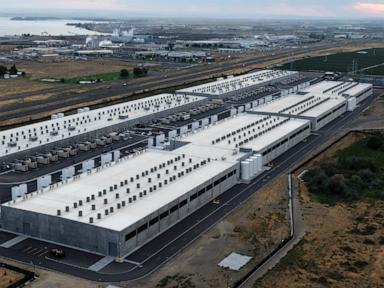
The rapid scaling of artificial intelligence workloads has broken the decoupling model of the digital economy. Historically, computational efficiency gains allowed software to scale with sub-linear energy growth. Hyperscale artificial intelligence models, specifically large language model training and continuous inference pipelines, have inverted this relationship. High-density data centers now require uninterrupted baseload power at a scale that the current electrical grid architecture cannot supply using wind and solar assets alone. This structural deficit forces a direct trade-off between artificial intelligence operational readiness and corporate carbon-neutrality mandates, driving an immediate, unpredicted resurgence in natural gas capacity expansion.
The Trilemma of AI Grid Integration
Integrating hyperscale artificial intelligence workloads into the existing electrical grid creates a three-way conflict between operational reliability, capital scalability, and decarbonization mandates.
               [Operational Reliability]
               (24/7/365 Baseload Demand)
                         /   \
                        /     \
                       /       \
                      /         \
 [Capital Scalability]-----------[Decarbonization Mandates]
(Rapid Infrastructure Deployment)  (Net-Zero Carbon Commitments)
The core issue stems from the distinct operational profiles of these three vectors:
- Operational Reliability: Artificial intelligence data centers run at capacity factors exceeding 90 percent. Unlike traditional enterprise cloud computing, which experiences diurnal cycles of high and low traffic, large language model inference clusters and training runs demand continuous, unyielding baseload power. Any voltage fluctuation or localized outage disrupts distributed training matrices, causing millions of dollars in lost compute time.
- Capital Scalability: Tech conglomerates must scale hardware deployments rapidly to maintain competitive positioning. Natural gas generation facilities can be built, permitted, and connected to regional transmission organizations far faster than large-scale solar or wind installations that require extensive geographic footprints and protracted interconnection queue approvals.
- Decarbonization Mandates: Virtually all major hyperscalers operate under strict self-imposed net-zero carbon timelines. The sudden requirement for multi-gigawatt power additions forces these entities to choose between stalling their computational growth or violating their environmental commitments by sourcing power from fossil-fuel-burning assets.
This structural mismatch exposes the core vulnerability of relying exclusively on variable renewable energy architecture to power continuous, high-density industrial loads.
The Intermittency Penalty of Current Renewable Architectures
The argument that wind, solar, and lithium-ion storage can entirely satisfy the power demands of the artificial intelligence boom overlooks the physics of grid stability and the economic realities of the intermittency penalty.
Solar and wind generation operate on low capacity factors, typically between 20 and 45 percent, depending on geography and seasonality. To deliver a guaranteed 1,000 megawatts of continuous baseload power to an artificial intelligence data center using variable renewables, a developer cannot simply build 1,000 megawatts of nameplate solar capacity. They must overbuild the system by a factor of three or four, constructing 3,000 to 4,000 megawatts of generation assets.
This overbuilding introduces severe capital inefficiencies. The excess energy produced during peak generation hours must either be curtailed—effectively wasted—or stored. Current battery energy storage systems primarily rely on lithium-ion chemistry, which is optimized for short-duration frequency regulation and four-hour shifting windows.
To bridge a three-day or week-long weather event where wind and solar outputs drop significantly across an entire regional transmission footprint, short-duration storage fails. The capital expenditure required to build a lithium-ion battery array capable of sustaining a multi-gigawatt data center cluster for consecutive days of low renewable generation is economically prohibitive.
Natural gas-fired generation assets, particularly combined-cycle gas turbines, solve this vulnerability directly. They provide high energy density, require minimal land area relative to their output, and can adjust their power production to meet fluctuating grid conditions or sudden drops in renewable output. Consequently, utilities face immediate pressure to build new natural gas plants or delay the decommissioning of legacy fossil facilities to guarantee grid stability as hyperscale data centers enter local interconnection queues.
The Capital Realities of Natural Gas Infrastructure Overhang
The decision to build natural gas assets to power artificial intelligence infrastructure introduces a multi-decade capital lock-in effect. Combined-cycle gas turbines carry an operational lifespan of 30 to 40 years. When a utility constructs a new natural gas facility to meet the sudden load growth of a tech company’s data center cluster, that capital expenditure is amortized over decades and often added to the regulated rate base of local consumers.
This reality introduces several systemic risks:
- Stranded Asset Vulnerability: If cleaner, scalable alternatives reach commercial viability sooner than expected, or if carbon pricing frameworks become punitive, these natural gas plants risk becoming stranded assets. The remaining capital costs would either be absorbed by utility shareholders or passed on to ratepayers, creating political and economic friction.
- Transmission Queue Saturation: The influx of data center power requests is clogging regional interconnection queues. Because natural gas plants offer predictable, dispatchable power, utilities often prioritize them in the short term to ensure system reliability, pushing back the evaluation and integration of new renewable energy projects.
- Corporate Accounting Disconnects: To maintain their net-zero claims while drawing power from a grid increasingly reliant on natural gas, hyperscalers rely heavily on Virtual Power Purchase Agreements and Renewable Energy Certificates. This accounting mechanism creates a false sense of security. While a tech company may purchase enough renewable energy certificates globally to match its total annual energy consumption, the physical data center on a specific regional grid is frequently running on electrons generated by burning natural gas during non-generation hours.
Structural Interventions: Beyond Traditional Grid Models
To resolve the tension between artificial intelligence expansion and grid decarbonization, the energy sector must move past the binary choice of unmitigated natural gas expansion versus variable wind and solar deployments. Resolving this challenge requires structural interventions across transmission optimization and alternative baseload generation architectures.
Grid-Enhancing Technologies (GETs)
Before adding physical generation assets, the efficiency of existing transmission infrastructure must be maximized. Deploying Dynamic Line Rating systems, which utilize sensors to monitor real-time environmental conditions like wind and temperature, allows utilities to safely increase the power throughput of existing transmission lines. This optimization reduces localized congestion and allows excess renewable energy from remote areas to reach data center hubs without requiring new natural gas capacity to balance the local load.
Advanced Nuclear Re-emergence
Small Modular Reactors represent the most logically sound long-term solution for high-density, carbon-free baseload power. Unlike traditional gigawatt-scale nuclear plants, small modular reactors feature factory-fabricated components that reduce construction timelines and capital risk. Their high capacity factors match the operational needs of artificial intelligence clusters, and they can be co-located directly with data centers, bypassing the congested public transmission grid entirely.
Next-Generation Geothermal Systems
Engineered Geothermal Systems expand the geographic footprint of geothermal energy beyond traditional volcanic fault lines. By utilizing advanced drilling and fracturing techniques derived from the oil and gas sectors, developers can inject water deep into hot rock formations anywhere on Earth to produce continuous, clean steam power. This technology provides a zero-emission, dispatchable baseload capability that directly replaces the operational role of combined-cycle gas turbines.
Operational Playbook for Hyperscale Infrastructure
To navigate the immediate power deficit without permanently derailing long-term sustainability mandates, infrastructure operators must deploy a dual-track strategy.
First, implement strict locational marginal pricing and power-availability modeling into the data center site-selection framework. Data centers must no longer be built solely based on fiber proximity or local tax incentives. They must be routed to regional grids characterized by underutilized baseline capacity or structural power surpluses, such as regions with stranded nuclear or hydro assets.
Second, split computational workloads by time-sensitivity profiles. Training runs for large foundational models, which can tolerate latency in non-real-time synchronization, should be decoupled from static geographic locations. These workloads can be dynamically routed to data centers operating in regions experiencing temporary renewable energy surpluses. Conversely, instantaneous inference processing, which requires low-latency proximity to urban centers, can remain on localized grids, utilizing advanced on-site energy storage or targeted clean baseload contracts to mitigate its carbon impact.
Failing to bifurcate these computational demands will guarantee a protracted reliance on natural gas infrastructure, locking in emissions profiles that run directly counter to long-term corporate and climate objectives.