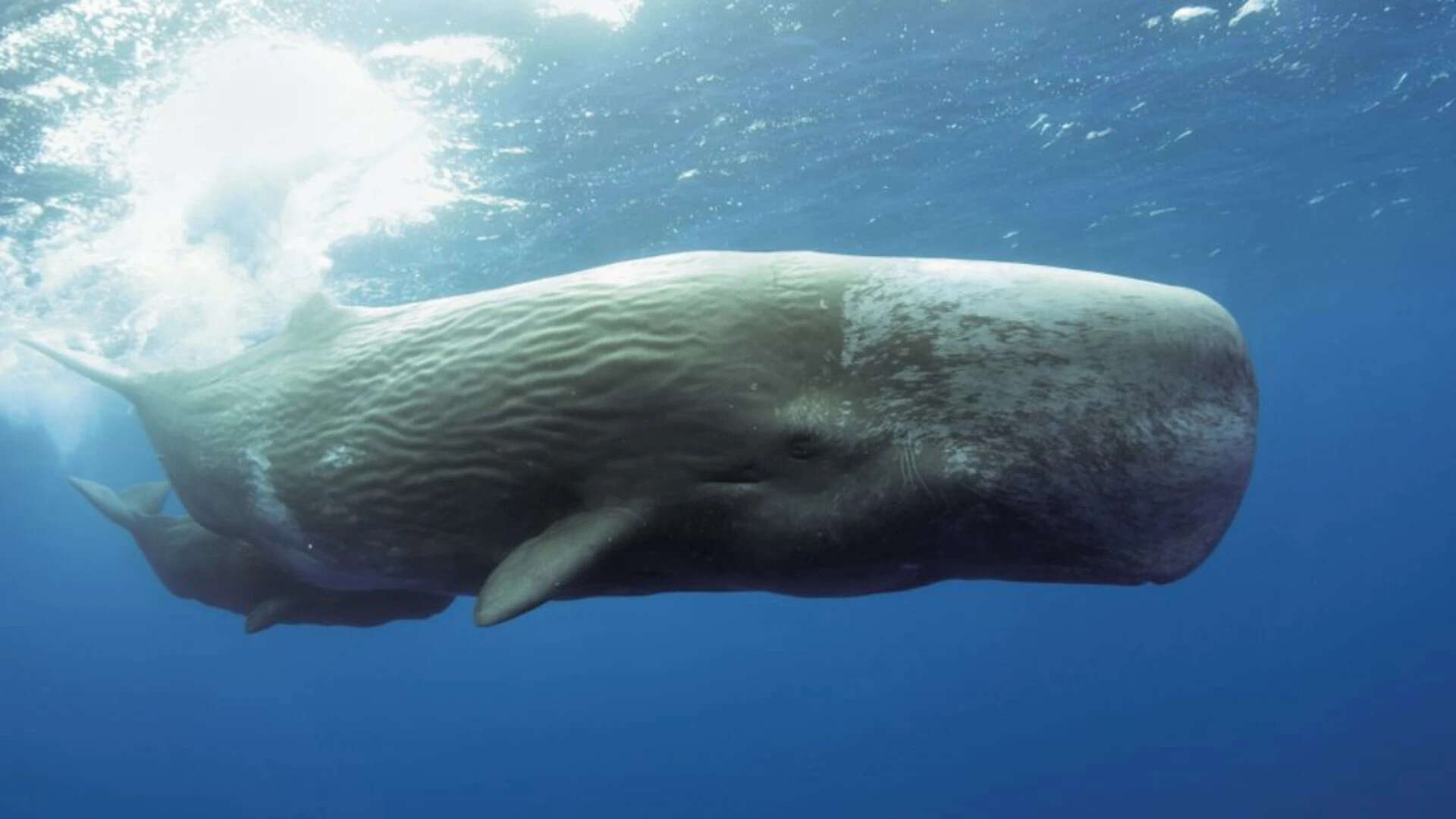
We are witnessing a massive tech-funded delusion in marine biology.
The mainstream media is swooning over news that data scientists are using machine learning to decode sperm whale communication. Headlines scream about a newly discovered "phonetic alphabet" and regional dialects among Mediterranean sperm whales. Investors are pouring millions into initiatives like Project CETI (Cetacean Translation Initiative), promising that we are on the precipice of chatting with Leviathan.
It is a beautiful fantasy. It is also a profound misunderstanding of both information theory and evolutionary biology.
Silicon Valley has applied its favorite hammer—generative pattern matching—to a problem that is not a software puzzle. By treating whale codas like an encrypted dead language waiting to be cracked by brute-force compute, researchers are committing a catastrophic category error. They are finding structure and calling it language.
The harsh reality? We are not decoding an alien civilization. We are over-fitting data to satisfy human anthropomorphism.
The Mirage of the Sperm Whale Alphabet
The recent excitement stems from analyzing the rhythmic clicks, or codas, that sperm whales use. By passing thousands of these audio recordings through deep neural networks, researchers identified subtle variations in tempo, rhythm, and ornamentation. Because these variations can be clustered mathematically, the immediate, lazy leap was made: it is an alphabet.
This is a classic case of confusing data complexity with semantic meaning.
To understand why this is flawed, we have to look at information theory. In 1948, Claude Shannon defined entropy as a measure of the uncertainty or information content in a message. For a sequence of sounds to constitute an alphabet capable of transmitting complex, abstract thoughts (language), it requires high combinatorial freedom and variable semantic mapping.
Sperm whale codas do not exhibit this. After decades of hydrophone recordings, we know these clicks serve three primary functions:
- Echolocation for hunting squid in pitch darkness.
- Mating displays.
- Basic social cohesion and group identification.
When AI identifies a new sub-variable in a Mediterranean whale’s click rhythm, it has not discovered a new noun or a grammatical tense. It has discovered a acoustic fingerprint.
Imagine analyzing the engine noises of different sports cars. A sophisticated machine learning model could easily map the subtle acoustic variations across Ferrari models, grouping them by the region of the factory they were built in. The model might find a distinct "dialect" in the V12 engines from Maranello compared to those modified by a tuning shop in Germany.
Does that mean the Ferraris are speaking a regional dialect? Are the engines communicating a complex philosophy via exhaust notes? No. The variation is a byproduct of mechanics, environment, and minor structural differences.
By labeling acoustic variance as a "phonetic alphabet," tech evangelists are projecting human linguistics onto a completely different biological operating system.
The Dialect Fallacy: Acoustic Drift vs. Cultural Language
The media loves the narrative of regional whale dialects because it makes the animals feel like us. "Look, the Mediterranean whales have an accent!"
As someone who has looked at acoustic data pipelines for years, I find this interpretation frustratingly naive. What researchers call a regional dialect is almost certainly the result of acoustic drift and localized environmental adaptation, not cultural slang.
Sound travels differently based on water temperature, salinity, and pressure. The Mediterranean Sea is a unique, highly congested, warm, and hyper-saline body of water compared to the open Atlantic. A sperm whale's acoustic signature must adapt structurally to those physics to remain effective over long distances.
Furthermore, sperm whales live in matrilines—tightly-knit family units. A small group of whales staying in a specific geographic area will naturally mirror each other’s physical outputs due to genetic similarity and simple behavioral mimicry.
Calling this a "dialect" implies a conscious choice or a culturally transmitted linguistic tradition. In reality, it is simply a localized feedback loop of biological mechanics. It is the acoustic equivalent of birds on one side of a mountain range having slightly shorter wings than birds on the other side. It is biology, not bilingualism.
The LLM Blindspot: Syntax is Not Semantics
The fundamental flaw in using Large Language Models (LLMs) or transformers to decode animal communication is that these models do not understand meaning; they calculate probability.
An LLM predicts the next most likely token based on massive training datasets. When you train a transformer on whale clicks, it will find patterns. It will generate a highly accurate predictive model of what click comes next.
But syntax does not equal semantics.
A computer can find a perfect mathematical pattern in the way waves crash on a beach or the way tree branches grow. It can predict the next branch or the next wave with startling accuracy. That does not mean the forest is writing a novel.
True communication requires a shared intentionality and a shared conceptual framework. Humans have language because we have abstract concepts: time, death, morality, hypothetical futures, and fictional narratives. There is absolutely zero empirical evidence that a sperm whale’s internal world requires an abstract syntax.
Their world is immediate, sensory, and spatial. Their clicks map the physical topography of the ocean and the proximity of their pod. When we force their binary acoustic pulses into a linguistic framework, we learn nothing about the whale. We only learn about our own desperate desire to find a mirror in Nature.
The True Cost of Tech-Driven Conservational Voyeurism
This obsession with "talking to whales" is worse than just bad science; it is a distraction from real conservation.
While tech billionaires pour money into massive underwater hydrophone arrays and cloud computing credits to "decode" the ocean, the actual oceans are dying. Mediterranean sperm whales are not facing an identity crisis because they cannot communicate with humans. They are facing extinction because of:
- Ship strikes from massive commercial cargo lanes.
- Plastic ingestion that blocks their digestive tracts.
- Acoustic pollution from military sonar and oil exploration that literally deafens them.
We do not need to understand a whale’s "grammar" to know that a container ship splitting them in half is bad. We do not need a translation matrix to understand that blasting high-decibel sonar into their habitats destroys their ability to hunt.
The tech industry loves the glamour of translation because it positions software as the savior of the natural world. It allows a venture capitalist to feel like a sci-fi protagonist decoding an alien signal, rather than facing the boring, politically difficult reality of regulating global shipping lanes and reducing plastic production. It is conservation voyeurism.
Stop Trying to Translate and Start Listening
If we want to actually respect cetacean intelligence, we must stop forcing it to pass a human literacy test.
Sperm whales have the largest brains on the planet. Their neocortex is structured entirely differently from ours, heavily weighted toward processing complex auditory data instantly. Their perception of reality is likely holistic and sensory in a way a human cannot fathom. They do not need an alphabet because they do not think in words. They think in shapes, echoes, and physical resonances.
Trying to translate a sperm whale click into a English sentence is like trying to describe a Rembrandt painting using only a thermometer. You are using the entirely wrong instrument for the medium.
The premise of the competitor’s article—and the entire field of AI zoology it champions—is broken. The question isn't "What are the whales saying?" The question is "Why are we so arrogant that we only value their lives if they speak like us?"
Turn off the neural networks. Pull the plug on the translation software. If we want to save the Mediterranean sperm whales, we need to stop trying to decipher their conversations and start clearing their waters. Pass the shipping regulations. Silence the industrial sonar. Leave them to their echoes in the dark.