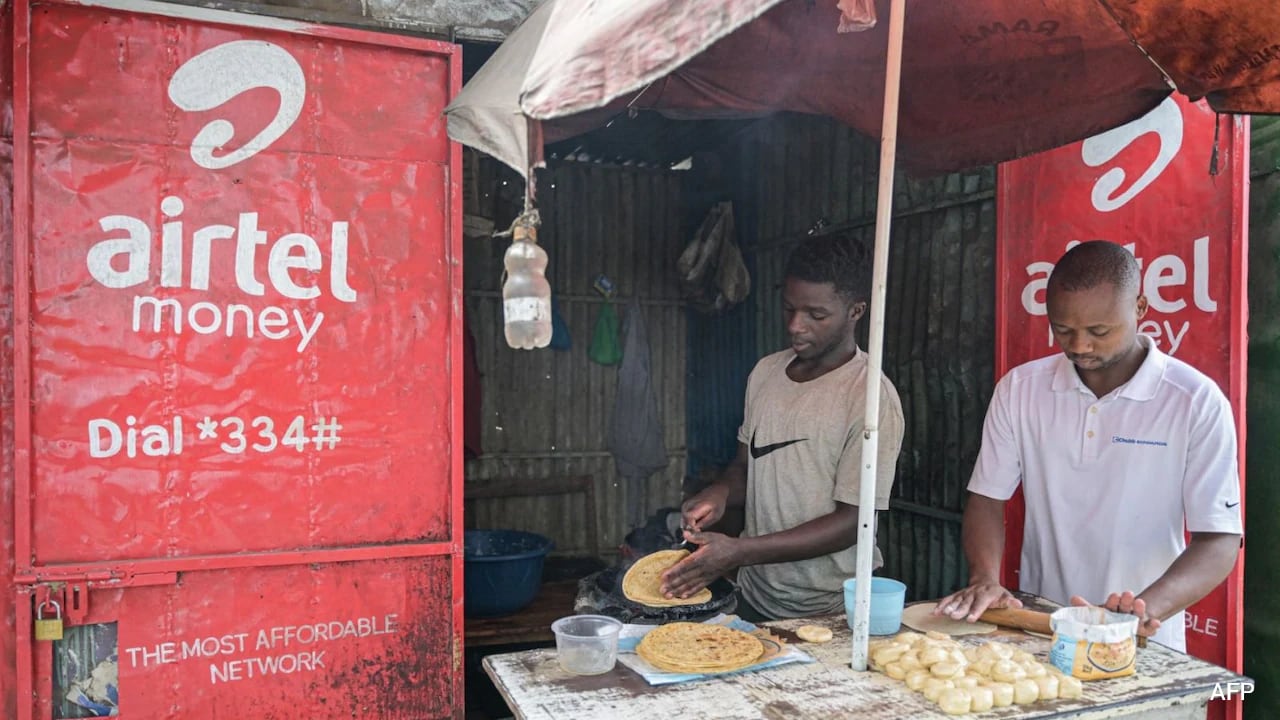
Every financial journalist and sell-side analyst popped cheap champagne when Airtel Africa floated its mobile money arm on the London Stock Exchange. They called it a monumental milestone. They wrote paeans to African financial inclusion, cheered the bridge between frontier liquidity and Western capital markets, and treated the ticker symbol like a golden ticket.
It is nothing of the sort. It is an admission of failure in domestic capital formation.
I have spent the last fifteen years watching telecom giants treat African subsidiaries like cash extraction machines wrapped in corporate social responsibility rhetoric. When a continent-spanning fintech operation has to haul itself to a foreign bourse in the middle of a UK market liquidity drought to find institutional validation, that is not a triumph of globalization. That is a distress flare.
Let us dismantle the lazy consensus piece by piece.
The Foreign Exchange Trap Nobody Wants to Talk About
The standard narrative goes like this: listing in London gives Airtel Money access to deep pools of institutional capital, lowers the cost of capital, and validates the asset class for global investors.
This sounds wonderful in a pitch deck. It falls apart the moment you look at a balance sheet under currency stress.
Airtel Money operates across fourteen sub-Saharan markets where local currencies face chronic depreciation against the US dollar and the British pound. When you list an asset in London, your valuation, your dividends, and your compliance overhead are denominated in hard currency. But your cash flows come from mobile wallet transactions paid in Nigerian Naira, Kenyan Shillings, and Zambian Kwacha.
Every time a local currency slides twenty percent against the pound, the London institutional investor panics. They do not see a growing base of unbanked users buying airtime and paying utility bills. They see foreign exchange exposure eating their dividend yield.
Management is now trapped in a vicious cycle. They must appease foreign shareholders who demand predictable hard-currency returns while operating in environments where currency volatility is a baseline reality. To protect the stock price in London, the local operating entities have to squeeze margins at home, hiking merchant fees and slowing down the very agent network expansion that fueled their growth in the first place.
You cannot build a sustainable financial infrastructure for the African continent on the whims of London hedge fund managers who throw tantrums over emerging market currency fluctuations.
Valuation Arbitrage is a Mirage
Let us address the valuation argument. The bankers who engineered this listing will tell you that African tech assets are chronically undervalued at home because local stock exchanges lack depth. They argue that London provides a fair valuation multiple compared to local bourses in Nairobi, Lagos, or Lusaka.
This is a self-serving myth peddled by advisory firms collecting hefty underwriting fees.
What happens when you list a pure-play African mobile money business on a London exchange? It gets pigeonholed. British and European institutional funds do not understand the unit economics of merchant float management in rural Uganda. They do not grasp why agent liquidity float behaves differently than traditional banking reserves.
Instead of being evaluated as a high-growth fintech disruptor, the stock gets traded as a proxy emerging-market telecom utility with a slightly higher beta. It suffers from the conglomerate discount and the geographic discount simultaneously.
If you want proof, look at the historical trading multiples of African-focused equities listed in London over the last decade. They trade at persistent discounts to their domestic peers or comparable private market transactions because Western markets do not know how to price frontier volatility. You are paying millions in listing fees, compliance costs, and advisory retainers just to trade at a discount in a timezone that does not understand your core customer.
The Regulatory Whiplash
When your parent company is domiciled or listed under Western regulatory oversight, local regulators in Africa take notice. And they do not take it as a compliment.
Central banks in sub-Saharan Africa are waking up to the reality of systemic risk. Mobile money is no longer a cute value-added service for SMS and airtime top-ups; it is the primary national payment rails for entire economies. When a mobile money platform grows large enough to list in London, it becomes a systemically important financial institution in half a dozen sovereign nations.
This triggers an immediate regulatory defensive crouch. Central bank governors in Nairobi and Abuja do not look kindly on foreign bourses exercising governance influence over domestic payment infrastructure.
We are already seeing the friction. Cross-border data residency laws, strict KYC mandates, and sudden transactional tax levies are hitting mobile wallets harder each year. Local regulators want domestic capital retention, local data sovereignty, and direct regulatory control. By tying your flagship fintech crown jewel to a London listing, you invite regulatory friction from both ends. You become a political football between Western ESG mandates and African economic nationalism.
The Real Alternative
So what should have happened?
Imagine a scenario where African telecom conglomerates pooled their resources to build a unified, continent-wide private liquidity market—backed by regional pension funds, sovereign wealth initiatives, and domestic retail participation platforms.
The capital is already there. African pension assets and institutional pools have billions sitting in low-yield government bonds because there are not enough deep, liquid local investment vehicles. Instead of exporting ownership of the continent’s most lucrative financial infrastructure to British pension funds and London stockbrokers, management should have spent that energy deepening local capital markets.
When you allow local citizens to own shares in the payment rails they use every single day, you create a defensive moat that no foreign regulator or currency crash can breach. You build stakeholder capitalism that actually stays in the soil.
Airtel Money on the London Stock Exchange is a triumph for investment bankers, London lawyers, and short-term equity traders. For the long-term health of African financial sovereignty, it is a step backward disguised as a leap forward.
Stop cheering for the extraction of ownership. Start demanding local wealth retention.