The rain in Belfast usually dampens everything. It softens the rough edges of the brick terrace houses, slicks the asphalt, and keeps people indoors, watching television by the warmth of a radiator. But in the summer of 2024, the rain failed to put out the fire.
On a damp August evening, a small supermarket on Sandy Row went up in flames. It was owned by a man named Bashir, who had spent a decade building a life there, selling spices and fresh bread to neighbors who had grown to love him. As the smoke rose into the heavy Northern Irish sky, the crowd outside didn’t look like a typical political protest. Many were teenagers, their faces hidden behind tracksuits and balaclavas, their hands gripping cobblestones and petrol bombs. They weren't shouting about the old divisions of green and orange. They were shouting about an invasion that didn’t exist.
A thousand miles away, in a climate-controlled room in California, a piece of code made a decision.
It didn't know about Belfast’s fragile peace. It didn't know about the Good Friday Agreement, or the decades of blood spilled to keep neighbors from killing each other. It only knew one thing: attention. A post containing a video of a burning car, accompanied by a caption falsely claiming that local hotels were being filled with unvetted, dangerous immigrants, was performing exceptionally well. The metrics were off the charts. People were angry, and angry people stay on their phones.
So, the code did what it was designed to do. It pushed the post to the top of millions of feeds.
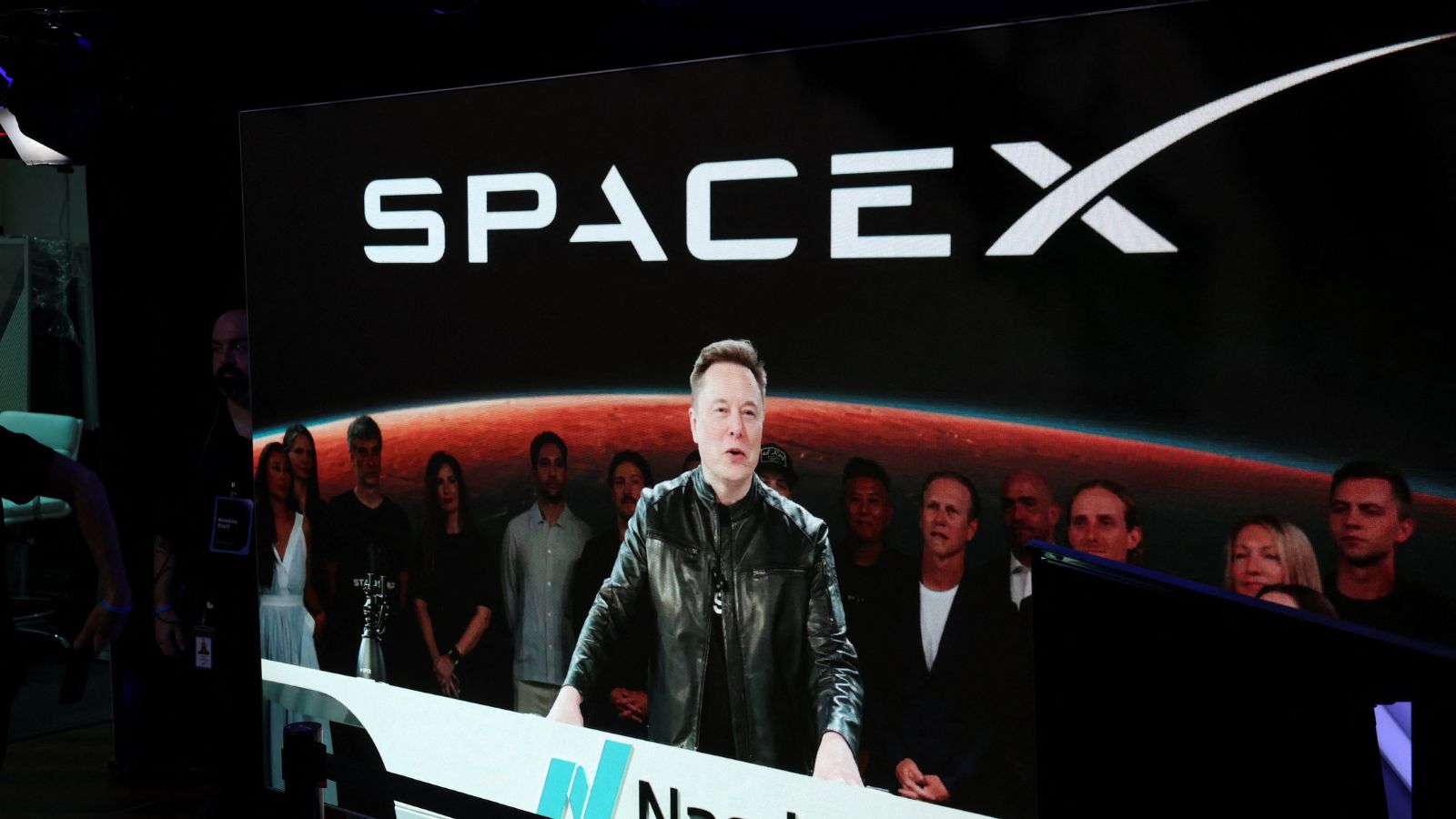
At the center of this digital machine sat Elon Musk. He wasn't just the owner of the platform formerly known as Twitter; he was its most powerful accelerant. During those critical days when Belfast, Southport, and Plymouth were teetering on the edge of chaos, Musk’s personal account became a megaphone for the very rhetoric feeding the flames on Sandy Row.
To understand how a billionaire in California can influence a riot in Northern Ireland, we have to stop looking at social media as a public square. It is a factory. And anger is the raw material.
The Frictionless Match
In the old days of media, spreading a lie took effort. You had to print pamphlets, or stand on a soapbox, or convince a fringe newspaper to run your story. There was friction. That friction gave communities time to breathe, to fact-check, to let tempers cool.
Algorithms removed the friction.
When riots broke out across the UK following the tragic stabbing of three young girls in Southport, a wave of disinformation swept the internet. The false rumor that the attacker was an undocumented asylum seeker spread like wildfire. In Belfast, a city with deep, historical muscle memory for street violence, this spark found dry tinder.
But a spark needs oxygen. Musk provided it, not just by allowing banned far-right accounts back onto the platform under the banner of absolute free speech, but by actively engaging with them. When a far-right agitator posted videos of smoke rising from British streets, Musk replied to his 190 million followers: "Civil war is inevitable."
Think about the weight of those words. They weren't muttered in a backroom. They were beamed directly into the pockets of anxious, frustrated people sitting in towns where manufacturing had died and public services were crumbling. For a young man in Belfast, feeling forgotten by his government and left behind by the economy, that tweet wasn't a casual observation. It was a validation. If the richest man in the world says a civil war is coming, then throwing a brick at a local grocery store stops feeling like a crime. It starts feeling like a duty.
The impact was immediate. Researchers at the Institute for Strategic Dialogue tracked a massive surge in xénophobic content and targeted hashtags in the days surrounding the Belfast riots. The platform’s recommendation engine actively steered users toward more extreme content. If you clicked on a video out of curiosity, your feed was flooded with anti-immigrant rhetoric within minutes. The algorithm didn't care if the content was true. It only cared that you were looking.
The View from the Counter
We often talk about tech policy in the abstract. We debate Section 230, content moderation frameworks, and algorithmic transparency. But those abstractions have a human cost.
Consider what happens next when the digital world collides with the physical one.
When the rioters reached the lower Ormeau Road, a diverse neighborhood that had spent years cultivating a sense of shared community, the fear was palpable. Business owners boarded up their windows. Families barricaded their doors. A local community worker, who asked to remain anonymous for fear of reprisal, described the atmosphere as a suffocating weight.
"We’ve spent twenty-five years trying to convince young people that violence achieves nothing," she said. "Then, over the course of forty-eight hours, they see people online becoming international celebrities for burning down a bus. How do you compete with that? How do you tell a kid to go to school and work hard when the internet is telling them that their country is being stolen and they need to fight?"
This is the hidden cost of the modern attention economy. The business model relies on engagement, and nothing engages human beings quite like fear and tribalism. We are hardwired to pay attention to threats. If a platform’s primary goal is to keep our eyes glued to the screen, it will inevitably prioritize content that triggers our survival instincts.
Musk’s defense has always been rooted in a simplistic definition of free speech. He views the platform as a mirror reflecting society, flaws and all. But a mirror doesn't choose which parts of your face to magnify. A mirror doesn't take the angriest voice in the room and hand them a microphone connected to a stadium sound system.
When the algorithm amplifies a xenophobic trope, it isn't practicing free speech. It is practicing amplification for profit. Every second a user spends scrolling through an enraged comment section is a second they are viewing advertisements. The burning shops of Belfast were, in a very literal sense, content that monetized beautifully.
The Architecture of Misdirection
It is tempting to view this as a purely political problem, a clash between the left and the right. But that misses the deeper, more unsettling reality. The true division isn't between ideologies; it is between those who live in the physical world and those who profit from its disintegration.
During the height of the unrest, independent journalists and fact-checkers worked frantically to debunk the rumors. They pointed out that the Southport attacker was born in Cardiff. They showed that the statistics being quoted about immigrant crime rates were entirely fabricated. They brought receipts.
But truth is slow. It requires nuance, context, and verification. A lie can travel around the world before the truth can get its boots on, and on a platform optimized for speed, the truth never stood a chance. The verified blue checkmarks, once a symbol of journalistic credibility, had been repurposed by Musk into a paid subscription feature. Anyone with eight dollars could buy prominence. The result was a democratization not of speech, but of deception. The voices of trusted local reporters were buried beneath a avalanche of accounts with no connection to Northern Ireland, many operating out of foreign troll farms, all pushing the same coordinated narrative.
The physical reality of Belfast became irrelevant. The city was merely a backdrop for a global digital culture war.
This creates a profound sense of dislocation for the people on the ground. You look out your window and see your neighbors helping a store owner clean up broken glass. You see hundreds of people gathering in the rain for an anti-racism rally, holding signs that say "Refugees Welcome." But you look at your phone, and the narrative is entirely different. On the screen, the city is an active war zone, an outpost in a racial holy war.
Which reality do you choose to believe? Over time, the digital reality begins to bleed into the physical one. People start acting based on the information on their screens, changing their behavior, avoiding certain streets, looking at their neighbors with suspicion. The social fabric doesn't tear all at once. It frays, thread by thread, until it can no longer hold the weight of a community.
The Unaccountable Sovereign
The traditional levers of democracy are poorly equipped to handle this. When a local newspaper prints a libelous statement, they can be sued. When a television station incites violence, they can lose their license. Governments possess clear mechanisms to hold traditional media institutions accountable to the public interest.
A tech billionaire operating across borders is largely immune to these levers.
When European officials warned Musk about the spread of harmful disinformation on his platform, his response was a dismissive meme. He positioned himself as a defender of liberty against tyrannical bureaucrats. But the liberty he defended looked a lot like the liberty of a firebrand to scream fire in a crowded theater, while he owned the theater and sold tickets to the stampede.
The sheer scale of this power asymmetry is terrifying. A single individual, driven by personal whims and ideological eccentricties, possesses the capability to alter the information ecosystem of an entire nation during a crisis. He can tweak a line of code, change a recommendation weight, or pin a specific video to the top of every feed, and the ripple effects will be felt on the streets of cities he has likely never visited.
This isn't about censorship. It is about accountability. We have allowed the digital infrastructure of our public discourse to be privatized and optimized for outrage, and we are now reaping the harvest.
The Embers that Remain
A few weeks after the riots, the rain returned to Belfast, persistent and cold. The boarded-up windows on Sandy Row were slowly replaced with fresh glass. Bashir’s shop remained closed, its charred interior a silent testament to the week the internet came to town.
The teenagers who threw the petrol bombs went back to the street corners, their phones still glowing in the dark. The algorithm didn't stop because the riots ended. It simply moved on to the next flashpoint, the next crisis, the next opportunity to capture human attention through conflict.
We tend to view these technological shifts as inevitable, a natural evolution of human progress. But there is nothing natural about a system designed to make us hate each other for profit. It was built by human hands, programmed by human minds, and maintained for human enrichment.
As the city heals its physical wounds, the deeper question remains unanswered. How do you rebuild trust in a community when the device in everyone’s pocket is constantly working to undermine it?
On the pavement outside the burned-out supermarket, someone had left a small bunch of flowers. The card attached didn't offer a grand political statement or a technical solution to algorithmic bias. It simply said, in messy, handwritten script: We are still here.
It was a quiet reminder of the physical world, stubborn and resilient, refusing to be entirely erased by the digital storm. But across the street, a young man pulled his jacket tight against the rain, unlocked his phone, and began to scroll.