The High Cost of Cheap Solutions
Most "pre-spring cleaning" guides are written by people who have never actually scrubbed a floor in their lives. They are curated by affiliate marketers looking to move high volumes of low-cost plastic junk from Amazon warehouses to your utility closet. They tell you that a $20 handheld vacuum or a set of color-coded microfiber cloths will revolutionize your home.
They won't. They are landfill fodder.
The industry standard for "cleaning" has devolved into a cycle of buying more stuff to manage the stuff you already have. It is a feedback loop of consumerism disguised as domestic productivity. If you want a clean house, you don't need a viral "scrub daddy" or a motorized spin brush that stalls the moment you apply actual pressure. You need a shift in physics and a ruthless audit of your inventory.
The Battery-Powered Lie
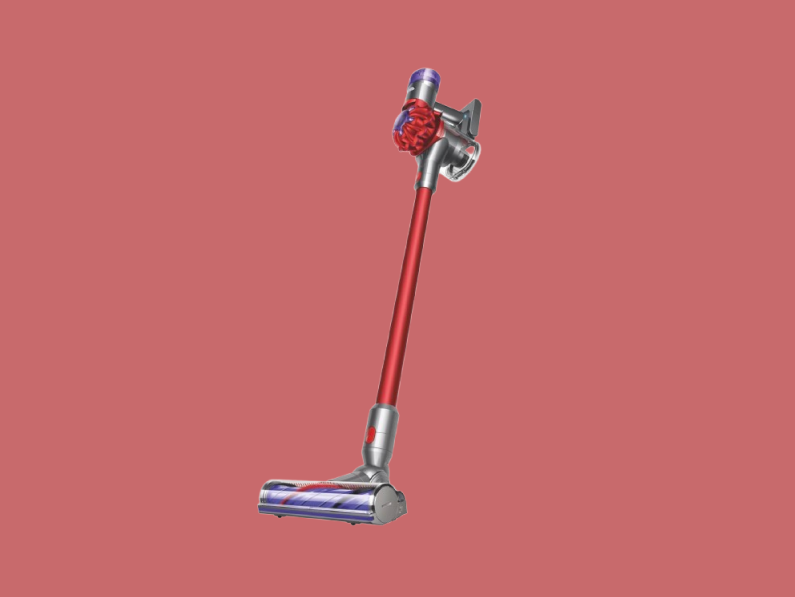
The first thing every "best of" list tries to sell you is a cordless, handheld vacuum for your baseboards or keyboard.
Here is the mechanical truth: Unless you are spending $600+ on a high-end unit with a digital motor, your cordless vacuum is a toy. Suction power is measured in Air Watts or Pascals ($Pa$). A standard plug-in upright vacuum pulls roughly $20,000$ to $25,000\ Pa$. That cheap, rechargeable Amazon "top seller"? It struggles to hit $6,000\ Pa$ and the battery starts degrading the moment you take it out of the box.
You aren't cleaning; you're just moving dust around with a vibrating stick.
Why Corded is Still King
- Continuous Power: A motor tied to a wall outlet doesn't have a "low power mode" to save battery. It sucks at 100% capacity until you turn it off.
- Lifespan: Lithium-ion batteries in cheap cleaning tech are designed to fail within 24 months. A high-quality Miele or Sebo corded vacuum will last 20 years.
- The Weight Ratio: Batteries are heavy. In a cordless unit, you are using 40% of your energy just to lift the power source. That’s inefficient ergonomics.
Stop Buying Specialized Chemicals
The "Cleaning Industrial Complex" wants you to believe that you need a different bottle for your windows, your counters, your floor, and your shower.
It is the same five ingredients rebranded with different scents.
Walk into any professional commercial cleaning supply house—the places that keep hospitals and hotels sterile—and you won't see 50 different spray bottles. You’ll see concentrated surfactants and pH-balanced solutions.
The Chemistry of the Scam
Most Amazon "spring cleaning" kits include "all-natural" sprays that are essentially 95% water and 5% fragrance. They don't have the chemical load to actually break down lipids or mineral deposits.
If you want to actually clean, you need to understand the pH scale:
- Acidic (pH 0-6): Used for mineral deposits, hard water stains, and rust. Think Citric Acid or Vinegar.
- Neutral (pH 7): Used for general dusting and surfaces that can be damaged by harshness (like marble).
- Alkaline (pH 8-14): Used for organic matter, grease, and oils. Most soaps fall here.
When a guide tells you to buy a "specialized kitchen degreaser" and a "specialized bathroom cleaner," they are often selling you two products with the exact same pH level. You are paying for the label.
The Microfiber Myth
Every curator suggests buying a 50-pack of cheap microfiber cloths. This is environmental and functional malpractice.
Cheap microfiber is made of polyester and polyamide blends that are poorly split. Instead of "hooking" the dust, they just smear it. Furthermore, every time you wash those cheap Amazon cloths, thousands of microplastics enter the water system.
The Pro Alternative: The Huck Towel
I’ve spent years consulting for high-end estate managers. They don't use microfiber. They use Huck Towels. These are 100% cotton, lint-free towels used in surgical rooms.
- They are absorbent.
- They are indestructible.
- They don't hold onto smells like synthetic fibers do.
Buying 100 cheap microfiber cloths is a sign you plan on failing. Buying 12 industrial huck towels is a sign you're ready to work.
The "Organizing" Trap
The most dangerous items in any "Pre-Spring Cleaning" list are the organizers. The clear acrylic bins. The drawer dividers. The over-the-door shoe racks.
Organization is the procrastination of disposal.
When you buy a bin to hold your "miscellaneous" items, you aren't cleaning. You are just giving your clutter a more expensive coffin. The "Curator" style articles love these because they look great in photos. They create a "Pinterest-perfect" aesthetic that lasts for exactly three days until the bins are overflowing again.
The Brutal Audit Method
Before you buy a single storage container from Amazon:
- Empty the space entirely.
- Touch every single object.
- If you haven't used it since the last spring cleaning, throw it away. Do not donate "maybe" items—that’s just moving your trash to a different building.
- Only when the volume of your possessions has decreased by 30% are you allowed to look at storage.
Most people don't need more storage; they need fewer things.
Automation is a Gimmick
Robot mops are the peak of this consumer delusion. The idea that a 5-pound circular puck dragging a damp rag across your floor can "clean" is laughable to anyone who has ever seen a mop bucket after a real session.
Cleaning requires agitation and extraction.
A robot mop provides almost zero agitation and zero extraction. It simply spreads a thin film of diluted dirt evenly across your floor. If you want clean floors, buy a spin mop with a dual-bucket system (one for clean water, one for dirty). It’s not "smart," it’s not "connected," and it doesn't have an app. It just works.
The "Scrubbing" Fallacy
Amazon is currently flooded with "Electric Spin Scrubbers." These are essentially oversized toothbrushes on a stick. People love them because they promise to do the "hard work" for you.
Here’s the problem: The torque on these machines is pathetic. To actually remove grout stain or soap scum, you need physical force. These motors are designed to stop if you push too hard to prevent the cheap plastic gears from stripping.
You are paying $50 for a tool that performs worse than a $5 hand brush and some elbow grease. The tool isn't saving you time; it’s making the task take longer because you’re waiting for a weak motor to do what a human can do in one swipe.
Stop Following "Lists"
The "Daily/Weekly/Monthly" cleaning checklists provided by these lifestyle blogs are designed for a house that doesn't exist. They are rigid, guilt-inducing, and ignore the specific biology of your home.
Your house has "hot spots." Maybe it’s the mudroom, maybe it’s the area around the dog’s bowl. Following a generic list that tells you to "dust the ceiling fans" while your entryway is caked in salt and mud is a waste of your limited cognitive energy.
Data-Driven Cleaning
Identify the high-traffic zones. Clean those daily. Everything else is secondary.
Spring cleaning shouldn't be a frantic week of buying gadgets and panic-scrubbing. It should be the one time a year you look at your home’s systems and realize they are broken because you have too much junk and too many "tools" that don't actually work.
Delete the Amazon cart. Throw away the plastic bins. Buy one gallon of neutral cleaner, a stack of cotton towels, and a heavy-duty corded vacuum.
Get on your knees and start scrubbing. Anything else is just theater.
Would you like me to break down the specific chemical concentrations you should look for in professional-grade cleaners to replace your cabinet full of spray bottles?