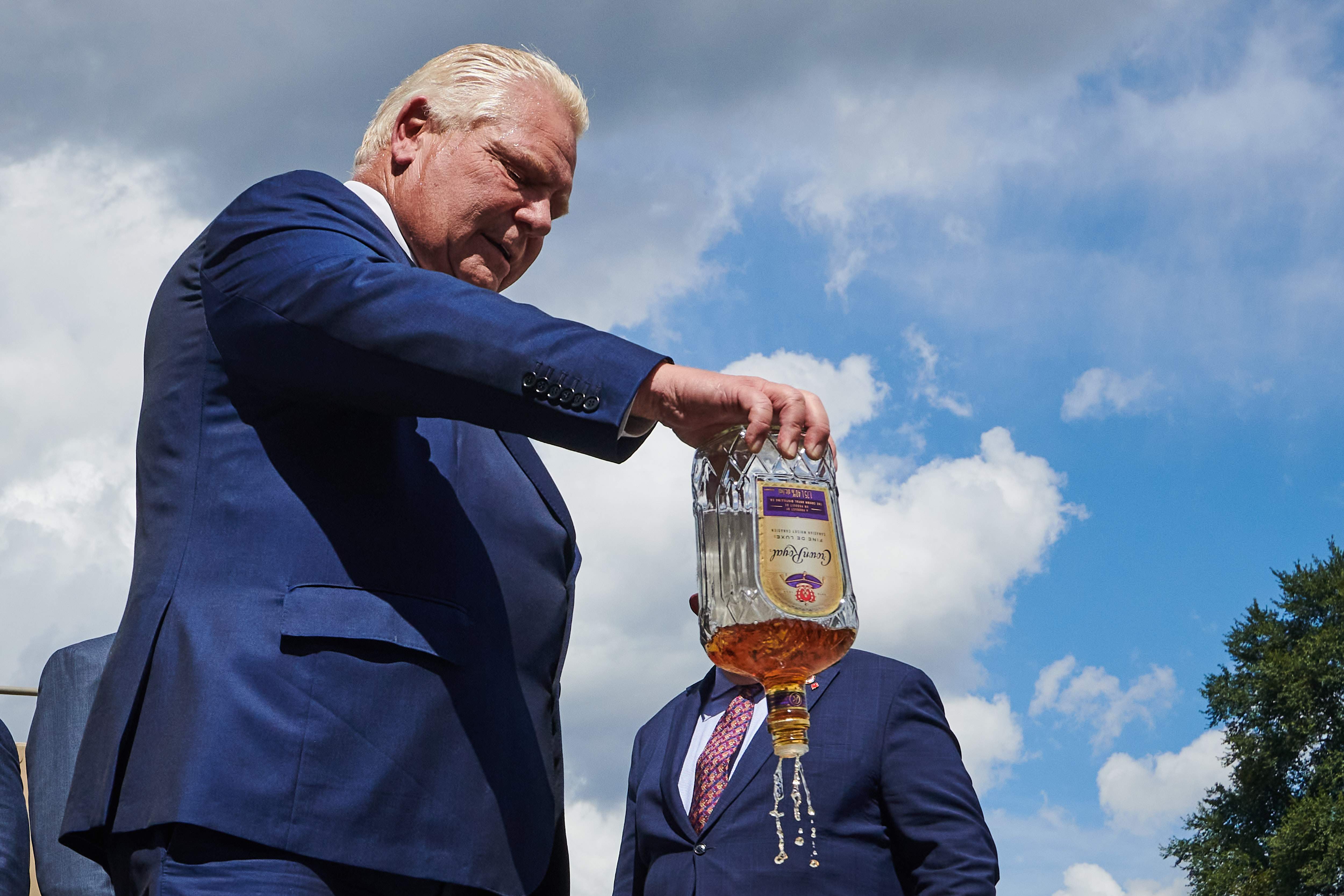
The outrage in Amherstburg isn't about whiskey. It’s about a fundamental misunderstanding of how capital moves in the 21st century.
Mayor Michael Prue is currently championing a narrative that feels good in a stump speech but falls apart the moment it touches a balance sheet. He argues that the town should have kept the "Crown Royal" name on the local maturation plant until a sale was finalized. He calls it a "slap in the face." He thinks a sign on a fence is a bargaining chip.
He is wrong.
In fact, his insistence on clinging to the branding of a departed corporate giant is the exact kind of "sentimental economics" that keeps small towns stagnant while the rest of the world evolves. Diago—the multi-billion dollar parent company—didn't strip the Crown Royal name to insult the locals. They did it because they are professional operators who understand that brand equity and physical real estate are two entirely different assets.
If you want to save Amherstburg, you have to stop acting like a jilted lover and start acting like a venture capitalist.
The Myth of Branding as Leverage
The "lazy consensus" here is that the Crown Royal name added value to the facility. The logic suggests that a buyer would see the purple bag legacy and pay a premium.
This is a fantasy.
Any serious industrial buyer—whether they are in spirits, logistics, or manufacturing—does not care what the sign says. They care about the zoning, the square footage, the environmental liabilities, and the utility hookups. By demanding the brand stay on the building, the town is essentially asking Diageo to subsidize a lie. Imagine a scenario where you try to sell your 2012 Honda Civic but insist on keeping a "Ferrari" badge on the hood to "maintain its dignity." The buyer isn't fooled; they just think you’re difficult to work with.
Diageo is protecting its trademark. They are moving their production to a new $245 million facility in St. Clair Township. Why would they leave their flagship brand’s intellectual property on a site they no longer control? They wouldn’t. And no amount of local council posturing will change the fact that once the whiskey leaves the barrels, the brand leaves the gate.
The "Anchor Tenant" Trap
Small-town politics is obsessed with the "Anchor Tenant." Everyone wants the big, shiny name to stay forever. But there is a hidden cost to being a company town: Total Fragility.
When a town’s identity is wrapped up in a single brand, the town loses its ability to pivot. I’ve seen municipalities blow years of potential growth waiting for a "suitable replacement" for a departed factory, rejecting smaller, more agile businesses because they don't have the same prestige.
Amherstburg’s insistence that this plant is the "Crown Royal plant" prevents it from becoming the Amherstburg Innovation Hub or the Northstar Logistics Center. By clinging to the ghost of a brand that has already moved on, the leadership is effectively telling new investors that they are second-choice rebounds.
The Brutal Reality of Industrial Real Estate
Let’s talk about the math that politicians hate.
The maturation plant is a specialized asset. It’s designed for one thing: holding barrels. To make that site attractive to a diverse range of buyers, it needs to be stripped of its specific identity.
- De-risking for the Buyer: A new company doesn't want to move into "the old Crown Royal building." They want a clean slate where they can build their own culture.
- Liability Management: Keeping the name on the site creates a "long tail" of brand risk for Diageo. If a secondary buyer has an industrial accident at the "Crown Royal plant," the headlines write themselves. No corporate legal department on earth would allow that.
- Market Velocity: The faster the site is neutralized, the faster it can be rezoned or repurposed.
Mayor Prue’s desire for the "status quo" to remain until a sale is a recipe for a "zombie site." These are properties that sit empty for decades because the seller and the local government are locked in a pride-based stalemate over what the site "should" be rather than what the market says it is.
The People Also Ask (and the Answers are Ugly)
People ask: “Doesn't the town deserve respect for decades of loyalty?”
In the world of global spirits, loyalty is a line item that gets depreciated over 20 years. Diageo provided jobs and tax revenue for decades. That was the contract. The contract is now over. Expecting a multi-national corporation to behave like a neighbor who borrows a lawnmower is a category error.
People ask: “Won't the removal of the sign hurt property values?”
No. What hurts property values is a vacant, decaying industrial site that becomes a symbol of "what used to be." The sign coming down is the first step of the grieving process. The sooner the town reaches "acceptance," the sooner it can start courting the next generation of industry.
Stop Looking Back
The real tragedy in Amherstburg isn't the loss of a logo. It’s the energy being wasted on a fight that was lost the moment Diageo broke ground in St. Clair.
If I were advising the council, I’d tell them to stop issuing press releases about "disrespect" and start offering aggressive tax abatements for the first three tech or light-manufacturing firms that agree to take over a portion of that acreage.
The "Crown Royal" era is over. The "Amherstburg" era needs to start.
Stop fighting for the right to keep a corporate logo on a fence. It’s not your brand. It’s not your whiskey. And it’s definitely not your future.
Burn the old jerseys and get back on the field.


