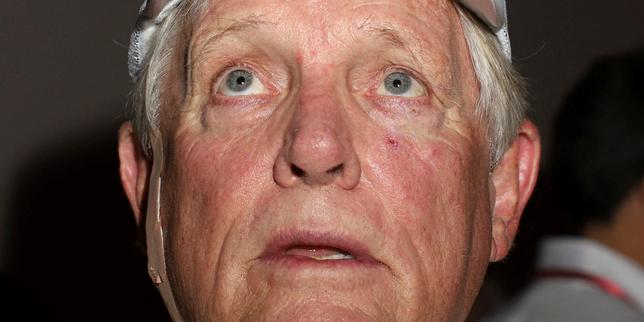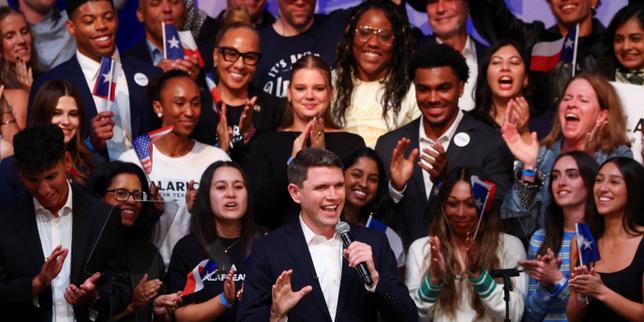
Media coverage of the November 3, 2026 midterm elections in Austin focused heavily on surface-level atmospherics: watch parties at the Long Center, emotional reactions in hotel ballrooms, and post-victory stops at local restaurants. That framing misses the structural mechanics of what occurred. When Democratic state representatives James Talarico and Gina Hinojosa won their respective races for the U.S. Senate and the Texas governorship—defeating Republican Attorney General Ken Paxton and three-term incumbent Governor Greg Abbott—they ended a 32-year statewide Democratic drought. The celebration in Travis County was not an isolated urban anomaly; it was the visible output of a coordinated statewide ticket alignment, demographic elasticity, and an aggressive economic counter-narrative.
The Structural Failure of Atmospheric Reporting
Standard election-night photo essays reduce political realignments to emotional theater. By focusing exclusively on crowd reactions in Austin, conventional reporting obscures the causal variables that allowed two Austin-based legislators to scale their appeal across suburban and rural Texas.
To understand the 2026 Texas midterm results, analysts must separate local enthusiasm from statewide conversion mechanics:
- The Urban Base Fallacy: Austin has functioned as a reliable Democratic stronghold for decades. High turnout in Travis County is a baseline condition for any competitive statewide Democratic campaign, not an explanatory variable for victory.
- Ticket-Splitting Compression: In previous cycles, statewide Democratic candidates suffered from steep down-ballot drop-off or uneven performance across top-of-ticket races. In 2026, Talarico captured approximately 55% of the vote (5,447,080 votes) while Hinojosa secured roughly 53% (5,232,690 votes), accompanied by Democratic victories in lieutenant governor, attorney general, comptroller, land commissioner, agriculture commissioner, and railroad commissioner contests.
- Incumbency Vulnerability: Greg Abbott entered the cycle seeking a record fourth term after winning the March 3, 2026 Republican primary with 82% of the vote. Ken Paxton entered the general election carrying years of accumulated institutional friction. Voters did not merely turn out in Austin; independent and disaffected suburban voters actively defected from entrenched Republican leadership.
The Three Pillars of the 2026 Texas Ticket Alignment
The synchronized victories of Talarico and Hinojosa relied on three operational pillars that neutralized traditional Republican structural advantages in Texas.
1. Geographic and Demographic Complementarity
Austin politicians historically struggle to build credibility outside the Interstate 35 corridor. Talarico and Hinojosa solved this through deliberate ticket pairing that bridged distinct voter blocs. Hinojosa, who won the Democratic primary with 59% of the vote, consolidated Hispanic voters across South Texas and urban centers, positioning herself to become the state's first Latina governor and first Democratic governor since Ann Richards in 1990. Simultaneously, Talarico leveraged a background in public education and seminary training to lower cultural resistance among suburban independents and moderate swing voters in Central and North Texas. Rather than competing for identical media oxygen, the two campaigns operated as a unified ticket in the final stretch, pooling ground-game infrastructure and shared rally stages.
2. Resource Allocation and Infrastructure Critique
For over two decades, Texas Republicans maintained dominance by anchoring their brand to deregulation, corporate relocation, and macro-economic growth. Hinojosa directly attacked the negative externalities of that model. During the campaign, she called for a moratorium on new data center construction in Texas alongside stricter guardrails on water and electricity consumption for existing facilities, arguing that everyday residents were subsidizing utility costs for billionaire-owned infrastructure.
This message converted abstract grid anxiety into a tangible pocketbook issue. By framing unchecked industrial expansion as a direct tax on household water and power bills, the Democratic ticket bypassed traditional partisan culture-war traps and established an economic populist wedge.
3. Contrast Against Entrenched Incumbency
In high-turnout midterm environments, longevity in office transitions from an asset to a liability when voters perceive institutional stagnation. Abbott’s bid for a fourth consecutive term made him the sole proprietor of state-level policy outcomes over a 12-year span. Combined with Paxton’s polarizing tenure as Attorney General, the Republican top of the ticket offered voters continuity at a moment when the electorate demanded structural disruption. Talarico and Hinojosa positioned themselves as legislative reformers capable of auditing state agencies rather than extending a decades-old political apparatus.
Quantifying the Realignment
While final certified county-by-county canvas audits continue to refine exact margins, preliminary returns (with 99% of precincts reporting) demonstrate the scale of the shift across the state:
- Gubernatorial Margin Expansion: Hinojosa’s 52.82% to 45.69% margin over Abbott represents the largest victory margin for a Democratic gubernatorial candidate in Texas since 1982, marking the first time an incumbent Texas governor lost reelection since Richards in 1994.
- Senate Flip Execution: Talarico’s 55% showing against Paxton flipped a critical U.S. Senate seat, contributing directly to Democrats regaining control of the upper chamber nationally.
- Down-Ballot Synchronization: Democratic sweeps across the Texas Supreme Court races (Chief Justice, Places 2, 7, and 8) and executive offices confirm that the Austin victories were not candidate-specific outliers. Voters cast straight-ticket ideological ballots rather than selectively punishing individual Republican figures.
Cause-and-Effect Mechanics in Austin
The scenes captured at the Long Center and downtown Austin hotels on November 3 were the terminal phase of a multi-year feedback loop. When Texas Democrats failed in 2018, 2020, and 2022, national donors treated the state as an expensive vanity project, starving down-ballot infrastructure of sustained capital.
In 2026, two state representatives from Travis County—Talarico representing House District 50 and Hinojosa representing House District 49—inverted the traditional top-down campaign model. Instead of parachuting national consultants into local districts, they exported Austin-tested legislative organizing frameworks statewide. High volunteer density in Central Texas funded and staffed voter contact operations in contested suburban ring counties, creating a multiplier effect that overwhelmed Republican turnout operations.
Strategic Constraints and Governance Risks
Winning statewide office in Texas does not automatically dismantle institutional friction. As Talarico transitions to the U.S. Senate and Hinojosa prepares to take office as governor, both face severe operational bottlenecks that limit immediate policy execution:
- Executive-Legislative Friction: Even with a Democratic sweep of statewide executive offices, governance in Texas remains constrained by the biennial legislative calendar and entrenched committee structures in the Texas House and Senate. If Republicans retain procedural leverage in either chamber or across rural judicial circuits, sweeping regulatory overhauls—such as an immediate statewide data center moratorium—will face immediate legal injunctions and legislative gridlock.
- Suburban Coalition Fragility: The suburban swing voters who backed Talarico and Hinojosa in 2026 did so largely as a check on Republican governance and utility cost inflation, not as an endorsement of progressive orthodoxy. Overreaching on regulatory or fiscal policy during the first 180 days will trigger rapid elasticity, snapping those moderate precincts back toward the GOP in 2028.
- Nationalized Polarization: President Donald Trump immediately signaled willingness to use executive veto power against a Democratic Senate. Talarico will operate in a hyper-polarized Washington environment where delivering tangible federal infrastructure or border-management appropriations for Texas requires bipartisan negotiation without alienating his base.
The Strategic Mandate for 2027
To convert a midterm wave into a durable governing majority, Texas Democrats must abandon celebratory post-mortems and execute three immediate structural plays before the 2027 legislative session convenes:
- Codify Utility and Grid Protections First: Governor-elect Hinojosa must anchor her first 100 days to measurable consumer relief on electricity rates and water conservation standards for industrial facilities. Delivering visible utility bill stabilization validates her core campaign thesis and locks in suburban independent support.
- Institutionalize Year-Round County Infrastructure: The Texas Democratic Party must redirect post-election fundraising away from Austin media markets and permanently fund field offices in the suburban ring counties surrounding Dallas-Fort Worth, Houston, and San Antonio, as well as South Texas border counties where competitive congressional districts (such as TX-28 and TX-34) remain battlegrounds.
- Establish Legislative Discipline: Talarico and Hinojosa must maintain strict message alignment between Washington and Austin, framing every federal and state policy initiative around household cost reduction and institutional accountability rather than partisan ideology.
The 2026 election proved that Texas is no longer structurally out of reach for Democrats. Whether November 3 stands as a permanent realignment or a one-cycle protest vote depends entirely on administrative execution over the next 24 months.
For visual coverage of the election night watch parties and victory speeches in Central Texas, review FOX 7 Austin's 2026 Midterm Elections broadcast, which captures the immediate on-the-ground reaction to the statewide Democratic sweep.