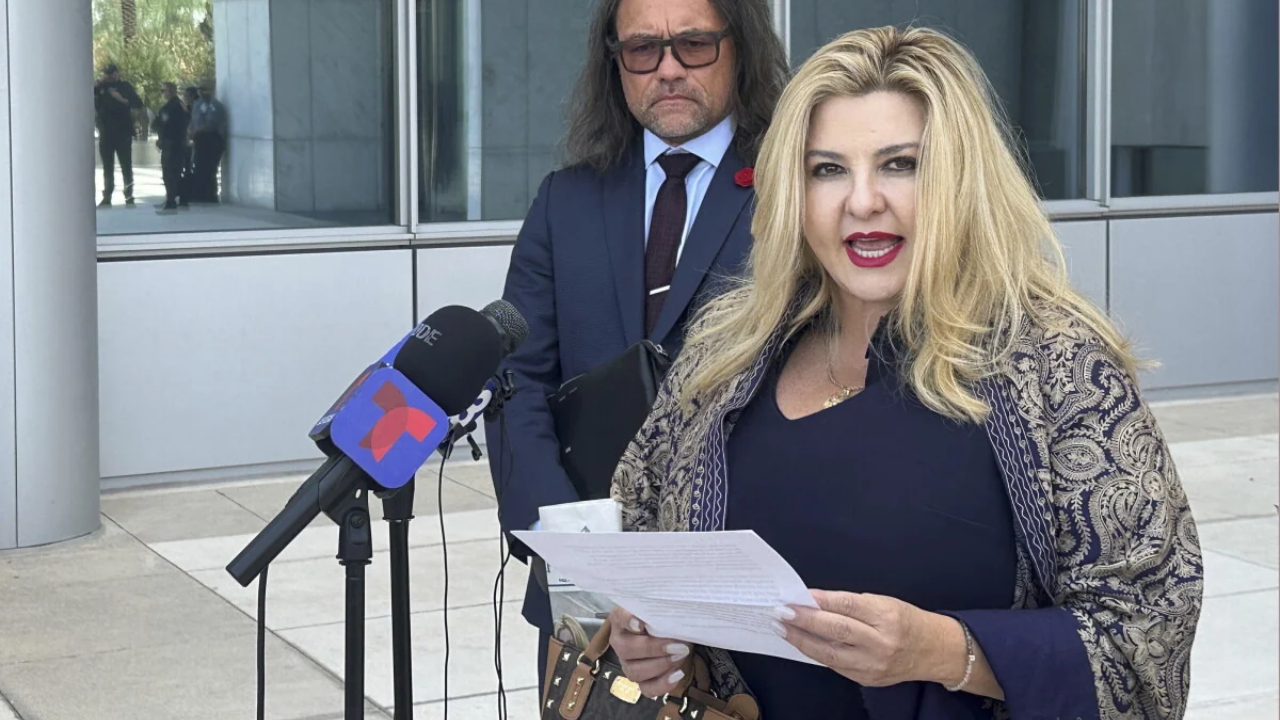
Political charity fraud relies on a specific structural vulnerability: the gap between emotional donor intent and opaque fiduciary oversight. In October 2024, a federal jury in Nevada convicted former Las Vegas City Councilwoman Michele Fiore on seven felony fraud counts—one count of conspiracy to commit wire fraud and six counts of wire fraud—after prosecutors proved she solicited over $70,000 for a memorial honoring slain police officers and diverted 100 percent of those funds to personal and political expenses. While standard news coverage treats this conviction as an isolated moral failure, an operational audit reveals a replicable systemic exploit involving affinity signaling, commingled accounts, and regulatory arbitrage between campaign finance and charitable solicitation.
The Architecture of Affinity Exploitation
Traditional fraud requires manufacturing credibility from scratch. Public-sector affinity fraud bypasses this acquisition cost by weaponizing institutional trust. Donors contributing to a memorial for fallen law enforcement—specifically Las Vegas Metropolitan Police Department Officers Alyn Beck and Igor Soldo, killed in the line of duty in 2014—operate under an implicit verification heuristic. When a sitting municipal official solicits funds for a civic monument, contributors assume institutional guardrails govern the transaction.
This mechanism operates across three distinct phases:
- Cause Hijacking: The solicitor attaches a fundraising apparatus to an emotionally resonant, unassailable civic tragedy. Donors rarely audit the administrative backend of a police memorial because questioning the fundraiser feels socially equivalent to questioning the sacrifice of the officers.
- Entity Obscuration: Rather than routing contributions through an established, audited municipal foundation or a transparent 501(c)(3) with public Form 990 filings, funds are directed into closely held political action committees (PACs) or loosely structured non-profit entities controlled by the solicitor and immediate associates.
- Conversion Velocity: Once liquidity enters an entity lacking dual-signature controls or independent board oversight, capital is rapidly converted into non-traceable or commingled disbursements before external stakeholders notice the absence of physical progress on the promised project.
In the Fiore case, the conversion rate was absolute. Federal prosecutors demonstrated that not a single dollar of the $70,000-plus raised went toward the bronze statue or memorial infrastructure. Instead, the capital functioned as a slush fund subsidizing personal rent, cosmetic surgery, political fundraising overhead, and expenses tied to her daughter’s wedding.
Deconstructing the Wire Fraud Mechanics
To secure a conviction under 18 U.S.C. § 1343 (wire fraud), federal prosecutors do not merely prove poor accounting or project mismanagement; they must establish a specific intent to defraud paired with interstate electronic communications. The prosecution’s blueprint in the District of Nevada relied on contrasting explicit donor representations against ledger reality.
- The Misrepresentation Vector: Solicitation materials, emails, and public statements explicitly restricted the use of funds. Donors were told their capital would exclusively finance the construction of a memorial statue. Under contract and fraud law, restricting the purpose of a charitable gift creates a fiduciary obligation.
- The Commingling Trap: Politicians frequently operate multiple financial vehicles simultaneously—campaign accounts, leadership PACs, personal LLCs, and charitable foundations. By moving money across these accounts, the operator creates administrative friction designed to confuse casual observers. Forensic accountants from the FBI Las Vegas Field Office dismantled this defense by tracing incoming donor checks and electronic transfers directly to outbound personal expenditures.
- The Zero-Allocation Proof: Defense strategies in charity fraud typically argue administrative overhead—claiming that 70 or 80 percent of funds went to "awareness," "event hosting," or "consultant fees," leaving a small fraction for the cause. When allocation to the stated charitable purpose equals zero, the administrative overhead defense collapses entirely.
Regulatory Arbitrage Between Campaign and Charity Law
Why do municipal and state politicians repeatedly target charitable memorials rather than inflating standard campaign expenses? The answer lies in asymmetric oversight and donor psychology.
Campaign finance law enforces strict contribution limits, mandatory quarterly or pre-election disclosures, and itemized expenditure reporting. Every dollar entering and leaving a candidate's campaign committee is published in a searchable database scrutinized by opposing campaigns, investigative journalists, and state ethics commissions. Paying personal rent or wedding bills directly from a campaign account triggers immediate automated flags and civil penalties.
Charitable solicitations for civic projects exploit a regulatory blind spot:
- Uncapped Contribution Ceilings: Unlike political donations, which are capped by statutory limits per election cycle, individuals and corporations can write five-figure checks to a memorial fund without triggering campaign finance alarms.
- Delayed Reporting Windows: Newly formed non-profits or ad-hoc memorial committees often operate for months—or over a year—before their first mandatory IRS filing comes due. This creates a prolonged operational window where funds can be collected and spent entirely out of public view.
- Donor Base Expansion: Civic memorials attract contributions from apolitical citizens, local businesses, and union members who would never donate to a partisan political campaign. The solicitor effectively expands their total addressable market of donors while bypassing political disclosure rules.
The Institutional Fallout and Post-Conviction Friction
The legal timeline following the October 2024 verdict illustrates the tension between federal executive clemency and state-level judicial discipline. Following her time on the Las Vegas City Council (2017–2022) and an unsuccessful 2022 bid for Nevada State Treasurer, Fiore had transitioned into the state judiciary, securing an appointment and subsequent election as a Justice of the Peace in Pahrump, Nye County.
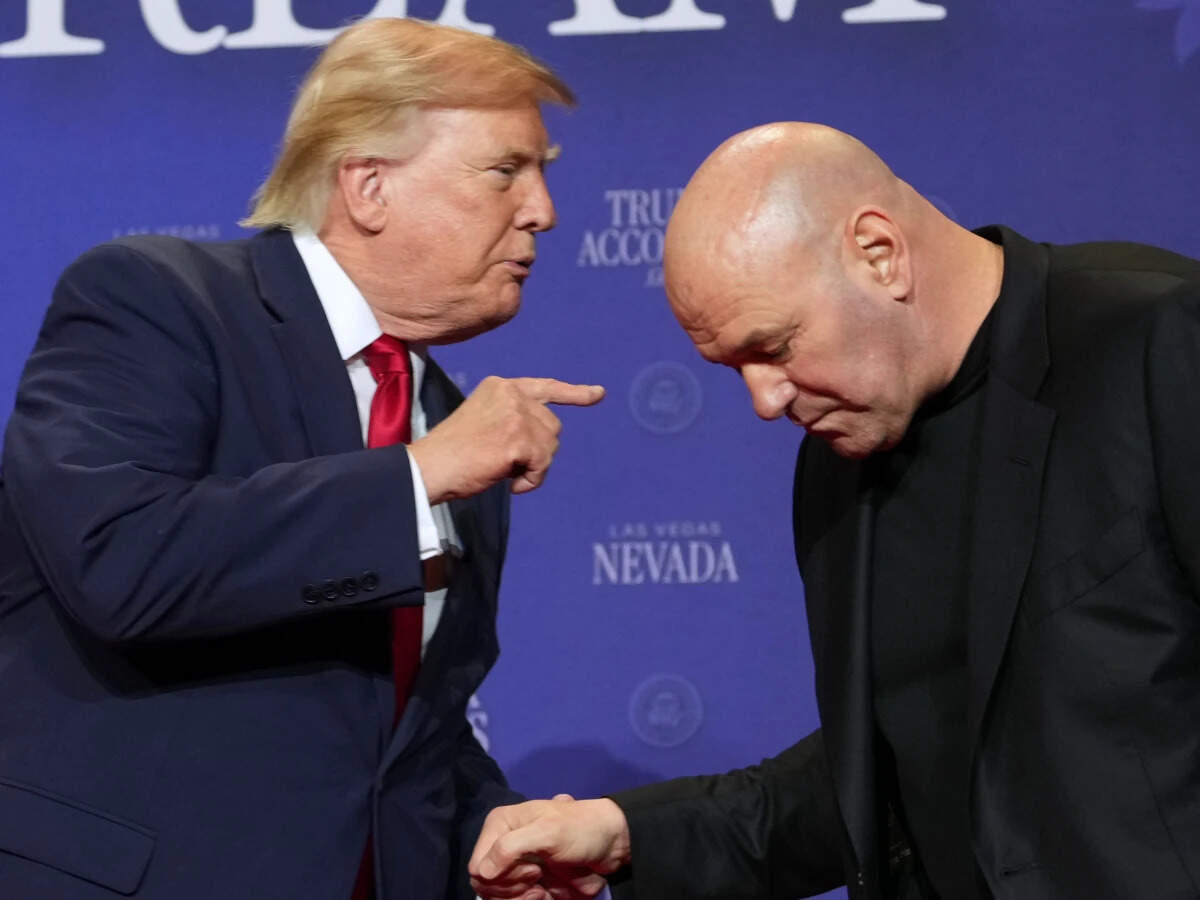
Upon her federal indictment and subsequent conviction—which carried a statutory maximum of 20 years per count—Nevada's Commission on Judicial Discipline suspended her without pay. In 2025, prior to sentencing, President Donald Trump granted Fiore a full presidential pardon.
A pardon eliminates federal criminal liability and vacates the impending prison sentence, yet it does not erase the underlying evidentiary record or automatically restore state-level professional credentials. When Fiore attempted to leverage the pardon to overturn her suspension and reclaim her judicial bench, the Nevada Supreme Court rejected her appeals in April 2026, upholding the state disciplinary panel's authority to keep her suspended.
This divergence highlights a critical distinction in governance risk: criminal culpability and fiduciary fitness operate on separate tracks. State judicial and licensing boards evaluate conduct against ethical canons rather than criminal conviction status. Even when federal penalties are nullified, documented misappropriation of public-facing funds permanently destroys the institutional trust required to adjudicate law.
Structural Controls to Eliminate Civic Fundraising Fraud
Preventing the diversion of civic memorial funds requires shifting from post-hoc criminal prosecution to pre-emptive architectural controls. Municipalities, police unions, and donor networks cannot rely on the personal integrity of elected officials to safeguard restricted gifts.
1. Mandatory Institutional Escrow for Civic Monuments
Municipalities must prohibit elected officials from soliciting funds for public property installations—such as statues, parks, or plaques—into private or political entities. Any fundraising campaign referencing a city-owned asset or fallen public servant must route directly into a dedicated municipal trust fund or an established, third-party community foundation with an independent board of directors.
2. Dual-Custody Disbursement Protocols
For independent non-profits raising money for public causes, banks and fiscal sponsors should enforce dual-signature authorization on all outbound wires and checks exceeding $1,000. Neither signatory may be an elected official, a member of their campaign staff, or a relative within three degrees of consanguinity.
3. Real-Time Ledger Transparency
Donors contributing to ad-hoc civic campaigns should demand proof of a restricted-fund agreement prior to capital transfer. Legitimate memorial committees publish monthly bank reconciliations and vendor invoices—such as foundry contracts for bronze casting—directly on their solicitation portals. If a fundraiser cannot produce a vendor contract within 60 days of launching a capital campaign, capital allocation should cease immediately.
4. Statutory Anti-Commingling Rules at the State Level
State legislatures must close the loophole separating political committees from charitable solicitation. Ethics statutes should explicitly classify any fundraising conducted by a sitting officeholder under the color of public service as subject to the same real-time itemized reporting and personal-use prohibitions as campaign funds, subjecting violators to immediate forfeiture of office upon civil audit findings rather than waiting years for federal wire fraud trials.