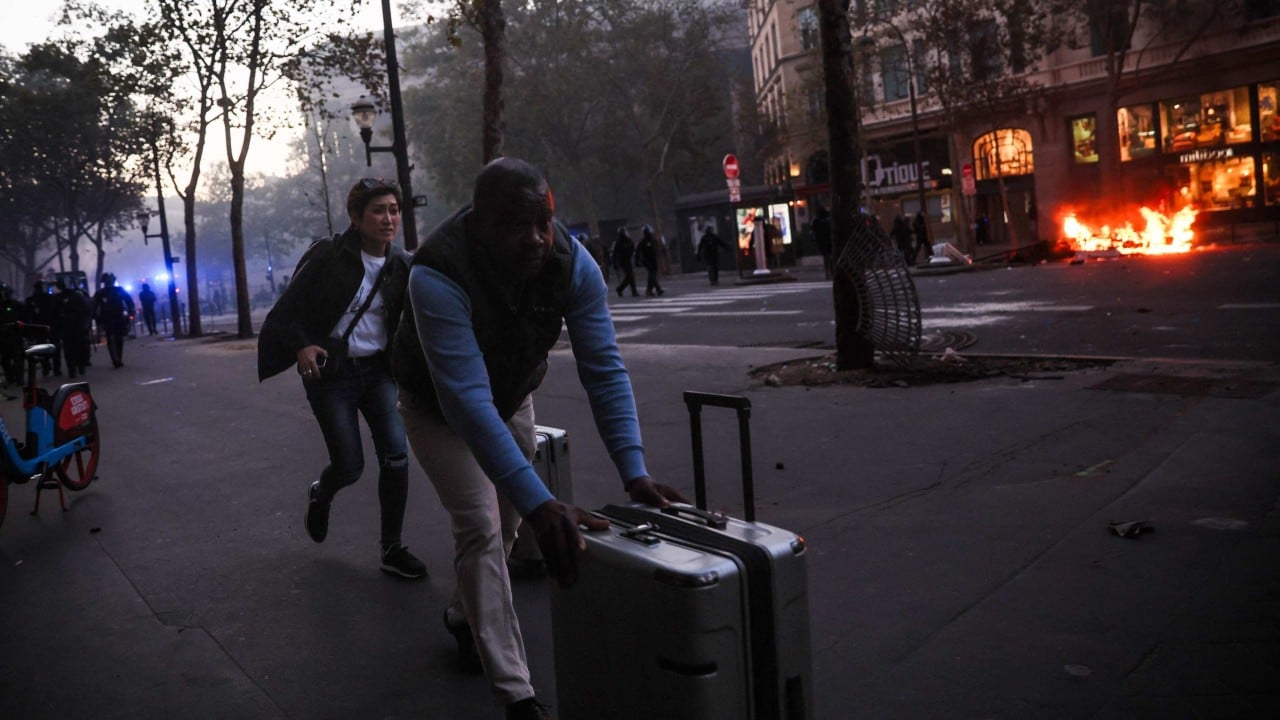
Street violence does not destroy France's tourism sector by closing its borders; it destroys it by compressing booking horizons, repricing perceived safety, and bleeding high-margin discretionary spend out of urban corridors. Headlines built around a single alarmist quote—"it's catastrophic"—conflate an acute shock to near-term demand with a structural collapse of an industry that draws roughly 102 million international arrivals and generates around €77.5 billion in international tourism receipts (with direct tourism value added representing roughly 3.8% of French GDP). To evaluate what street unrest actually costs French hospitality, operators and analysts must separate theatrical television footage from unit economics, distinguish known baseline figures from educated hypotheses, and trace how street disruptions propagate through accommodation, retail, and municipal balance sheets.
Deconstructing the Competitor Narrative
Standard news coverage of civil unrest and tourism relies on a predictable, reactive sequence: dramatic images of clashes in major cities, a quote from a trade association or tour operator warning of disaster, a mention of softened hotel reservations, and a nod to government travel advisories or past protest cycles. That narrative captures real anxiety on the ground, yet its analytical structure is thin. It treats "tourism" as a single monolithic bucket rather than a layered value chain, and it treats duration as a binary switch ("fine for two weeks, catastrophic for months") instead of a variable that alters customer acquisition and pricing power.
A second flaw in conventional reporting is conflating visibility with physical exposure. Broadcast clips and social feeds of burning street furniture, damaged storefronts, or police cordons in central Paris, Lyon, or Nice compress hours of localized friction into an ambient impression of nationwide instability. A traveler sitting in New York, Shanghai, or Berlin does not evaluate neighborhood-by-neighborhood street maps during an initial search; they evaluate risk heuristics. When foreign ministries update travel advisories or highlight street clashes, risk-averse travelers postpone commitments or redirect spending toward competing European hubs.
Third, surface-level commentary often blurs known facts with educated hypotheses:
- Known fact (macro scale and structure): France remains the world's most visited country by international arrivals, with direct tourism accounting for roughly 3.8% of GDP and accommodation representing the largest single slice of tourism value added (around 44%), ahead of passenger transport (roughly 17%), food and beverage (around 10%), and leisure/recreation (around 9%).
- Known fact (near-term shock signals): Street clashes, property damage, and international media coverage trigger rapid softness in short-lead hotel bookings—particularly in urban and higher-tier segments—and generate immediate physical damage claims for commercial property and retail operators.
- Educated hypothesis (revenue compounding): If unrest recurs across multiple weekends or seasons, high-spending long-haul visitors may substitute other destinations, turning temporary booking deferrals into permanent lost share of wallet.
- Educated hypothesis (second-order labor and fiscal drag): Prolonged urban disruption can lengthen receivables cycles for small hospitality and retail businesses, squeeze seasonal hiring, and raise municipal security and cleanup outlays.
The Cost Function of Street Disruption
To measure civil unrest rigorously, treat a tourism destination as a perishable-inventory yield system. An unsold hotel room night, an empty restaurant cover, or a cancelled guided tour on a given Tuesday cannot be stored and sold twice on Friday. Civil unrest attacks this system through four cost channels rather than one single hit.
1. Direct Physical Damage and Operational Friction
Clashes in commercial districts impose immediate physical and operational costs on street-level businesses: shattered glass, damaged facades, looted stock, transit slowdowns, and early closures. Insurance claim tallies from major protest episodes demonstrate that commercial enterprises bear the bulk of insured property losses, while uninsured friction—lost operating hours, rerouted deliveries, and extra security staffing—hits margins directly. Even when monuments and hotels remain physically intact, mobility friction degrades the visitor proposition: travelers do not pay urban room rates to remain confined indoors.
2. Booking Curve Compression and Yield Dilution
Tourism demand operates on a booking curve—the distribution of reservations across lead times prior to arrival. Unrest flattens the near-term end of that curve first. Leisure travelers with flexible dates delay bookings; corporate and group planners pause commitments; high-yield segments such as luxury and boutique stays often react earliest because affluent travelers face fewer switching constraints and place a higher premium on frictionless mobility.
When near-term occupancy softens, hotel revenue managers face a classic yield dilemma: cut average daily rate (ADR) to chase occupancy, or hold rate and accept lower occupancy. Cutting rates late in the booking cycle erodes RevPAR (revenue per available room) and trains customers to expect discounts, whereas holding rates preserves brand positioning at the expense of immediate cash flow.
3. Spend Mix Shift from High-Margin Add-Ons to Base Shelter
Not all tourist euros carry the same contribution margin. Base accommodation and transit cover fixed infrastructure costs, whereas discretionary spending—fine dining, specialty retail, private tours, and cultural add-ons—drives high incremental margin. Street tension shifts traveler behavior toward defensive consumption: shorter walks from the hotel, fewer late-evening outings, and more conservative spending on optional experiences. A visitor who still arrives but spends less on high-margin discretionary items reduces total economic yield per arrival even if headcount holds steady.
4. Reputational Lag and Advisory Amplification
Reputation behaves like a damped oscillator with asymmetric inertia. Positive brand equity in a premier destination builds over years of cultural capital, infrastructure investment, and service quality, yet a few days of intense global media coverage can knock short-term sentiment off balance within hours. Once foreign governments issue or tighten travel advisories, corporate travel policies and travel insurance clauses often activate automatically, creating a lag between the end of street incidents and the return of normal booking velocity.
Cause-and-Effect Chains Conventional Coverage Misses
Competitor articles typically stop at "riots happen, tourists worry, bookings dip." In practice, five causal chains govern whether that dip remains a minor blip or becomes a serious earnings drag.
First, long-haul vs. intra-European asymmetry. Domestic and nearby European travelers often have deeper familiarity with French cities, shorter travel times, and greater willingness to travel by car or regional rail. Long-haul visitors from markets such as North America or East Asia rely more heavily on media framing and official advisories, and typically book higher-value multi-stop itineraries. A modest percentage drop in long-haul arrivals can therefore outweigh a larger percentage fluctuation in short-hop trips on a revenue basis.
Second, the urban-to-regional divergence. Street unrest concentrates in specific dense municipal cores and transport nodes. Coastal resorts, countryside estates, mountain areas, and second-home markets do not experience identical street conditions or media framing. Treating "France's tourism sector" as uniform masks sharp divergence between central-city hotels facing immediate booking softness and regional operators insulated from street clashes.
Third, cash-flow timing vs. annual totals. Annual macro figures smooth out seasonal and monthly volatility. A two-week or six-week booking soft spot during a shoulder or pre-holiday window may look small against a full-year hotel-night total, yet still create acute working-capital strain for independent cafes, tour operators, and shops that rely on peak seasonal cash reserves to carry off-peak fixed payroll and rent.
Fourth, the counter-cyclical security and macro feedback loop. Protests in France rarely occur in a vacuum; they frequently intersect with domestic fiscal debates, cost-of-living pressures, or broader sovereign market jitters. When public unrest coincides with tighter government budgets or higher borrowing costs, state capacity to subsidize promotional campaigns or absorb local disruption costs becomes more constrained precisely when industry marketing support is most needed.
Fifth, the "TV vs. Street" perception gap. News broadcasts naturally select high-contrast visual conflict over quiet streets two blocks away. That gap creates a tactical opportunity for operators who can verify real-time ground conditions, but it punishes operators who rely on generic destination branding while international audiences see images of smoke and barricades.
Operational Playbook for Hospitality and Destination Leaders
Turning macro analysis into execution requires separating immediate crisis containment from medium-term demand recovery.
Phase 1: Immediate Stabilization (Days 1–14)
- Audit booking pacing by lead window and source market. Segment reservations into 0–14 day, 15–45 day, and 45+ day windows, separating domestic, European, and long-haul channels so revenue teams see where cancellations or pick-up stalls are actually occurring.
- Publish verifiable, hyper-local operational status. Replace vague reassurance with concrete facts: metro and rail line status, museum and venue opening hours, neighborhood access routes, and flexible rebooking or date-change terms.
- Protect rate integrity on core dates. Avoid knee-jerk across-the-board rate slashes during short-lived spikes; use targeted value-adds (such as flexible cancellation, breakfast inclusion, or late checkout) rather than permanent price erosion.
- Document physical and interruption exposure early. Log all security expenses, damaged assets, and business-interruption variances with timestamped records to support insurance claims and lender communications.
Phase 2: Demand Rebuilding and Channel Calibration (Weeks 3–8)
- Reweight acquisition spend toward resilient segments. Shift paid media and sales outreach toward domestic, regional, and nearby European drive/rail markets that respond faster to clear safety and transit updates, while maintaining baseline presence in long-haul markets without tone-deaf messaging.
- Equip B2B partners and concierges with accurate briefings. Tour operators, travel advisors, and corporate travel managers need crisp, unvarnished updates they can pass to clients; overpromising during active unrest destroys credibility faster than admitting localized disruption.
- Curate low-friction, high-value on-property and neighborhood experiences. When guests prefer curated or nearby options over unguided exploration, well-designed cultural, culinary, or guided outings help recover discretionary spend per guest.
Limitations and Edge Cases
No playbook eliminates geopolitical or social risk. If street unrest escalates into sustained, multi-month nationwide disruption, severe transport paralysis, or prolonged foreign government travel bans, tactical rate management and local messaging cannot offset macro demand contraction. Likewise, businesses carrying high fixed debt service or thin cash buffers face structural solvency risks from multi-week revenue drops that marketing adjustments alone cannot cure. Finally, over-communicating "everything is completely normal" while visible clashes continue in the same city backfires; credibility depends on accuracy, restraint, and operational competence.
Strategic Forecast and Play
Civil unrest will test French tourism's resilience whenever domestic grievances spill into high-visibility urban streets, but France's underlying tourism fundamentals—cultural density, transport connectivity, and diversified domestic and international demand—remain strong enough to absorb short, contained shocks. The decisive strategic move for hospitality operators and destination boards is to build a standing Crisis Revenue & Communications Protocol before the next flare-up: pre-approved flexible rebooking rules, real-time neighborhood mobility feeds, segmented lead-time triggers for promotional shifts, and ring-fenced liquidity for 30-to-60-day demand troughs. Operators who treat unrest as an operational yield-and-trust problem rather than a headline panic will preserve margins, protect brand equity, and capture rebound demand first when streets calm.