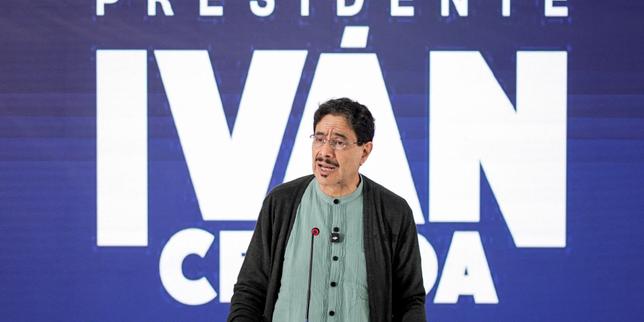
The razor-thin margin of Colombia’s June 21, 2026 presidential runoff—where far-right outsider Abelardo de la Espriella secured 49.7% of the vote against progressive senator Iván Cepeda's 48.7%—signals more than a mere shift in executive leadership. It represents a fundamental breakdown of the institutional equilibrium that has governed the state's approach to its sixty-year internal armed conflict. When Cepeda issued an urgent appeal for calm following immediate post-election outbreaks, he was not merely responding to structural unrest; he was acknowledging a profound systemic failure.
The political calculus driving this destabilization can be broken down into clear structural mechanics. The conventional reporting on this transition overlooks the precise macro-variables that made de la Espriella’s rise predictable and Cepeda’s narrow defeat inevitable. To understand why a nation of 50 million stands on the brink of structural volatility, it is necessary to map the conflict architecture, the collapse of negotiation models, and the upcoming strategic friction points.
The Tri-Pillar Failure of Total Peace
The primary catalyst for the electoral shift was the strategic obsolescence of the Paz Total (Total Peace) framework, the hallmark policy of outgoing President Gustavo Petro, which Cepeda had pledged to salvage. The policy collapsed under the weight of three operational structural flaws:
- The Incentive Asymmetry: By offering simultaneous negotiation tracks to both ideological insurgencies, such as the Ejército de Liberación Nacional (ELN), and purely transactional criminal syndicates like the Clan del Golfo, the state inadvertently lowered the cost of non-compliance. Criminal enterprises calculated that continuing territorial extraction (via cocaine production and illegal mining) yielded higher returns than state concessions, using peace talks as a strategic shield to consolidate resources.
- The Enforcement Vacuum: As formal military operations were throttled back to preserve negotiation goodwill, localized security vanished. Armed factions filled the administrative void, causing the past twelve months to record the highest localized violence metrics since the 2016 FARC accord.
- The Fragmentation of Non-State Actors: Unlike the historic monolithic command structures of the old FARC, modern Colombian criminal elements operate as decentralized, hyper-fragmented networks. Forging a peace treaty with a nominal leadership council no longer guarantees compliance from localized fronts, rendering top-down diplomacy functionally ineffective.
This security deficit transformed public safety into the definitive electoral variable. De la Espriella exploited this structural vulnerability by introducing an opposing doctrine: a return to full-scale military confrontation and the absolute rejection of state-led concessions.
The Cost Function of the Right-Wing Outside Strategy
De la Espriella’s path to the executive mansion provides a textbook blueprint for the anti-establishment outsider strategy now sweeping Latin American politics. Lacking any history of public service, his campaign minimized traditional political overhead while maximizing media saturation through calculated culture-war narratives.
The mechanism of his victory relied on an asymmetric polarization strategy. By positioning himself as a direct ideological ally to external populist figures like Donald Trump, de la Espriella framed the election as a binary Choice between complete state collapse under the left or an iron-fisted restoration of sovereignty. He successfully consolidated a fractured center-right electorate that had initially split its votes during the May 31 first-round ballot, drawing in the remaining support bases of traditional candidates like Paloma Valencia.
The geographic distribution of the votes highlights the structural divide. De la Espriella captured the critical inland departments and corporate power hubs like Barranquilla, leveraging the financial backing of influential regional business coalitions disaffected by the previous administration's economic interventions. Cepeda’s base remained concentrated in Bogotá and marginalized rural territories—regions most affected by state abandonment but lacks the demographic weight to counter the urban and industrial conservative turn.
Institutional Stress Metrics and Legal Bottlenecks
The post-election landscape is defined by acute institutional stress. The immediate decision by Cepeda’s legal team to challenge the tallies across more than 30,000 voting stations introduces a dangerous period of administrative gridlock.
Historically, no presidential election outcome in Colombia has ever been overturned by a recount. The challenge function here is less about reversing the numerical reality and more about managing political capital. By casting doubt on the absolute legitimacy of a 1% victory, the progressive coalition constructs an immediate defensive bulwark within Congress, where de la Espriella’s movement lacks an absolute legislative majority.
This creates an immediate constitutional bottleneck across three fronts:
- The Legislative Veto: De la Espriella’s hardline proposals—including the dismantling of remaining peace frameworks and the aggressive realignment of foreign policy, such as restoring ties with Israel—will face systematic obstruction from a highly organized left-wing legislative bloc.
- The Judicial Friction: The Superior Tribunal of Bogotá's October 2025 acquittal of former President Álvaro Uribe on procedural wiretap flaws remains a flashpoint. With Cepeda's team pushing an extraordinary appeal (casación) before the Supreme Court, any perceived executive interference by the incoming administration will trigger an immediate counter-response from an independent judiciary.
- The Territorial Flashpoints: The immediate threat to stability rests in the rural peripheries. If the incoming administration terminates all existing ceasefire agreements, criminal organizations are highly likely to pre-emptively launch urban campaigns to demonstrate asymmetric military capability.
Strategic Forecast
The incoming administration will face an immediate paradox. Executing the promised "Pax Romana"—achieving stability through overwhelming state force—requires a level of fiscal expenditure and military deployment that the current macroeconomic environment cannot easily sustain. The state's debt-to-GDP ratio and the realities of fragmented rural geography mean that total military eradication of criminal networks remains highly improbable.
The likely path forward will not be an absolute victory for either model, but a protracted war of attrition. De la Espriella will likely be forced to narrow his military focus to high-value targets to signal executive decisiveness, while quietly maintaining backdoor channels with select armed factions to prevent full-scale economic disruption.
Conversely, the progressive opposition will pivot from executive execution to aggressive territorial and legislative resistance. Cepeda’s call for calm should be understood as a tactical repositioning: a move to preserve the institutional playing field for a long-term defensive strategy, ensuring that the progressive coalition remains the only viable alternative when the electorate experiences the inevitable friction of the new administration's security push.


