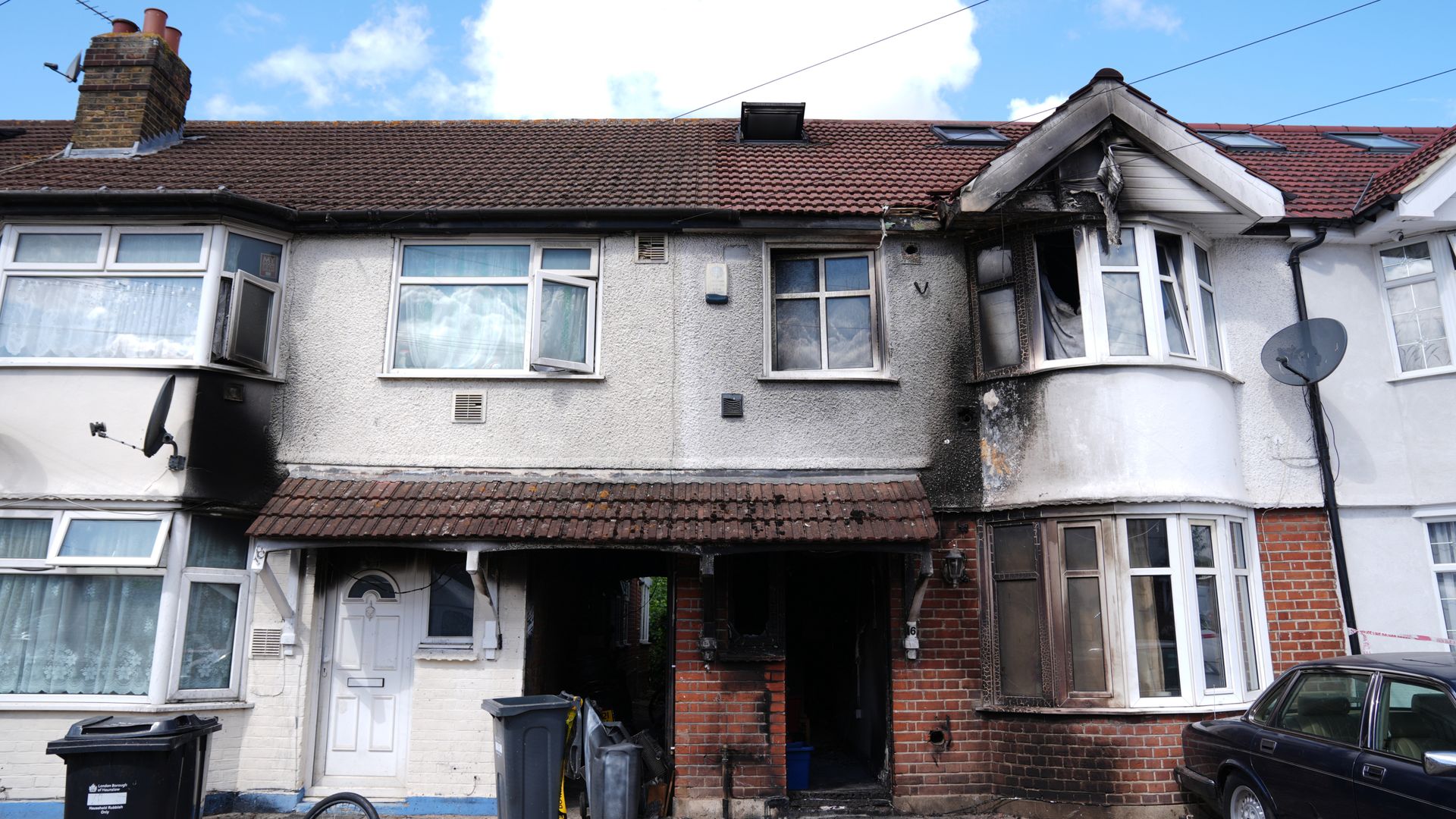
When a residential fire transitions from a structural emergency to a multi-defendant homicide investigation, the legal and operational mechanisms shift into a high-stakes evidentiary domain. The official charging of a second suspect in a fatal house fire exposes the complex web of joint enterprise liability, forensic reconstruction, and prosecutorial strategy required to secure convictions in complex homicide cases. Arson-related homicides present unique investigative hurdles because the primary crime scene is frequently destroyed by the very element used to perpetrate it, demanding an exceptional level of scientific rigor and behavioral tracking to establish criminal culpability.
The Evidentiary Triad in Fatal Arson Investigations
Proving murder in the context of an intentionally set structure fire requires law enforcement and forensic pathologists to bridge two distinct disciplines: fire dynamics and homicide investigation. This convergence rests on an evidentiary triad comprising origin and cause determination, pathology, and digital or testimonial corroboration.
First, the physical origin of the fire must be scientifically isolated. Modern fire investigation relies heavily on NFPA 921 standards, moving away from archaic visual indicators toward systematic hypothesis testing. Investigators must rule out accidental ignition vectors before establishing incendiary intent.
Second, the autopsy findings must definitively link the fatality to the fire or the acts precipitating it. Distinguishing between thermal injuries sustained ante-mortem versus post-mortem, as well as quantifying carbon monoxide toxicity versus smoke inhalation, establishes the physical mechanism of death.
Third, establishing intent and participation when multiple individuals are implicated requires corroborative anchors. Because physical evidence at a burned scene is frequently compromised, investigators rely on cell phone site data, automated license plate readers, surveillance footage, and witness testimony to place suspects within proximity of the spatial-temporal window of the crime.
The Legal Mechanics of Joint Enterprise and Complicity
When authorities file charges against multiple individuals for a single homicide resulting from arson, they typically invoke doctrines of accomplice liability, conspiracy, or felony murder. Understanding these legal vectors clarifies how secondary actors face identical or comparable severity of charges to the primary perpetrator.
Felony Murder Doctrine
In many jurisdictions, if a death occurs during the commission of a dangerous felony—such as first-degree arson—all participants involved in the underlying felony can be charged with murder, regardless of whether they directly caused the fatal injury or intended for a person to die. The legal threshold requires the prosecution to prove:
- The commission or attempted commission of a predicate felony.
- That the felony was inherently dangerous to human life.
- That the death was a direct consequence of the felonious act.
Complicity and Aiding and Abetting
Alternatively, prosecutors pursue theories of complicity where the state must demonstrate that the secondary actor possessed the requisite mental state for the crime and actively encouraged, aided, or agreed to facilitate the offense. In arson-homicide scenarios, this manifests when one individual procures the accelerant while another deploys it, or when multiple parties coordinate an attack on a structure knowing occupants are trapped inside. The operational challenge for the prosecution lies in proving shared intent rather than mere presence at the scene.
The Operational Bottlenecks in Multi-Defendant Prosecutions
Bringing a second defendant into an active murder prosecution alters the tactical balance of a case. Investigators and prosecutors face specific operational bottlenecks that can either solidify the state's case or introduce vulnerabilities exploited by defense counsel.
- Evidentiary Asymmetry: Physical evidence frequently points heavily toward one primary actor, forcing prosecutors to rely on circumstantial chains or cooperation agreements to establish the role of the second suspect.
- Co-Defendant Divergence: Once multiple suspects are charged, their legal strategies inevitably diverge. Defense attorneys will often attempt to shift primary culpability onto the co-defendant, creating internal friction that the state may exploit through plea negotiations.
- Chain of Custody Vulnerabilities: Debris removal from a burned structure is chaotic. Defense teams routinely challenge the integrity of accelerant-detection canine alerts and laboratory gas chromatography-mass spectrometry results, arguing sample contamination during the suppression and overhaul phases.
Strategic Trajectory and Prosecutorial Leverage
The addition of a second arrest signals a deliberate structural expansion of the state's theory of the crime. Rather than treating the incident as an isolated act by a lone actor, the prosecution is constructing a collaborative narrative of premeditation or reckless indifference.
The immediate procedural consequence is an extended timeline of discovery, preliminary hearings, and pretrial motions regarding the admissibility of forensic testing and co-defendant statements. As forensic experts parse burn patterns and digital footprints, the strength of the state's case will hinge entirely on whether the physical data can unequivocally tether both defendants to the fatal mechanics of the fire. The ultimate resolution will depend on the prosecution's ability to withstand rigorous cross-examination regarding origin determination and to successfully navigate the legal boundaries of joint criminal responsibility.