The detection of 992 confirmed cases of Cyclospora cayetanensis in Michigan, combined with over 500 cases in neighboring Northwest Ohio, marks the state’s largest parasitic outbreak in history. Nationally, the current transmission volume runs four times higher than the identical period last fiscal year, spanning across 28 states. This is not a failure of individual hygiene; it is a structural failure at the intersection of agricultural supply chains, clinical diagnostics, and changing baseline environmental temperatures.
Understanding the propagation of cyclosporiasis requires moving past the alarming symptom descriptions and analyzing the structural mechanics of why this specific pathogen paralyzes both public health investigative teams and commercial food distribution networks.
The Three Pillars of Pathogen Persistence
Unlike typical bacterial contaminants such as Salmonella or Escherichia coli, Cyclospora cayetanensis operates on a biological timeline that exploits modern logistics. Its persistence and transmission volume rely on three distinct operational advantages.
- Delayed Infectivity (The Oocyst Maturation Window): When excreted by a host, Cyclospora oocysts are unsporulated and non-infectious. They require days to weeks in specific environmental conditions (warmth and high humidity) to sporulate and become infective. This delayed mutation means direct person-to-person transmission is practically non-existent. Instead, the environment acts as an incubator, delaying the onset of an outbreak until long after the initial contamination event occurs.
- The Temperature-Dependent Proliferation Curve: The parasite thrives in heat. Escalating global baseline temperatures have expanded both the geographic range and the calendar duration of the optimal sporulation window. This shifts what was once a highly predictable, localized tropical anomaly into a recurring seasonal hazard within temperate agricultural zones.
- Sub-Clinical Colonization of High-Velocity Inventory: Cyclospora typically targets fresh, high-surface-area produce such as pre-washed bagged salads, cilantro, basil, and raspberries. These items move from agricultural fields to retail shelves within 48 to 72 hours, far faster than the clinical incubation and diagnostic lifecycle of the disease.
The Diagnostic and Tracing Bottleneck
Public health authorities are forced to react to outbreaks with a data lag that severely undermines containment protocols. The core vulnerability in the current systemic response is structured around two specific diagnostic and forensic bottlenecks.
The Diagnostic Gap
[Contamination Event] ──> [Logistics Velocity: 2-3 Days] ──> [Consumer Ingestion]
                                                                     │
[Public Health Alert] <── [Lab Lag: Genotypeless] <── [Incubation: 7 Days]
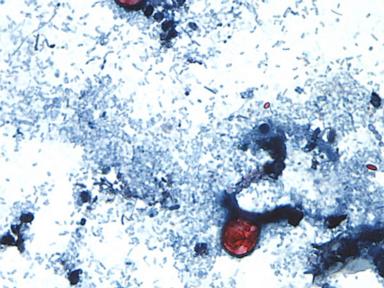
Standard multi-pathogen stool panels utilized by emergency rooms and primary care physicians frequently omit Cyclospora testing entirely, as they are calibrated primarily for bacterial and viral loads. When a patient presents with protracted watery diarrhea, days are lost before specific microscopic or molecular (PCR) testing for Cyclospora is ordered. This creates a severe underreporting index, masking the true slope of the infection curve.
The Forensic Limitation
Technicians cannot cultivate Cyclospora cayetanensis in vitro within laboratory environments. Consequently, investigators cannot grow the parasite from food samples to match a specific genetic fingerprint to a patient's isolate, a standard technique used to trace Salmonella outbreaks back to a specific processing plant.
Instead, tracing relies entirely on epidemiologic food-history questionnaires. Because the parasite is frequently carried on low-weight, high-frequency ingredients distributed inside complex ingredient matrices (such as a single herb variety used across dozens of distinct commercial salad mixes or restaurant dishes), pinpointing the origin using human memory becomes a mathematical improbability.
Supply Chain Interdiction Strategy
Because the source of the multi-state surge remains unidentified, public health interventions must shift from reactive tracing to systemic risk mitigation. Traditional consumer handling strategies, such as standard cold-water rinsing, are mechanically insufficient for removing Cyclospora oocysts. The outer shell of the sporulated oocyst is highly resistant to chemical sanitizers, including chlorine-based washes used in commercial packaging facilities.
To mitigate immediate exposure risks, a structured mitigation framework must be deployed across commercial food services and consumer behavior.
- Inventory Sourcing Substitution: Retailers and commercial kitchens should suspend the procurement of high-risk, pre-washed, pre-cut commodity leafy greens. The centralized washing of massive bulk quantities of greens can act as a vector for cross-contamination, where a single contaminated batch spreads the oocyst across thousands of units of inventory.
- Structural Disassembly Protocol: Consumers must transition to purchasing whole heads of lettuce rather than consolidated bagged mixes. The outer two to three protective leaves must be mechanically stripped and discarded entirely. The remaining leaves must be individualised and washed under high-velocity running water to physically dislodge the microscopic oocysts from the texturized surface of the vegetation.
- Thermal Destruction: Where commercially viable, food preparations should pivot toward cooked menu items. The application of thermal energy exceeding 60°C (140°F) for sustained periods destabilizes the cellular structural integrity of the oocyst, rendering it inert.
The current case volume in Michigan is a trailing indicator. Due to the seven-day average incubation period and the multi-day diagnostic latency, the real-time transmission rate has already peaked well beyond the recorded numbers. Public health infrastructure must prepare for sustained clinical presentations throughout the remainder of the high-temperature summer season, necessitating a permanent shift toward molecular surveillance in standard diagnostic protocols.