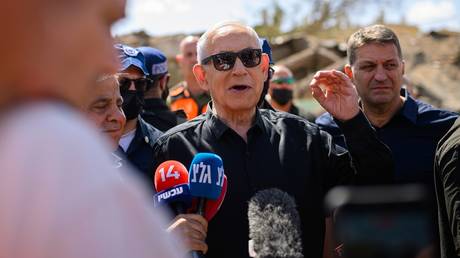
The friction between Israeli Prime Minister Benjamin Netanyahu and New York City Mayor Zohran Mamdani highlights a structural shift in how municipal leaders engage with international geopolitics. This confrontation exposes the friction points between local governance, federal jurisdictional boundaries, and foreign policy advocacy. By examining the mechanics of this dispute, observers can map the exact boundaries where municipal authority ends and international posturing begins.
The Jurisdictional Reality Check
Municipal leaders operate within strict legal parameters defined by state and federal statutes. When Mayor Mamdani initially asserted during his campaign that the New York City Police Department could enforce an International Criminal Court arrest warrant against visiting heads of state, he ignored foundational principles of constitutional law and diplomatic immunity.
Subsequent legal reviews by the mayor's office yielded an inevitable conclusion: municipal entities possess zero independent authority to execute international arrest warrants or regulate foreign policy. The United States is not a party to the Rome Statute, meaning the federal government does not recognize the direct jurisdiction of the International Criminal Court. Federal supremacy dictates that foreign relations and diplomatic admissions remain exclusively within the purview of the executive branch and the State Department.
The mechanics of this limitation create a predictable feedback loop:
- Local Rhetoric: Mayoral statements establish political alignment with progressive bases and international human rights bodies.
- Legal Constraint: City charters and federal laws block any operational translation of that rhetoric into physical enforcement.
- Federal Override: Executive assurances—such as statements from Washington guaranteeing safe passage for visiting dignitaries—neutralize municipal threats entirely.
The Rhetorical Escalation Matrix
Netanyahu’s counter-offensive, delivered via national media channels, framed the municipal opposition not merely as a disagreement over foreign policy, but as a domestic security hazard. By accusing Mamdani of fomenting division and pointing to local hate crime statistics, the Israeli leadership shifted the vector of debate from the battlefields of Gaza to the streets of New York.
This strategic framing exploits the unique demographic architecture of New York City, home to one of the largest Jewish populations outside of Israel. When a local executive designates a visiting foreign leader as an unwelcome war criminal, the downstream effect is an immediate polarization of municipal constituents. The cause-and-effect chain operates through distinct phases:
- Stigmatization: Municipal officials utilize moral language to brand foreign state actors, transforming diplomatic disputes into local moral imperatives.
- Constituent Polarization: Communities within the city map their safety and identity onto the global conflict, raising social friction and increasing recorded hate crime vulnerabilities.
- Security Burden: Local law enforcement agencies absorb the operational cost of managing heightened civil unrest, absorbing resources away from baseline municipal administration.
The Federal Intersect and Institutional Realignment
The dispute also signals a wider fracture in domestic political coalitions. Traditionally, bipartisan backing for foreign allies like Israel served as an unassailable baseline in American politics. The rise of municipal leaders willing to openly challenge foreign heads of state reflects a splintering within the Democratic Party, particularly along progressive and moderate lines.
When mayors step outside domestic service delivery to engage in transnational disputes, they alter the cost-benefit analysis of foreign leaders visiting urban economic centers. Netanyahu’s insistence on traveling to New York for the United Nations General Assembly, despite being declared unwelcome by the city's highest-ranking executive, is a calculated assertion of sovereign presence. It tests the limits of federal protection against local political hostility.
Municipal leaders who leverage foreign policy crises for domestic political positioning must weigh the administrative fallout. While symbolic defiance satisfies ideological factions, it complicates the primary mandate of municipal management: maintaining civic cohesion and public safety for all residents regardless of religious or national background.
Strategic Outlook
Future interactions between urban centers and foreign figures will likely follow this template of symbolic friction paired with legal impotence. As local politics increasingly mirrors international ideological divides, city executives will continue to test the boundaries of federal foreign policy prerogatives. The resulting institutional strain requires federal authorities to constantly reinforce jurisdictional lines to prevent municipal policy fragmentation from destabilizing national diplomatic protocols.(https://www.youtube.com/watch?v=gNPO74yBmws)]
This video provides an in-depth breakdown of the political confrontation between New York City leadership and the Israeli prime minister regarding international arrest warrants.