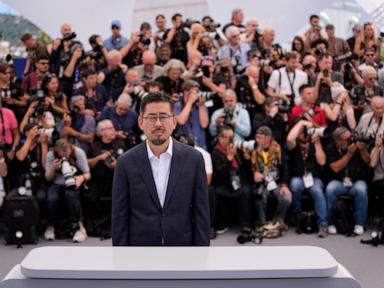
The inclusion of Na Hong-jin’s Hope in the official competition at the 79th Cannes Film Festival exposes a widening structural fracture between traditional prestige curation and the market mechanics of high-budget South Korean genre cinema. Written and directed by Na, Hope arrives after a ten-year production cycle as a 160-minute, multi-million-dollar speculative fiction feature. The critical polarization following its premier—ranging from declarations of an immediate cult classic to outright dismissals of its narrative logic—demands an analytical deconstruction that moves beyond the binary language of film festival hyperbole. The film operates as an aggressive subversion of standard arthouse pacing, using a continuous tonal mutation that deliberately trades narrative cohesion for systemic kinetic escalation.
To understand why Hope alienated traditionalist factions of the Cannes press while capturing the attention of major international distributors like Neon and Mubi, one must map its operational framework. The film rejects the linear narrative progression characteristic of contemporary Western science fiction. It operates instead on three distinct structural pillars that dictate its pacing, visual execution, and thematic scope. Learn more on a similar issue: this related article.
The Pillar of Continuous Tonal Mutation
The primary engine of Hope is its refusal to stabilize its genre. The film initiates as a provincial procedural drama, shifts into localized folk-horror, scales into a creature-feature survival narrative, and ultimately expands into a macro-level extraterrestrial conflict involving international cast members Michael Fassbender, Alicia Vikander, and Taylor Russell. Na Hong-jin maps this progression across a strict temporal curve, maintaining a sustained high-velocity pace that denies the audience the cognitive downtime typically allocated for character exposition or thematic reflection.
The Asymmetry of Broad Daylight Action
Unlike traditional horror and monster cinema, which relies on low-key lighting and atmospheric shadows to obscure visual assets and manipulate tension, Hope shifts its major action sequences into high-intensity, broad-daylight environments. Filmed across the rural landscapes of Jeju Island and the forested mountains of Romania by cinematographer Hong Kyung-pyo, this spatial and lighting strategy creates a distinct psychological effect. The horror is stripped of its mystique, forcing the spectator to confront the raw, unpolished violence of the entity in real-time, completely detached from the comforting safety of genre-standard darkness. Additional analysis by GQ highlights comparable views on this issue.
The Duality of Perspectives
The narrative arc functions as a scale mechanism, moving from the trivial to the cosmic. The initial inciting incident—the discovery of a mutilated bull carcass by a local police chief, Sergeant Bum-seok (Hwang Jung-min)—is treated with small-town absurdity and dark, scatological humor. The micro-level conflict driven by under-equipped local law enforcement and trigger-happy rural hunters, led by Sung-ki (Zo In-sung), serves as a psychological foundation. The subsequent introduction of external, incomprehensible forces pivots the film from a localized emergency to a tragedy of cosmic proportions.
The Production Bottleneck and Visual Asset Degradation
The most acute point of critical failure identified by detractors of Hope lies in the execution of its computer-generated imagery (CGI). A cross-examination of production data and director statements reveals a clear operational bottleneck: a decade-long development cycle followed by an expedited, high-pressure post-production phase forced by the hard deadline of the Cannes selection committee.
The relationship between time, budget, and render quality in high-end visual effects functions as a strict optimization problem. When a director prioritizes a highly complex, 160-minute cut featuring massive, daylight-rendered entities, the computing power and human labor hours required scale exponentially. The structural breakdown of Hope’s visual assets can be modeled by a standard cost-versus-fidelity function:
$$F(t) = \frac{B \cdot t}{R \cdot C}$$
Where:
- $F$ is the final visual fidelity.
- $B$ is the allocated post-production budget.
- $t$ is the available time prior to the hard distribution deadline.
- $R$ is the volume of required render assets (highly inflated by broad daylight scenes).
- $C$ is the complexity of the creature design.
Because $t$ was severely compressed to meet the festival deadline, and $R$ remained exceptionally high due to the choice of daylight settings, the final visual fidelity $F$ dropped below contemporary industry standards. The resulting imagery has been widely critiqued as looking weightless, retro, or reminiscent of low-tier video game graphics. This creates a severe aesthetic disconnect: the hyper-realistic, grit-and-gore production design by Hwokyoung Lee and the grounded, fluid camera work of Hong Kyung-pyo run completely parallel to a creature asset that lacks physical presence and texture density.
The Socio-Political Mechanics of Xenophobia
The thematic architecture of Hope relies on an allegorical framework that Na Hong-jin explicitly traces to the mechanics of institutional xenophobia and immigrant friction. The rural town of Hope Harbor—a multi-generational, insular community with static social systems—serves as a controlled lab environment for analyzing human behavior under the stress of an external demographic shock.
The breakdown of the community's defense mechanisms does not stem from a coordinated, malicious invasion strategy by the extraterrestrial entities. It occurs as a direct result of a systemic communication failure, which can be broken down into three logical phases:
- The Misinterpretation of Signal: The initial encounters between the rural population and the entities are filtered through a legacy lens of local superstition, animal attacks, or domestic threats. The population lacks the conceptual framework required to accurately categorize the danger.
- The Dominance of Asymmetric Perspectives: The local authority figures (Bum-seok and Sung-ae) operate on a survival-centric, defensive paradigm, while the civilian hunters act on a retributive, aggressive paradigm. The absence of a centralized, rational crisis-management node ensures that individual actors make decisions based on localized panic rather than macro-level utility.
- The Self-Amplifying Chaos Loop: The escalation from a minor encounter to an international catastrophe is fueled entirely by internal human conflict. The fear of the unknown ("the different") triggers an immediate tribal defense mechanism, transforming a potential first-contact scenario into a mutual slaughterfest. The true horror of Hope is not the biological threat of the creature, but the predictable, mathematical certainty with which human institutions fracture when confronted with a radical paradigm shift.
Strategic Recommendation for Global Distribution
For the North American and European distributors holding the theatrical rights to Hope, the critical rift at Cannes presents a specific marketing challenge. Attempting to position the film as a prestigious, high-concept arthouse sci-fi entry in the vein of contemporary festival winners will result in immediate consumer backlash due to the visible technical shortcomings of the CGI and the deliberate narrative unevenness.
The optimal strategy requires an aggressive pivot toward framing the film as an uncompromising, maximalist genre experiment—an unhinged cult event that must be experienced collectively. Marketing materials must lean heavily into the film's chaotic energy, its pitch-black gallows humor, and the undisputed prestige of its core creative team, specifically the kinetic cinematography and the visceral score by Michael Abels. By anchoring consumer expectations to the wild, genre-mutating ride rather than technical polish, distributors can exploit the film’s sheer unpredictability as its primary market differentiator.