Macroeconomic shifts in federal immigration enforcement create distinct ripple effects across naturalized and legal immigrant groups, often triggering disproportionate behavioral responses relative to actual legal exposure. Recent policy proposals and administrative directives targeting undocumented migration have introduced acute operational uncertainty within various demographic sectors, including the substantial Filipino-American population. Evaluating this friction requires separating emotive public rhetoric from statutory reality, measuring actual legal vulnerability, and examining how administrative volatility alters labor market dynamics for foreign-born professionals.
Structural Vulnerability Versus Legal Reality
The core tension within immigrant communities during periods of heightened enforcement stems from a fundamental disconnect between administrative announcements and statutory limitations. Federal agencies operate under strict constitutional and statutory constraints regarding the revocation of citizenship and legal permanent residency.
Statutory security relies on three distinct tiers of legal status within the Filipino-American demographic:
- Naturalized Citizens: Comprising roughly three-quarters of the foreign-born Filipino population, naturalized citizens possess the same constitutional protections as native-born Americans, barring rare cases of material fraud proven in federal court during the naturalization process. Denaturalization remains statistically marginal, requiring extensive Department of Justice resource allocation per individual case.
- Legal Permanent Residents (Green Card Holders): Holders of permanent residency occupy a conditional status. While authorized for indefinite employment and residence, permanent residents face statutory exposure to deportation if convicted of specific criminal offenses, particularly aggravated felonies.
- Temporary Visa Holders and Petitioners: Workers on specialized visas or individuals navigating family-sponsored petitions experience the highest degree of structural exposure. Rapidly shifting Department of Homeland Security (DHS) guidance directly alters their timeline to permanence, introducing operational friction into career and family planning.
Public discourse often aggregates these three tiers into a singular narrative of generalized risk. This conflation drives widespread anxiety, even though the statistical probability of adverse administrative action against law-abiding citizens or compliant permanent residents remains close to zero.
The Labor Market Transmission Mechanism in Critical Sectors
The impact of immigration enforcement volatility extends beyond legal status anxiety into workforce stability, particularly within sectors characterized by high foreign-born concentration. The structural reliance of the United States healthcare infrastructure on Filipino labor creates a clear transmission channel for policy shocks.
Nearly one in five healthcare workers in the United States is foreign-born, with nurses from the Philippines representing a vital component of acute care delivery. When federal agencies issue contradictory guidance regarding green card processing timelines or consular interview requirements, the friction manifests as institutional instability rather than immediate mass deportations.
This operational volatility generates three distinct secondary effects:
- Regulatory Compliance Drag: Employers and institutional human resources departments must expend capital interpreting ambiguous administrative memos, delaying the onboarding or status adjustment of skilled foreign professionals.
- Power Asymmetry and Compliance Risk: Administrative uncertainty can temporarily tilt leverage toward employers, where unscrupulous actors utilize real or perceived regulatory threats to suppress legitimate labor grievances or wage adjustments.
- International Talent Diversion: Persistent policy unpredictability encourages highly skilled professionals to evaluate alternative destination markets, reducing the relative competitiveness of the United States in attracting elite clinical and technical talent.
Administrative Volatility and the Cost of Signaling
Federal enforcement strategies rely heavily on signaling mechanisms intended to deter unauthorized entry and encourage self-deportation. However, broad-spectrum rhetoric designed for political signaling creates negative externalities for legal immigrant populations who interpret aggressive executive actions as an existential challenge to their standing.
The financial and psychological cost of this signaling can be quantified through increased demand for preventative legal consultations, community-level organizing, and defensive adjustments to long-term residency plans. Organizations providing legal aid report spikes in advisory sessions driven entirely by executive branch announcements that are later walked back, modified, or blocked by federal courts. The systemic cost is measured in wasted administrative bandwidth across both immigrant households and legal advocacy networks.
Future stability within these demographic segments depends less on executive rhetoric and more on the structural resilience of administrative law. Navigating these periods requires separating enforcement priorities directed at unauthorized populations from the stable statutory protections governing naturalized citizens and employment-based permanent residents.
Trump immigration crackdown fuels fear among Filipino immigrants in Georgia
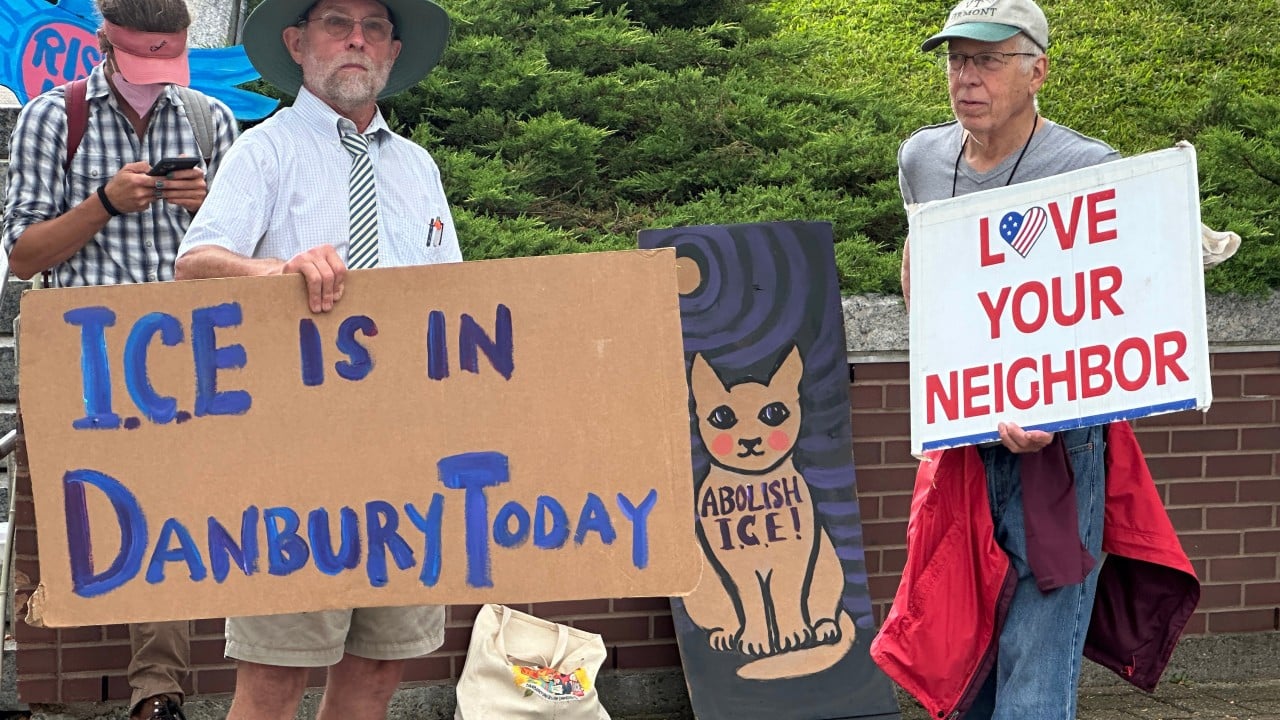
This visual report details how heightened immigration enforcement and shifting federal directives generate anxiety and prompt grassroots legal awareness responses within Filipino-American communities in Georgia.
http://googleusercontent.com/youtube_content/1