The strategic architecture of contemporary bilateral trade is no longer governed by simple commodity exchange or labor arbitrage. Instead, it is dictated by asymmetric resource dependencies within hyper-specialized technology supply chains. The formalization of the India-Netherlands strategic partnership during Prime Minister Narendra Modi’s state visit to The Hague exposes a calculated economic calculus. This framework maps a structural convergence between two distinct economic profiles: a capital-intensive, technologically monopolistic European economy and a high-scale, infrastructure-accelerating South Asian manufacturing base.
Rather than viewing the relationship through the lens of diplomatic alignment, a rigorous analysis requires quantifying the precise mechanisms of this bilateral framework. This involves evaluating India's macro-industrial transformation against specific Dutch technological monopolies, notably in photolithography and hydrogen distribution. Don't miss our recent coverage on this related article.
The Semiconductor Asymmetry: Lithography Access vs. Fab Scaling
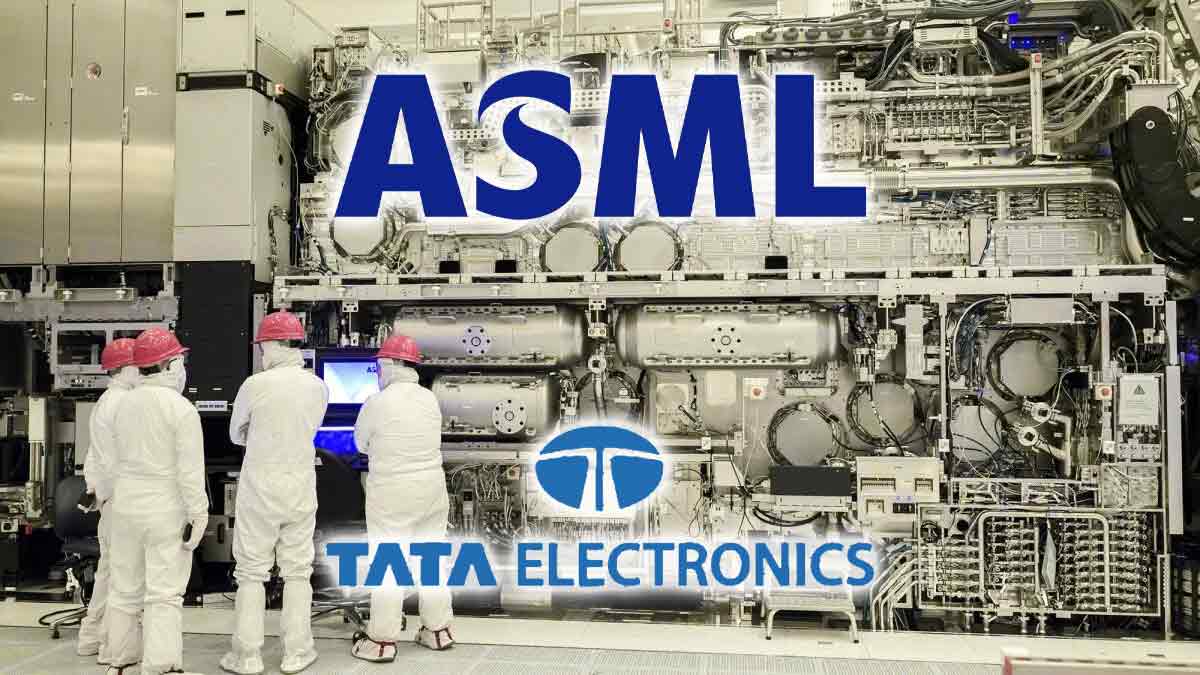
The core of this bilateral integration lies in the semiconductor manufacturing sector, specifically the technical and commercial agreements finalized between Tata Electronics and ASML during the Dholera fabrication facility development in Gujarat. To understand this linkage, the industrial value chain must be disaggregated into its component capital expenditure (CapEx) dependencies.
+-----------------------------------------------------------+
|                     ASML (Netherlands)                     |
|  Monopoly Supply of Advanced Photolithography Equipment   |
+-----------------------------------------------------------+
                              |
                              | High-Precision Tooling &
                              | Hardware Interdependence
                              v
+-----------------------------------------------------------+
|                 Tata Electronics (India)                  |
|  Greenfield Fab Scaling & High-Volume Silicon Production  |
+-----------------------------------------------------------+
India's domestic semiconductor market is projected to expand from $55 billion to $100 billion by 2030, driven by non-linear demand increases in automotive electronics, 5G Internet of Things (IoT) infrastructure, and mobile hardware. However, building physical fabrication plants (fabs) is insufficient without securing access to upstream precision machinery. ASML maintains a functional monopoly over advanced photolithography systems. This critical process determines transistor density and yield optimization by printing nanoscale circuit patterns onto silicon wafers. To read more about the background of this, Mashable provides an in-depth breakdown.
The strategic interdependence functions through a precise trade-off:
- The Dutch Structural Constraint: High-precision engineering firms require predictable, massive capital deployments to sustain multi-billion-dollar research and development cycles. The domestic European market lacks the domestic consumer hardware manufacturing volume required to absorb this capacity indefinitely.
- The Indian Capacity Ramp: India’s greenfield fabrication plants require immediate, de-risked access to advanced lithography systems to prevent multi-year operational delays.
The agreement signed between Tata Electronics and ASML creates a direct mechanism to resolve this bottleneck. By integrating computational software and metrology tools directly into the Dholera facility during construction, the partnership minimizes the time required to achieve high-volume production yields. This structural optimization lowers the cost-per-wafer, enabling Indian manufacturers to counter established East Asian foundries.
The Green Hydrogen Vector: Mapping the Logistics Corridor
The second pillar of this partnership replaces traditional energy imports with a joint roadmap for green hydrogen production and distribution. This initiative addresses a fundamental structural mismatch in the emerging global decarbonization framework.
The primary limitation of green hydrogen production is not the underlying chemical process of electrolysis, but the economics of long-distance logistics and infrastructure scaling. India possesses a distinct geographic and structural advantage in the production phase, driven by the low levelized cost of electricity (LCOE) from its massive utility-scale solar installations. This low input energy cost allows India to produce green hydrogen at a highly competitive rate per kilogram.
However, exporting this energy requires specialized infrastructure. The Netherlands, via the Port of Rotterdam, functions as the primary energy gateway to continental Europe, possessing extensive maritime logistics systems, pipeline networks, and regasification infrastructure.
+--------------------------------------------------------+
|                      INDIA                             |
| Low LCOE Solar Infrastructure -> Low-Cost Hydrogen     |
| Production (Input Phase)                               |
+--------------------------------------------------------+
                           |
                           | Maritime Export / Trade Corridor
                           v
+--------------------------------------------------------+
|                   NETHERLANDS                          |
| Port of Rotterdam Network -> Industrial Distribution   |
| To Continental Europe (Offtake Phase)                  |
+--------------------------------------------------------+
This creates a highly complementary logistics corridor:
$$\text{India (Low Cost Production)} \longrightarrow \text{Maritime Corridor} \longrightarrow \text{Netherlands (Port of Rotterdam Network)} \longrightarrow \text{European Industrial Offtake}$$
This integration mitigates a key risk for both nations. For India, it secures a reliable European offtake market, de-risking the massive capital expenditure required for national green hydrogen initiatives. For the Netherlands, it provides a stable, diversified supply of non-fossil fuels, reducing its exposure to regional energy disruptions.
Domestic Structural Reforms and the Cost Function of Indian Manufacturing
The expansion of Dutch foreign direct investment (FDI)—which stands at a cumulative $55.6 billion, positioning the Netherlands as India's fourth-largest investor—cannot be attributed solely to diplomatic alignment. It is directly tied to changes in India's domestic corporate cost structures, driven by specific regulatory overhauls.
Foreign manufacturing investment decisions are governed by a total cost function:
$$\text{Total Cost} = \text{Labor Costs} + \text{Compliance Overhead} + \text{Logistics Inefficiency} + \text{Tax Burden}$$
Historically, India’s structural advantages in low labor costs were offset by high compliance overhead and an unpredictable tax environment. Recent next-generation structural reforms have altered this equation by adjusting several key operational variables:
1. Corporate Taxation Realignment
The simplification of corporate tax codes and the introduction of predictable fiscal incentives for electronics manufacturing have lowered the effective tax rate for new production facilities. This provides foreign capital with a transparent, long-term model for projected returns on investment.
2. Labor Code Consolidation
The consolidation of complex, historical labor regulations into simplified, standardized codes reduces administrative friction. This enables multinational corporations to scale manufacturing operations up or down without facing prolonged legal delays.
3. Compliance and Ease of Doing Business
The systematic reduction of regulatory filings and the digitization of industrial approvals have lowered administrative friction. This transition shifts India's economic value proposition from low-cost labor to high-efficiency manufacturing.
This operational shift is evident in the changing profile of Indian exports. Electronics, which previously represented a significant net import drain on India's current account balance, has become a rapidly growing export sector. This change demonstrates that domestic manufacturing facilities have achieved the quality standards and cost efficiencies required to compete in global markets.
Global Capability Centers and Talent Mobility Dynamics
The services component of the bilateral relationship has evolved beyond traditional IT outsourcing into a sophisticated model driven by Global Capability Centers (GCCs). Over 300 Dutch companies operate within the Indian economic ecosystem, shifting their high-value engineering, design, and research divisions to domestic urban centers.
This transition alters the dynamic of human capital flight. Rather than relying entirely on physical talent mobility—which faces strict visa and immigration caps—the current model relies on digital infrastructure to integrate Indian engineering talent into global corporate architectures.
This framework creates a dual-benefit mechanism:
+-------------------------------------------------------------+
|               Global Capability Centers (GCCs)              |
+-------------------------------------------------------------+
               /                               \
              /                                 \
             v                                   v
+------------------------+             +------------------------+
|       For India        |             |   For Dutch Firms      |
| Retention of Skilled   |             | Distributed R&D        |
| Engineers & Technology |             | Capability at Scale    |
| Transfer               |             | Without Local Scarcity |
+------------------------+             +------------------------+
This system allows Dutch enterprises to access highly specialized engineering talent at scale, bypassing the constraints of domestic talent shortages. Simultaneously, it allows India to retain high-value human capital within its domestic tax base, while accelerating knowledge transfer into its local technology ecosystem.
Strategic Interdependence and Risk Management
While the structural alignment between India and the Netherlands offers significant economic potential, its long-term success depends on navigating several systemic constraints:
- Asymmetric Capital Flows: The relationship remains highly reliant on a small number of critical industries, particularly semiconductor hardware and maritime logistics. A downturn in global consumer electronics demand or delays in India’s domestic infrastructure rollout could lead to underutilized capacity in these specialized corridors.
- Regulatory Friction: The realization of this economic framework depends on the full implementation of the India-EU Free Trade Agreement. Delays in resolving disagreements over intellectual property rights, data localization rules, and cross-border tariffs could create bottlenecks for these integrated supply chains.
- Geopolitical Exposure: The high concentration of advanced semiconductor tool manufacturing within a single geography leaves supply chains vulnerable to regional regulatory shifts or export control changes.
The long-term value of this bilateral framework will be determined by how effectively both nations manage these structural risks. The shift from a transactional trade relationship to an integrated technological partnership provides a foundation for more resilient supply chains. However, maintaining this momentum will require continuous policy alignment, predictable regulatory frameworks, and sustained capital deployment across both economic ecosystems.