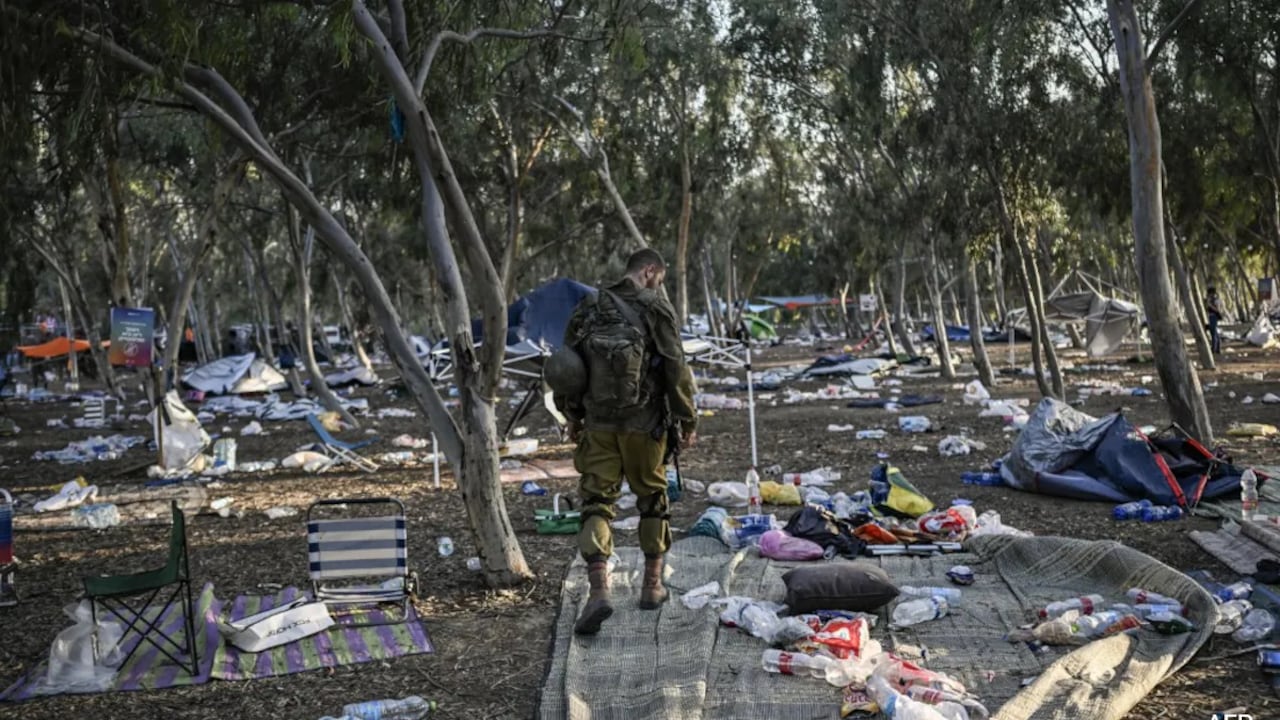
Systemic operational failures rarely stem from a single point of error; they emerge from compounding organizational blind spots, misaligned incentives, and rigid cognitive biases. Gadi Eisenkot, former Chief of the General Staff of the Israel Defense Forces (IDF) and a member of Israel's wartime cabinet until June 2024, has consistently advocated for a formal state commission of inquiry into the October 7, 2023, Hamas attack. His demand is not merely a political maneuver within a fractured coalition—it is an operational imperative rooted in institutional accountability, military doctrine, and the mechanics of strategic deterrence.
Understanding Eisenkot’s position requires stripping away partisan rhetoric and examining the structural mechanics of the failure. When a tier-one military and intelligence apparatus suffers a catastrophic surprise, internal military probes are structurally incapable of diagnosing the root cause. A state commission of inquiry, governed by Israel's Commissions of Inquiry Law of 1968, possesses subpoena power, operates independently of the executive branch, and evaluates the interface between political directives and military execution. Without this external audit, the institutional assumptions that enabled the breach remain intact, guaranteeing future vulnerability.
The Architecture of Strategic Blindness
To deconstruct the October 7 failure, analysts must separate tactical execution from strategic conception. In Israeli security doctrine, the prevailing mental model prior to October 2023—often referred to internally as the Konseptzia (the Conception)—rested on a flawed game-theoretic assumption: that Hamas was deterred by economic incentives and the threat of disproportionate military retaliation.
This model created three distinct structural blind spots across the political and military echelons:
- Confirmation Bias in Intelligence Collection: Intelligence agencies collected granular tactical indicators of Hamas training, tunnel expansion, and breach rehearsals. Yet, analytical frameworks filtered out data that contradicted the baseline assumption that Hamas sought governance stability over total war. Signals were misclassified as posturing rather than preparation.
- Over-Reliance on Technological Deterrence: The construction of the multi-billion-dollar subterranean and surface barrier around Gaza fostered an illusion of physical invulnerability. This capital-intensive defense architecture allowed military planners to reduce human troop deployments along the Gaza envelope, reallocating forces to the West Bank. When the barrier’s sensors and remote weapon stations were neutralized in the opening minutes of the assault, no maneuverable reserve existed to absorb the shock.
- Asymmetric Risk Tolerance: Israeli planners modeled Hamas as a rational actor seeking to maximize utility through economic concessions, such as Qatari financial transfers and work permits for Gazan laborers. They failed to account for an ideological actor willing to accept total infrastructural destruction in exchange for shattering the adversary's psychological and strategic equilibrium.
Eisenkot’s push for an inquiry targets the exact intersection of these three failures. An internal IDF investigation can assess why a specific brigade failed to deploy on time or why a surveillance post went dark. It cannot, however, interrogate why the Prime Minister’s office and the defense establishment maintained a policy of containment and financial facilitation despite mounting intelligence warnings.
Internal Probes Versus State Commissions
A core tension in post-crisis governance is the selection of the investigative mechanism. Prime Minister Benjamin Netanyahu and segments of his coalition have repeatedly argued that a comprehensive inquiry must wait until the conclusion of active hostilities, favoring limited internal military reviews in the interim. Eisenkot has rejected this sequencing, identifying it as a mechanism to diffuse responsibility and outlast public scrutiny.
The operational differences between internal military reviews and a statutory state commission are absolute:
- Jurisdictional Scope: Internal IDF probes examine the tactical and operational chain of command—from battalion commanders up to the Chief of Staff. They stop at the doorstep of the Ministry of Defense and the Prime Minister’s Office. A state commission investigates the entire decision-making apparatus, including the National Security Council, the Shin Bet (Israel Security Agency), the Mossad, and the political cabinet.
- Evidentiary Authority: Internal probes rely on voluntary cooperation and standard military reporting protocols, which often protect institutional reputations. A state commission, headed by a Supreme Court justice appointed by the President of the Supreme Court, exercises full judicial authority to compel testimony under oath, seize classified documents, and issue binding personal recommendations that can bar officials from holding future public office.
- Temporal Decay of Accountability: Delaying an inquiry degrades evidentiary integrity. Institutional memories fade, digital records are overwritten or contextualized post-hoc, and political actors construct self-serving narratives. By the time a delayed inquiry publishes its findings, the responsible officials have often transitioned out of office, rendering accountability purely symbolic.
In organizational theory, this dynamic illustrates the principal-agent problem. The citizens (the principals) delegate national security authority to elected officials and military commanders (the agents). When a catastrophic failure occurs, the agents have a direct incentive to obscure information and delay audits to preserve their tenure. Eisenkot’s insistence on an immediate state commission is an attempt to re-establish principal oversight over non-transparent agents.
The Cost Function of Delayed Accountability
Postponing a systemic audit imposes severe operational costs on an active military campaign. Fighting a multi-front war while operating under the same unexamined institutional frameworks that caused the initial failure creates compounding strategic risks.
The first cost is doctrinal stagnation. Military organizations adapt through rigorous after-action reviews. Historically, Israel’s most significant doctrinal evolutions followed external, independent inquiries. Following the 1973 Yom Kippur War—another intelligence failure driven by a rigid Konseptzia—the Agranat Commission forced a complete overhaul of intelligence assessment methodologies, establishing the "Devil’s Advocate" unit within Military Intelligence (Aman) to institutionalize dissent. Similarly, the Winograd Commission following the 2006 Second Lebanon War exposed severe deficiencies in ground force readiness, combined-arms coordination, and cabinet-level decision-making. Eisenkot himself served as head of the IDF Operations Directorate during the 2006 war and later as Chief of Staff, directly implementing the structural reforms mandated by the Winograd findings.
The second cost is the erosion of civil-military cohesion. The IDF relies on a citizen-army model, where reserve soldiers voluntarily mobilize based on an implicit social contract: the state will only risk their lives within a coherent, accountable strategic framework. When political leaders resist scrutiny for the deadliest single-day failure in the nation’s history, trust in the high command and political leadership fractures. Reserve mobilization rates and morale suffer when soldiers perceive that leadership prioritizes political survival over institutional learning.
The third cost is strategic incoherence in post-war planning. Without a clear diagnosis of how the containment policy failed, the government cannot formulate a viable governance model for post-war Gaza. Tactical military victories—eliminating battalions and destroying tunnel networks—do not translate into strategic victory if the underlying political-military interface remains broken. Eisenkot’s resignation from the war cabinet in June 2024 was explicitly tied to this vacuum: the refusal to link military operations to a realistic diplomatic and governance endgame.
Mapping the Decision-Making Bottlenecks
To understand what a state commission would actually examine, one must trace the chronological breakdown of the command chain in the hours preceding and following 06:29 AM on October 7. Known facts indicate that intelligence signals began accumulating during the night of October 6. Unusual activity on Hamas’s cellular networks, combined with observations from frontline female surveillance soldiers (tatzpitaniyot), triggered high-level consultations between the head of the Shin Bet, Ronen Bar, and the IDF Chief of Staff, Herzi Halevi.
Despite these indicators, the system failed to transition from a peacetime posture to a combat-ready alert. Several structural bottlenecks explain this paralysis:
- Fragmented Intelligence Fusion: Information sat in silos between Military Intelligence (focused on external signals and broad strategic assessments) and the Shin Bet (focused on human intelligence and internal security). Neither agency possessed a unified real-time operational picture capable of overriding the baseline assumption that Hamas was merely conducting a nocturnal exercise.
- Escalation Thresholds: Raising the alert level along the Gaza border carried high operational and political costs. Deploying reinforcements risked tipping off Hamas, potentially triggering an unintended escalation, or exhausting troops over what analysts assessed as a low-probability event. Consequently, commanders opted for limited, localized adjustments—such as dispatching a small tactical team from the Shin Bet—rather than ordering a full division-level mobilization.
- The Political-Military Disconnect: The Prime Minister’s military secretary was updated during the night, yet no emergency cabinet meeting was convened, nor was the Prime Minister awakened until the assault was already underway. A state commission must determine whether this omission resulted from established protocols regarding low-confidence intelligence or an institutional reluctance to disturb the political leadership without definitive proof.
Evaluating these bottlenecks requires distinguishing between human error and systemic design flaws. Firing a specific intelligence officer addresses individual negligence, but it leaves intact the incentive structures that penalized analysts for raising false alarms. A rigorous audit examines the system architecture that made the error probable.
Limitations of the Statutory Commission Model
While a state commission of inquiry represents the highest standard of institutional accountability in Israel, treating it as a panacea ignores significant operational and political limitations.
First, statutory commissions are inherently retrospective and slow. The Agranat Commission took over a year to publish its final report; the Winograd Commission required nearly two years. In a fast-moving regional conflict involving multiple state and non-state actors, a two-year investigative cycle cannot provide real-time tactical corrections. The IDF must conduct rapid, parallel internal reviews to adjust combat doctrine immediately, even as a state commission examines the broader strategic failure.
Second, the recommendations of a state commission are vulnerable to political subversion. While historical precedent dictates that governments adopt the personal recommendations of a commission—such as the resignations of defense ministers or chiefs of staff—there is no absolute legal mechanism forcing a sitting government to implement structural reforms. In an era of deep political polarization, factions aligned with the executive branch can delegitimize the commission by attacking the impartiality of the Supreme Court justice leading it, effectively neutralizing its moral authority.
Third, excessive focus on legalistic accountability can induce institutional risk aversion. When military commanders and intelligence analysts know their every tactical decision will be dissected years later by jurists with the benefit of hindsight, operational paralysis can set in. Officers may prioritize procedural compliance and CYA (cover-your-ass) documentation over decisive, intuitive action in ambiguous combat environments. Balancing accountability with operational autonomy remains one of the hardest problems in military governance.
Strategic Execution for Institutional Recovery
Restoring deterrence and rebuilding institutional trust requires decoupling the investigative process from partisan survival. Based on the mechanics of organizational recovery and historical precedent, the path forward demands three concrete actions:
- Immediate Establishment of a Dual-Track Audit: The government must immediately charter a statutory State Commission of Inquiry under the 1968 law to investigate the political-military interface from 2014 through October 7, 2023. Simultaneously, the IDF must complete and publish its internal tactical probes without redacting failures at the General Staff level, allowing immediate doctrinal adjustments in ongoing operations.
- Institutionalizing Adversarial Intelligence: Military Intelligence and the Shin Bet must restructure their analytical workflows to eliminate consensus-driven groupthink. This requires elevating the authority of red-team units, mandating that dissenting intelligence assessments be presented directly to the security cabinet unfiltered by agency heads, and weighting low-probability, high-impact scenarios based on adversary capabilities rather than assessed intentions.
- Codifying Political-Military Escalation Protocols: The National Security Council must establish clear, non-discretionary thresholds for political notification and force mobilization when multi-source intelligence indicators cross a defined anomaly baseline. Eliminating subjective hesitation during nocturnal or holiday periods removes the single point of failure that paralyzed the command chain on the night of October 6.
Without executing these structural corrections, any tactical success achieved on the battlefield remains fragile. True deterrence relies not merely on the capacity to inflict damage, but on the demonstrated institutional ability to diagnose failure, adapt doctrine, and enforce accountability at the highest levels of command.