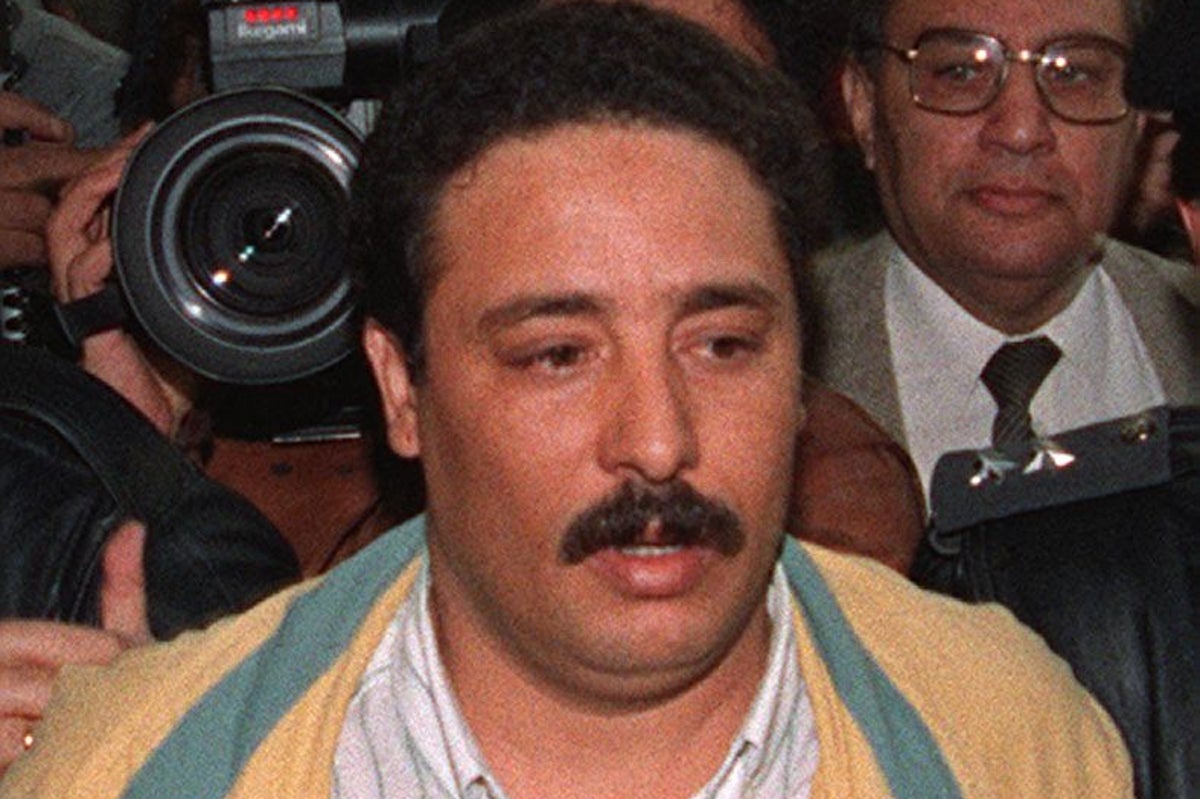
The death of Al Amin Khalifa Fhimah at age seventy closes a minor chapter in one of the twentieth century's most complex intelligence operations. Fhimah, a former station manager for Libyan Airlines in Malta, was tried and acquitted in 2001 by a panel of Scottish judges sitting at Camp Zeist in the Netherlands for his alleged role in the December 21, 1988 bombing of Pan Am Flight 103. While his co-accused, Abdelbaset al-Megrahi, was convicted of mass murder, Fhimah walked free, returned to Tripoli, and lived out his life under the protection of the Libyan state until his passing.
Evaluating this event requires stripping away the emotional residue of the 270 fatalities to examine the structural mechanics of international criminal tribunals, state-sponsored terrorism attribution, and the limits of historical justice.
The Jurisdictional Architecture of Camp Zeist
The prosecution of Pan Am Flight 103 was an unprecedented exercise in cross-border legal engineering. Standard jurisdictional models failed because Libya refused to extradite its nationals to Scottish or American courts, citing constitutional prohibitions against handing citizens to foreign jurisdictions.
The resulting diplomatic deadlock forced a compromise: a Scottish court operating under Scots law, but situated on neutral soil at a former United States Air Force base in the Netherlands, governed by a special treaty between the United Kingdom and the Netherlands. This framework created a unique operational environment for the three presiding Scottish judges.
The legal test demanded proof beyond a reasonable doubt that Fhimah and Megrahi acted in concert with Libyan intelligence services to introduce an unaccompanied luggage item containing an improvised explosive device into the interline baggage system at Luqa Airport in Malta, routed via Frankfurt onto Pan Am Flight 103.
The court established that the mechanics of the conspiracy relied on exploiting vulnerabilities in early civil aviation security protocols, specifically interline baggage transfer tracking. However, the evidentiary threshold for conspiracy requires robust corroboration of individual intent and execution.
The Divergent Legal Fates
The divergence in the verdicts between Megrahi and Fhimah highlights the rigorous evidentiary demands of a criminal trial, even one influenced by high-stakes geopolitics.
Megrahi was linked to a specific pseudonym, a passport utilized to travel to Malta, and circumstantial links to the purchase of clothing items found inside the primary bomb suitcase. The prosecution's case against Fhimah, while built on similar intelligence assumptions regarding his access to the Malta station, suffered from fatal vulnerabilities concerning temporal proximity and operational logs.
The trial court found that while Fhimah had the professional means and access to manipulate baggage tags or routing mechanisms at Luqa Airport, the Crown failed to prove his active participation in the specific logistical sequence on the day of the bombing. Specifically, evidence pointed to gaps in the timeline of luggage handling and alternative hypotheses regarding how the primary device entered the transit chain.
Fhimah's acquittal was not an affirmation of absolute innocence, but a judicial recognition that the standard of proof required by Scots criminal law—requiring credible and reliable corroboration of every vital fact—had not been met for his specific indictment.
The Mechanics of State Attribution and Sanctions
The Lockerbie investigation established a blueprint for how western states respond to state-sponsored asymmetric warfare prior to the proliferation of cyber operations and modern counter-terrorism frameworks.
United Nations Security Council resolutions enacted sweeping economic and diplomatic sanctions against Libya, isolating the regime of Colonel Muammar Gaddafi and choking its hydrocarbon-dependent economy. This systemic pressure functioned as an economic cost function designed to force state compliance.
In 2003, following years of back-channel negotiations and the surrender of the two suspects, Libya formally accepted general responsibility for the actions of its officials, agreed to pay nearly three billion dollars in civil compensation to the families of the victims, and dismantled its unconventional weapons programs.
This outcome demonstrates how sustained multilateral economic coercion can compel a sovereign state to alter its strategic calculus, trading individual intelligence assets for the rehabilitation of its international economic standing.
The Residual Legal Frontier
Fhimah's death occurs against a backdrop of ongoing legal maneuvers that prove accountability in legacy state-sponsored terrorism cases rarely achieves structural closure. Decades after the initial verdicts, the United States Department of Justice pursued additional indictments, most notably against Abu Agila Mohammad Masud Kheir Al-Marimi, a former Libyan intelligence operative accused of assembling the primary explosive device.
The pursuit of Masud relies on post-2001 intelligence discoveries, including statements recovered by Libyan authorities during the post-2011 political transition. However, these later developments introduce complex evidentiary strains. Statements obtained during periods of internal civil conflict or under detention regimes often invite challenges regarding coercion, voluntariness, and the chain of custody for oral admissions.
Furthermore, under legal doctrines such as the Double Jeopardy (Scotland) Act 2011, an acquittal can theoretically be set aside only under extraordinary statutory conditions requiring newly discovered, highly probative evidence that was unavailable during the original proceedings and would have substantially altered the outcome. Fhimah's death permanently closes any legal avenue for prosecutors to test whether fresh intelligence from the Masud proceedings could have triggered a retrial under Scottish jurisdiction.
Strategic Trajectory
For contemporary international security analysts, the legacy of the Lockerbie trials offers a clear operational lesson regarding attribution velocity. The timeline from the 1988 detonation to the 2001 verdict spanned over twelve years, and supplementary prosecutions continue decades later.
Future investigations into state-sponsored infrastructural sabotage must anticipate long-tail judicial horizons where primary suspects pass away before comprehensive legal consensus is achieved. Intelligence agencies and prosecutorial bodies must transition toward real-time digital evidence preservation to prevent the degradation of technical data that historically undermines complex conspiracy trials.