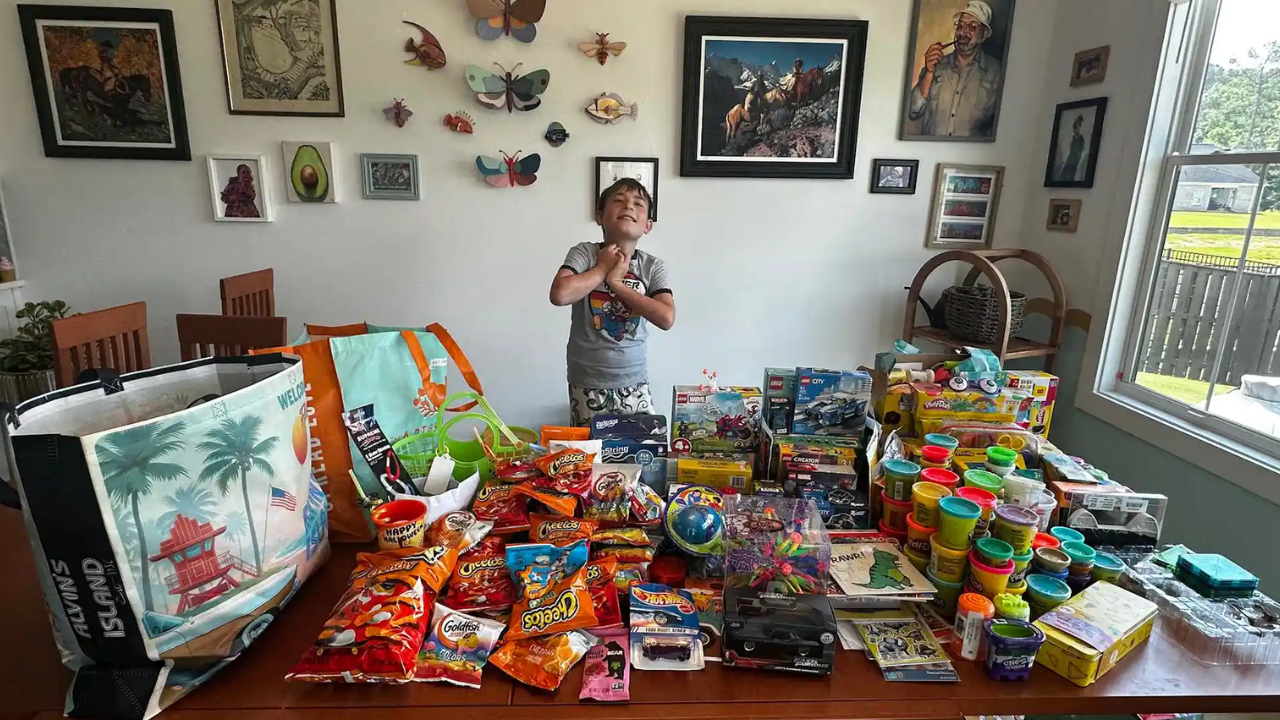
Community cohesion typically operates on strict temporal schedules. Social rituals—such as Halloween, holiday gift exchanges, and neighborhood block parties—are bound to specific calendar anchors. When an individual violates these temporal norms, friction usually occurs due to the breakdown of expected scripts. Recently, an 11-year-old autistic boy attempted to execute a Halloween trick-or-treating protocol during the summer months. Instead of experiencing social rejection, he encountered a responsive neighborhood environment where residents opened their doors and adapted to the anomalous behavior. This event provides a clear case study for examining the mechanics of localized social elasticity, cognitive reframing, and the parameters governing informal community support systems.
The Temporal Friction of Social Scripts
Human socialization relies heavily on shared mental models and predictable scripts. Sociological frameworks suggest that everyday interactions run smoothly because participants anticipate the rules of engagement. Halloween functions as a high-consensus social script:
- Temporal constraint: Occurs exclusively on October 31st.
- Behavioral protocol: Costumed individuals approach residences; verbal prompts are exchanged; nominal confectionery assets are transferred.
- Reciprocal expectation: The interaction is transient, low-stakes, and mutually understood.
When a participant attempts to execute this protocol outside its designated temporal window, the standard script fails. The immediate response from a community usually involves confusion, skepticism, or defensive boundary enforcement. The summer trick-or-treating incident defies this baseline prediction.
To understand why residents bypassed the script, we must examine the cost function of social compliance. For most neighbors, the cognitive load of rejecting a non-conforming child outweighs the minor inconvenience of participating in an out-of-season ritual. The marginal cost of granting compliance—handing out a snack or offering a friendly acknowledgment—is near zero, whereas the social cost of turning away an autistic child violates internal ethical frameworks.
The Mechanics of Neighborhood Elasticity
Community resilience and adaptability depend on what can be termed neighborhood elasticity. This metric measures a community's capacity to absorb behavioral anomalies without resorting to exclusionary tactics. High-elasticity environments possess specific structural characteristics:
Decentralized decision-making units allow individual households to act as independent nodes. In the observed event, no central authority coordinated the response. Each neighbor independently assessed the situation, recognized the non-threating nature of the stimulus, and recalibrated their immediate behavioral output.
Information asymmetry worked in favor of the interaction. Neighbors did not require a comprehensive clinical briefing on the child's neurological profile to alter their behavior. Human pattern recognition quickly identified the core variables: a child seeking engagement, an absence of malicious intent, and a break in routine driven by developmental divergence.
Adaptive friction reduction occurred because the residents prioritized immediate emotional validation over strict adherence to temporal norms. By opening their doors, the neighborhood demonstrated a tolerance for operational variance that standard social structures rarely accommodate.
Neurodivergence and Predictability Gaps
Autistic individuals frequently rely on routines, special interests, and fixed mental frameworks to navigate a high-stimulus environment. For an 11-year-old boy fixated on a favored holiday, the calendar constraint of October 31st may represent an arbitrary barrier devoid of internal logic. If Halloween provides a structured, safe framework for social interaction, the desire to replicate that security during an off-peak period is a rational pursuit of psychological comfort.
The friction arises when internal neurological processing conflicts with external societal synchronization. Society demands temporal synchronization; individual neurology often prioritizes functional stability. When neighbors adapted to the summer request, they inadvertently bridged this predictability gap. They temporarily dissolved the barrier between normative schedules and individual accommodation.
The broader implications for autism integration point toward the necessity of environmental flexibility. Traditional inclusion models focus heavily on institutional settings, specialized schools, or structured therapy sessions. However, real-world integration relies on the informal micro-interactions that occur within residential spaces. When a community displays high elasticity, the burden of adaptation shifts partially from the neurodivergent individual to the collective environment.
The Cost Function of Social Compliance
Analyzing community responses through economic lenses reveals the underlying incentives driving neighbor behavior. Social transactions carry invisible ledgers of cost and benefit.
[Incoming Stimulus: Out-of-Season Request]
       │
       ▼
[Household Assessment Matrix]
       ├── Cost of Rejection: Social guilt, perceived cruelty, cognitive dissonance
       └── Cost of Compliance: Minor pantry depletion, temporal interruption
       │
       ▼
[Optimized Output: Compliance and Validation]
When confronted with the summer trick-or-treating scenario, the cost of rejection registers as significantly higher than the cost of compliance. Rejecting the child creates immediate negative feedback loops within the resident's self-perception—specifically, the violation of internalized norms regarding the protection of vulnerable youth. Conversely, compliance incurs a negligible resource expenditure while generating positive social validation.
This calculation changes drastically in urban or densely populated settings where anonymity is high. In close-knit or moderately connected neighborhoods, social visibility acts as a moderating variable. Reputation management, observation by peers, and a desire to maintain a cohesive local identity reinforce positive or accommodating responses.
Systemic Limitations of Informal Adaptation
Relying entirely on spontaneous neighborhood elasticity presents severe structural limitations. Informal kindness is not a scalable public policy. Several failure points exist within this model:
Variance in local tolerance remains high. While one neighborhood exhibits high elasticity and positive engagement, an adjacent community might display low tolerance, resulting in suspicion, law enforcement involvement, or verbal hostility toward a non-conforming minor.
Unsustainable dependency on goodwill can create vulnerabilities. An autistic individual cannot reliably navigate the world by expecting strangers to suspend societal rules on demand. Systemic inclusion requires predictable infrastructure rather than relying on the emotional labor of random bystanders.
The absence of standardized training means that community responses remain clumsy, even when well-intentioned. Neighbors improvised their approach because no educational frameworks exist to guide civilians on how to interact with neurodivergent individuals during atypical social breaches.
Scaling Community Inclusion Metrics
To transform isolated acts of neighborhood kindness into a replicable framework, communities must measure and optimize their integration parameters. This requires shifting from passive tolerance to active environmental design.
Diagnostic Assessment of Local Infrastructure
Communities must evaluate their current accessibility not merely through physical ramps and ADA compliance, but through behavioral tolerance audits. Measuring how local businesses, neighborhood associations, and resident groups respond to non-disruptive behavioral anomalies establishes a baseline for social friction.
Protocol Standardization for Public Spaces
Civic organizations should develop clear, low-barrier guidelines for local residents on recognizing and responding to neurodivergent behaviors. This reduces the cognitive load on individuals when they encounter unexpected social scripts, replacing hesitation with structured empathy.
Resource Allocation for Micro-Interventions
Investment should flow toward neighborhood-level educational initiatives that normalize variance in social expression. By normalizing atypical behaviors before they occur in public view, the baseline elasticity of the community increases permanently.
Implement a decentralized neighborhood sensory map and behavioral guideline distribution program across municipal sectors to systematically lower the friction of social inclusion before reliance on spontaneous goodwill becomes necessary.