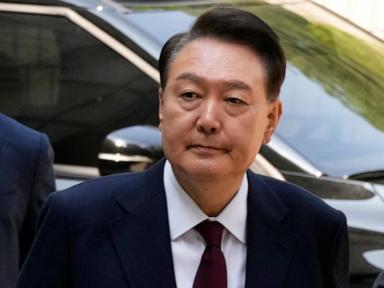
The judicial architecture of South Korea enforces strict accountability mechanisms on political campaigns, transforming minor rhetorical missteps into existential threats for institutional parties. The Seoul Central District Court sentenced former President Yoon Suk Yeol to 18 months in prison, suspended for three years, after determining he violated public official election laws during his narrow 2022 presidential victory. Far from a routine judicial reprimand, this ruling establishes a measurable cost function for political falsehoods, linking candidate statements directly to state-level financial clawbacks and party insolvency.
The Mechanics of Election Law Violations
Under South Korean Public Official Election Act provisions, the state reimburses campaign expenditures for candidates who secure victory or clear a 15% vote threshold. This statutory framework is designed to lower barriers to entry for political aspirants. However, the legal architecture contains a balancing clause: if a candidate receives an election-invalidating sentence—defined as a prison term or a fine of 1 million won or greater—the underlying administrative validation dissolves.
The court substantiated two primary falsehoods from Yoon's 2022 campaign trail:
- The explicit denial of introducing a specific lawyer to a former tax official.
- The denial of any personal or spousal association with a controversial shaman, Jeon Seong-bae, who maintained proximity to former first lady Kim Keon Hee.
Prosecutors successfully argued that these denials systematically deflected public scrutiny during an exceptionally tight electoral race, which Yoon won by a margin of just 0.7 percentage points. By insulating his campaign from collateral reputational damage via public misstatements, Yoon altered the informational equilibrium available to the electorate. The court quantified this impact by noting that falsehoods broadcast during high-leverage debates and media interviews distort voter decision matrices beyond ordinary political spin.
The Financial Liability Matrix
The operational consequence of the ruling extends far beyond Yoon's personal liberty, triggering a severe liquidity crisis for the conservative People Power Party (PPP).
- Reimbursed Principal: Following his 2022 victory, the National Election Commission disbursed 39.7 billion won ($27.1 million) to cover Yoon's official campaign expenses.
- The Clawback Trigger: A final, unappealable conviction carrying a prison sentence or a fine exceeding 1 million won legally mandates the complete return of these funds.
- Institutional Vulnerability: For a political organization operating on strict annual operational budgets, a sudden liability of approximately 40 billion won introduces acute balance-sheet stress, potentially impairing the party's ability to finance subsequent local and national election cycles.
This mechanism creates an asymmetric risk profile for political parties. While candidates reap the immediate utility of winning office, the party infrastructure assumes a latent, deferred liability tied directly to the candidate's post-election legal exposure.
The Cumulative Compounding of Legal Risk
Yoon's conviction does not exist in a vacuum; it functions as a single node within an expanding network of criminal proceedings following his removal from office after the short-lived December 2024 martial law declaration. The compounding legal jeopardy alters the strategic calculations of political allies and institutional actors.
When a political figure faces concurrent prosecutions—ranging from insurrection charges to abuse of power—the marginal cost of an additional conviction changes. For the judicial system, stacking penalties reinforces the doctrine of legal supremacy over executive immunity. For the political opposition, it establishes a legal precedent that campaign rhetoric is an auditable asset subject to retrospective verification.
The defense strategy, anchored by plans to appeal the verdict to higher courts, relies on parsing the statutory definition of what constitutes a material false statement versus subjective political rhetoric. Yet, the judiciary's willingness to link direct statements about personal associations to electoral distortion signals a low tolerance for candidate obfuscation.
Track the progression of the appellate review at the Supreme Court level to evaluate the timing of liquidity demands on the People Power Party, and recalibrate institutional risk assessments around campaign expenditure audits well in advance of future election cycles.