Capital misallocation in regulated natural monopolies produces compounding operational friction long before financial solvency collapses. The £30.5 million enforcement package levied by Ofwat against South East Water on July 14, 2026, represents more than a punitive fine for localized service interruptions. It exposes a structural decoupling between infrastructure maintenance expenditure, credit rating stability, and regulatory oversight mechanisms. When a utility prioritizes short-term balance sheet engineering over asset health, technical vulnerability becomes guaranteed.
The economic and operational collapse of South East Water operates across three distinct vectors: systemic underinvestment in network resilience, severe breakdowns in operational crisis response, and capital structure vulnerability leading to credit rating downgrades. Examining these mechanisms provides a clear framework for how infrastructure failure occurs under regulated price cap regimes.
The Tri-Fold Mechanism of Operational and Regulatory Failure
Ofwat’s enforcement package concludes three independent investigations, synthesizing operational, customer service, and financial compliance breaches into a single regulatory intervention.
+-------------------------------------------------------------------------------+
|                       TRIPLE REGULATORY INVESTIGATION                         |
+-------------------------------+-------------------------------+---------------+
| 1. Systemic Supply Failures   | 2. Customer Service & Crisis  | 3. Financial  |
|    (2020–2026)                |    Execution (Storm Goretti)  |    Licence    |
+-------------------------------+-------------------------------+---------------+
| - 286,000+ impacted (2020-23) | - Inadequate communication    | - Moody's     |
| - 70,000 homes offline        | - Bottled water failure       |   downgrade   |
| - Pembury plant vulnerabilities| - Logistical bottlenecks     | - Breach P26  |
+-------------------------------+-------------------------------+---------------+
                                |
                                v
+-------------------------------------------------------------------------------+
|                      £30.5M REDRESS PACKAGE STRUCTURE                         |
|  - £13.0m Direct Ringfenced Remediation Plan                                  |
|  - £5.0m  Household Water Efficiency Infrastructure (Water Butts)            |
|  - £5.0m  Non-Household Smart Metering Infrastructure                         |
|  - £5.0m  On-Site Storage Infrastructure                                      |
|  - £1.5m  Community Impact Fund (Kent & Sussex)                              |
|  - £1.0m  Vulnerable Site Storage Works                                       |
+-------------------------------------------------------------------------------+
1. Network Asset Deterioration and Shock Vulnerability
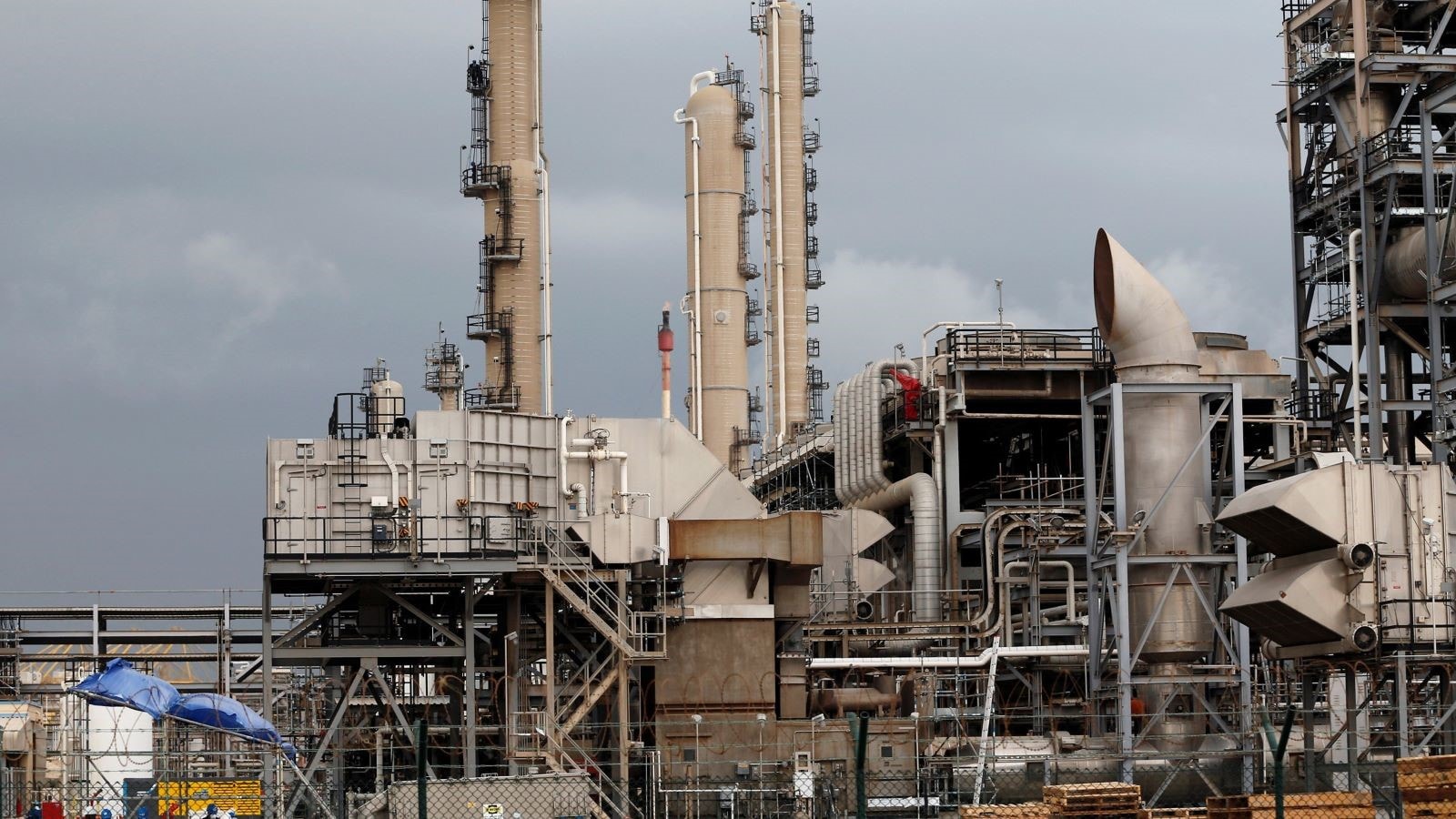
The initial £22 million component of the financial settlement addresses long-term supply failures between 2020 and 2023 affecting over 286,000 consumers. These disruptions were not isolated anomalies driven by external climate events; they resulted from delayed maintenance on key assets such as the Pembury Water Treatment Works.
Water distribution networks rely on steady hydraulic pressure and sustained production capacity. When water treatment plants experience mechanical or filtration failures, trunk mains lose pressure, causing widespread vapor pockets and pipe bursts upon repressurization.
By failing to allocate capital toward baseline infrastructure, South East Water reduced its operational buffer. Between November 2025 and January 2026, during winter freezing cycles and Storm Goretti, this lack of buffer resulted in up to 70,000 households losing tap water simultaneously across Kent and Sussex.
2. Operational Execution and Logistics Failures During Crisis Management
The second investigation established that crisis escalation protocols were largely ineffective during severe disruptions. Regulator findings highlighted specific procedural failures:
- Communication Lag: Delayed and contradictory updates left municipal authorities and residents without accurate restoration timelines.
- Logistical Bottlenecks: Distribution centers for emergency bottled water were understaffed and geographically misplaced, creating long wait times and supply shortages.
- Vulnerable Customer Neglect: Failure to maintain an accurate Priority Services Register meant vulnerable households went without direct delivery assistance.
When utility networks fail structurally, customer response logistics function as the secondary defense line. The total absence of scalable contingency distribution converted a technical water outage into a widespread public welfare failure.
3. Balance Sheet Stress and Licence Condition P26 Breaches
The third investigation centered on financial governance. In May 2026, credit rating agency Moody’s downgraded South East Water's debt rating. Under Condition P26 of its operating licence, a regulated utility must maintain an investment-grade credit rating to ensure it can access capital markets at reasonable interest rates to finance capital expenditure programs.
The downgrade triggered an immediate licence breach. High debt leverage coupled with rising debt-servicing costs restricted the firm's capacity to absorb operational shocks. When balance sheets are stretched to capacity, management teams often defer capital expenditure to service debt obligations, creating a direct feedback loop where financial stress accelerates infrastructure decay.
Capital Allocation and the £30.5 Million Redress Structure
To prevent penalties from degrading the company's financial position further—which would ultimately harm service delivery—the regulator mandated that the £30.5 million package be funded strictly by equity shareholders rather than passed through to customer bills.
The allocation of the package enforces specific operational reinvestments:
Direct Remediation and Operational Capital (£14.0 Million)
- £13.0 Million ringfenced directly for the core Remediation Plan to fix structural engineering issues across vulnerable treatment works and pipeline distribution networks.
- £1.0 Million directed into site storage capacity and physical works targeted specifically at vulnerable operational nodes in Kent and Sussex.
Demand Management and Network Monitoring (£10.0 Million)
- £5.0 Million allocated for smart metering deployment across non-household and commercial customers to detect leakage in real time.
- £5.0 Million dedicated to localized household water efficiency tools, reducing peak surge demand on weakened treatment assets.
Local Infrastructure and Community Redress (£6.5 Million)
- £5.0 Million committed to expanding on-site raw and treated water storage capabilities.
- £1.5 Million transferred into a dedicated community fund for directly affected regional zones.
Separately from the £30.5 million penalty, Ofwat mandated the installation of an Independent Monitor, paid for directly by South East Water shareholders. The monitor oversees the execution of the company's Turnaround Plan and reports compliance directly to the regulator.
Structural Interventions for Regulated Asset Turnarounds
Resolving chronic infrastructure failure in private water utilities requires systemic operational reform rather than superficial regulatory adjustments.
       CAPITAL STRUCTURE RE-ENGINEERING
   (Equity Injections & Debt De-leveraging)
                     │
                     ▼
       OPERATIONAL AUDIT & ROOT CAUSE ANALYSIS
   (Independent Monitor & Asset Diagnostics)
                     │
                     ▼
       INFRASTRUCTURE RESILIENCE TARGETING
   (Redundant Storage & Smart Meter Monitoring)
                     │
                     ▼
       REGULATORY & SERVICE RE-ALIGNMENT
   (Compliance with Licence Condition P26)
Mandatory Equity Injections Tied to Asset Performance Metrics
Regulators must link shareholder dividend distributions directly to verifiable asset performance indicators, such as unplanned outage duration, burst rates per kilometer, and treatment plant uptime. When operational metrics drop below baseline thresholds, dividend lock-up mechanisms should activate automatically, forcing free cash flow directly into capital expenditure accounts.
Enforcing Redundant Water Storage Ratios
Network design must mandate minimum localized storage buffers. Utilities operating in geographically fragmented areas like Kent and Sussex require distributed storage reservoirs capable of maintaining minimum water pressure for at least 72 hours during major treatment plant shutdowns.
Separating Operational Oversight from Corporate Governance
The appointment of an Independent Monitor reporting directly to Ofwat breaks the information asymmetry between utility boards and the regulator. For troubled assets, independent monitoring must include real-time access to operational telemetry, asset health telemetry, and customer ticket response rates to spot operational failures before catastrophic losses occur.
The enforcement package against South East Water marks a shift toward operational accountability in regulated utilities. Restoring network reliability requires equity holders to fund capital expenditure, stabilize debt levels to satisfy licence condition P26, and rebuild physical asset redundancy across the network.