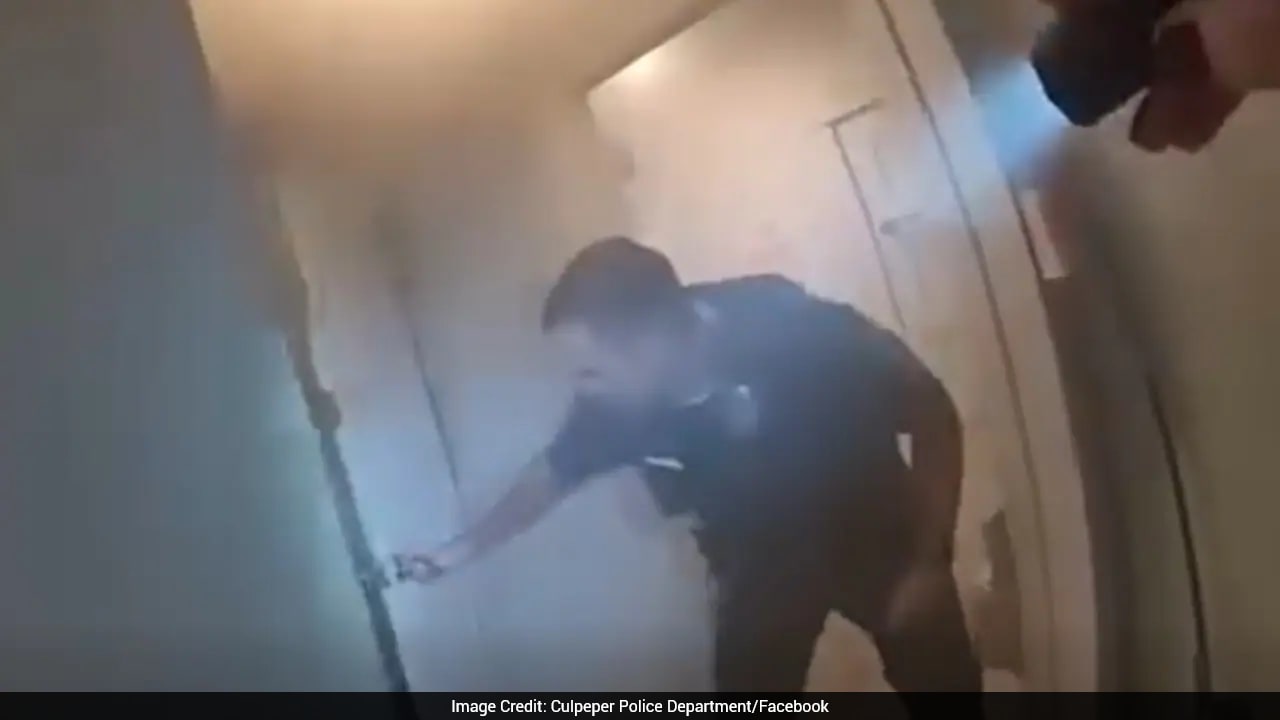
Residential structure fires compress survival into a narrow window where minutes govern brain injury and mortality, making first responder arrival times and early intervention the primary operational determinants of outcome. Headlines about police officers pulling an unconscious occupant from a burning house in Virginia—such as a headline reading Police Officers Rescue Unconscious Man From Burning House In Virginia—typically frame the event as isolated heroism while leaving the underlying mechanics unexamined. A rigorous systems view treats such an incident as a high-stakes race against thermal injury, toxic smoke inhalation, and oxygen deprivation, governed by dispatch latency, building geometry, crew deployment, and hazard exposure. Understanding how these variables interact clarifies why street-level patrol officers frequently arrive ahead of specialized fire suppression units, what limits they face without structural gear, and how municipal emergency systems can improve survival odds without pretending any single tactic eliminates risk.
The Anatomy of a Rescue Window
Flashover Physics and Survival Time
Modern residential interiors burn faster and hotter than legacy construction built with heavier dimensional lumber and natural fibers. Synthetic furnishings, polyurethane foams, engineered wood products, and open floor plans increase fuel load density and accelerate heat release rates. When a room fire transitions toward flashover—the rapid shift from a localized fire to simultaneous ignition of exposed combustible surfaces in an enclosed space—temperatures climb sharply and visibility drops to near zero in a matter of minutes rather than tens of minutes.
For an unconscious occupant, the hazard is compounded because impaired consciousness removes the behavioral reflex to crawl low, cover the airway, or exit early. Incapacitation frequently precedes thermal burns because carbon monoxide, hydrogen cyanide, and oxygen depletion impair cognition and motor control first. Once a person loses consciousness inside a smoke-logged room, survival depends on two competing clocks: the rate at which the atmosphere becomes lethal or unbreathable, and the elapsed time until air is restored and the body is removed from heat and smoke.
A known operational fact in fire service engineering is that early fire growth is non-linear; small delays in detection or dispatch correspond to disproportionately larger heat and smoke accumulation. An educated hypothesis in any single-headline incident without an incident report is that the victim's unconsciousness resulted from smoke inhalation or a medical event prior to extraction, though exact toxicology and ignition timelines remain unverified without official investigation findings.
Patrol Proximity Versus Suppression Readiness
In many municipal and county jurisdictions across Virginia—spanning dense suburbs, small cities, and rural corridors—law enforcement patrols operate continuously on distributed beats rather than waiting in fixed stations. When a structure fire is reported, nearby police units often reach the scene before engine and ladder companies can complete turnout, board apparatus, and navigate traffic or distance.
This geographic distribution creates an operational asymmetry:
- Patrol advantage: High dispersion across neighborhoods yields shorter initial travel times to an active address.
- Patrol constraint: Lack of self-contained breathing apparatus (SCBA), thermal imaging cameras, forcible entry hydraulics, and fire hose lines limits interior penetration once heat and smoke build.
- Fire crew advantage: Full personal protective equipment, structured two-in/two-out safety protocols, breathing air, and water streams allow sustained interior operations and simultaneous fire attack.
- Fire crew constraint: Station-based staging creates longer response curves in outlying or congested sectors.
When police officers execute an unassisted or semi-assisted extraction from a burning structure, they are trading protective margin against smoke and heat for speed. That trade-off can succeed when entry points are accessible and conditions have not yet reached untenable heat, yet it carries severe physiological and legal-operational risks if officers enter blind into superheated smoke without respiratory protection.
The Cost Function of Emergency Response
Emergency response performance is best understood as a cost function where every second of delay raises the expected harm to both civilians and responders. The total timeline from ignition to definitive care is not a single number; it is a chain of discrete intervals, each with its own friction points.
- Detection and call initiation: Time elapsed from fire onset until someone notices smoke, heat, or flames and dials emergency services. Unmonitored rooms, sleeping occupants, or delayed discovery widen this gap substantially.
- Call processing and dispatch: Time required to verify location, determine incident type, and alert police, fire, and emergency medical services. Address ambiguity, high call volume, or multi-agency routing can add critical seconds.
- Turnout and transit: Time for units to don gear, mount vehicles, and travel under emergency conditions. Road geometry, rail crossings, school or commuter traffic, and distance between stations govern transit duration.
- Scene size-up and access: Time spent locating the exact entry point, assessing structural stability or locked doors, and locating an unconscious victim inside a layout that may be unfamiliar or cluttered.
- Extraction and resuscitation: Physical effort required to drag or carry an incapacitated adult out of a hazard zone and begin airway management, oxygenation, and transport handoff.
A second bottleneck in residential rescues involves human physiology under load. Dragging or carrying an unconscious adult through smoke or narrow hallways spikes heart rate and oxygen demand in the rescuer while ambient oxygen is depleted and toxic gases are present. Even brief exposure to dense smoke can trigger coughing spasms, disorientation, or airway irritation that slows movement at the exact moment speed matters most.
Cause-and-Effect Chains Headlines Miss
Single-incident news coverage tends to compress complex multi-actor sequences into a binary story of danger and rescue. Looking through a cause-and-effect lens exposes dependencies that determine whether a similar event ends in survival or tragedy.
How Early Detection Changes Scene Dynamics
Working smoke alarms provide the earliest warning signal available to most households, converting silent smoldering or early flaming into an actionable cue while egress routes remain clear. When detection occurs early, three downstream effects follow: occupants have more time to self-rescue or call for help, bystanders or neighbors can report exact room locations to dispatchers, and arriving responders face a younger fire with lower ceiling temperatures. Conversely, late discovery shifts the entire burden onto external intervention when room conditions are already severe.
How Building Layout Shapes Search and Extraction
Floor plans dictate movement under zero-visibility conditions. Open sightlines can speed initial discovery from a doorway, whereas winding hallways, closed bedroom doors, narrow stairs, or furniture obstacles slow down a rescuer moving by touch or low visibility. Closed doors also act as thermal and smoke barriers that can protect a room temporarily while simultaneously hiding an occupant from a quick visual sweep.
An educated hypothesis regarding Virginia residential incidents—given the state's mix of historic townhomes, mid-century split-levels, suburban single-family homes, and rural properties—is that structural access and interior circulation vary sharply by housing stock age and density. That variation is a plausible explanation for why extraction difficulty ranges from a threshold reach near an exterior door to a prolonged search in an interior room, even when response times look similar on paper.
The Medical Handoff After Removal From Heat
Pulling an unconscious person onto a lawn or driveway is a major milestone, not the end of the clinical emergency. Heat stress, carbon monoxide poisoning, smoke-induced airway injury, and underlying medical collapse require immediate assessment, high-flow oxygen or airway support, and rapid EMS transport. If post-extraction care stalls or if smoke inhalation has already caused severe hypoxia or acute respiratory distress, survival remains uncertain even after a successful physical removal.
Operational Playbook for Emergency Systems and Communities
Improving outcomes in residential structure fires requires coordinated action across dispatch centers, patrol and fire leadership, and residential property owners. No single measure solves every scenario, and each carries practical limits that leaders must manage openly.
Tactical Steps for Dispatch and First Responders
- Standardize dual-unit hazard alerts: Ensure fire and EMS units receive immediate parallel dispatch whenever a structure fire is reported, while updating arriving patrol officers on known occupancy clues and hazards.
- Train patrols on boundary-first search and air awareness: Equip and train officers to conduct rapid exterior/threshold checks, communicate exact victim locations to incoming fire crews, and avoid deep blind entry without breathing protection when conditions are untenable.
- Pre-plan high-risk addresses and access points: Use available pre-incident data to flag access constraints, gates, or vulnerable occupants where legally permitted and operationally relevant.
- Integrate immediate post-extraction medical handoffs: Position EMS staging and airway/oxygen gear so extracted victims transition immediately to clinical stabilization rather than waiting on scene perimeter checks.
Practical Steps for Households
- Maintain interconnected smoke alarms on every level and inside sleeping areas: Test units monthly and replace batteries or aging alarms on schedule so early warnings reach occupants and nearby alert devices.
- Keep primary exits and interior pathways clear: Avoid storing bulky items in hallways, stairwells, or near doors where they slow both escape and responder movement.
- Close interior doors at night where practical: A closed door can slow smoke and heat spread into a sleeping space, buying vital minutes.
- Share clear location details with 911: When calling about a fire or trapped person, state clearly which room or side of the house the person was last seen in so first arrivals do not waste time guessing.
Limitations and Trade-Offs
Every operational improvement involves friction and limits. Expanding patrol entry into burning structures without proper respiratory protection increases officer injury risk from toxic gases and flashover, which can degrade overall response capacity if officers become casualties. Similarly, faster emergency sirens and transit carry crash risks in traffic, and even the fastest municipal response cannot overcome a fire that burned undetected for twenty minutes before a call was placed.
Municipal leaders and safety planners should treat police rescues from house fires as a signal to tighten coordination between patrol, fire suppression, and EMS—investing in early detection, clear radio handoffs, and disciplined risk boundaries—rather than relying on ad-hoc heroics as a substitute for systemic readiness.