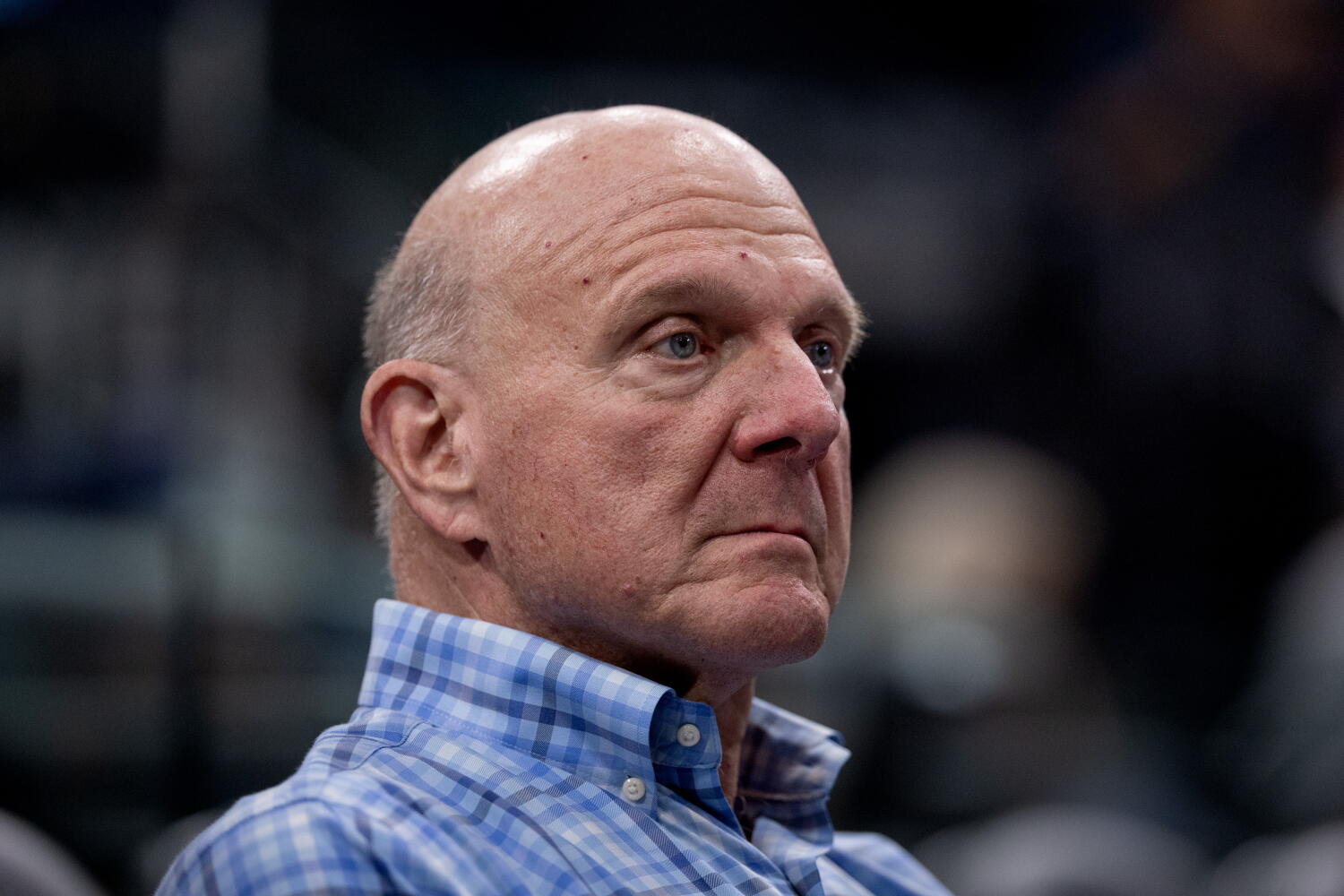
The penalty handed down by the National Basketball Association against the Los Angeles Clippers represents a structural turning point in how league offices police financial compliance. By stripping the franchise of five first-round draft picks, imposing a thirty-million-dollar fine, and suspending owner Steve Ballmer for one year, the commissioner's office established a hard ceiling on off-balance-sheet player compensation. This enforcement action dismantled a complex arbitrage strategy designed to bypass the collective bargaining agreement using third-party corporate vehicles.
Understanding this ruling requires analyzing the economic mechanics of modern sports ownership. When franchise valuations cross the ten-figure threshold, traditional salary caps create a binding constraint on talent acquisition. Because elite player compensation cannot exceed maximum percentages of team revenue under the collective bargaining agreement, high-net-worth owners face a marginal utility problem. They possess excess capital that they cannot legally deploy toward roster construction.
The investigation, executed by the law firm Wachtell Lipton, mapped how this excess capital was allegedly channeled. The mechanism relied on corporate reciprocity. The franchise allegedly induced third-party corporate entities—including Aspiration Partners, Boingo Wireless, Daktronics, and Lockton Insurance—to direct multi-million-dollar endorsement contracts toward star player Kawhi Leonard. In exchange, the team aligned its own institutional vendor spending to backstop these corporate partners, offsetting their financial exposure.
This establishes a clear vector of circumvention. The cost function of acquiring elite talent was split into two ledgers: the official salary cap ledger overseen by the league auditors, and an unofficial corporate sponsorship ledger managed through executive relationships.
The primary structural vulnerability in the franchise's defense lay in the asymmetry of the contracts. Investigators highlighted conditional clauses that tied endorsement payouts directly to roster status, alongside provisions where compensation materialized independently of promotional labor. When a commercial agreement lacks performance requirements for the recipient, it ceases to be an open-market marketing transaction and functions as deferred compensation.
The enforcement mechanism targeted three distinct tiers of organizational architecture.
Owner Steve Ballmer absorbed a one-year suspension for approving the structural intersections between team vendor contracts and player endorsements. Operating under the economic reality of an individual fortune exceeding one hundred fifty billion dollars, standard financial penalties fail to register as deterrents. Consequently, the league relied on asset deprivation, removing the franchise's draft capital from 2029 through 2033. This effectively hollows out the team's long-term asset accumulation cycle, turning a short-term cap advantage into a decade-long competitive deficit.
President of business operations Gillian Zucker received a one-year ban for serving as the operational conduit between corporate partners and the player's representation. The findings noted that corporate accounts were utilized to absorb expenditures that should have fallen under standard player management costs. By coordinating vendor alignment, executive leadership crossed the boundary between standard franchise marketing and cap manipulation.
President of basketball operations Lawrence Frank received a six-month suspension for managing informal communications with player representatives regarding auxiliary expense approvals. This highlights the institutional failure within the front office. Modern basketball operations cannot operate as isolated silos divorced from business compliance. When basketball executives interact with player management regarding non-salary financial flows, the organization absorbs systemic risk.
The penalty structure also extended to the player side. Kawhi Leonard absorbed a seven-hundred-thousand-dollar fine, while his former business representative faced a five-year ban from transacting with league franchises. Crucially, the player's contract itself was not voided, separating the disciplinary action against the franchise from the contractual validity of the player's labor agreement. This distinction prevents teams from using past administrative infractions as a retroactive mechanism to dissolve player contracts.
The imposition of a five-year compliance and monitoring program transforms how the franchise must operate. External auditors will maintain visibility over corporate sponsorships, vendor contracts, and executive communications. This administrative overhead permanently alters the cost of doing business for the franchise, replacing informal executive deal-making with bureaucratic oversight.
Franchise leadership facing similar valuation constraints must recalibrate their asset allocation models. Attempting to exploit grey areas in third-party endorsements now carries an existential penalty vector that strips away draft capital and executive personnel. The operational playbook for acquiring elite talent is strictly confined within the boundaries of the salary cap ledger. Compliance departments must now audit all commercial partnerships to ensure zero correlation between team procurement and player off-court income.