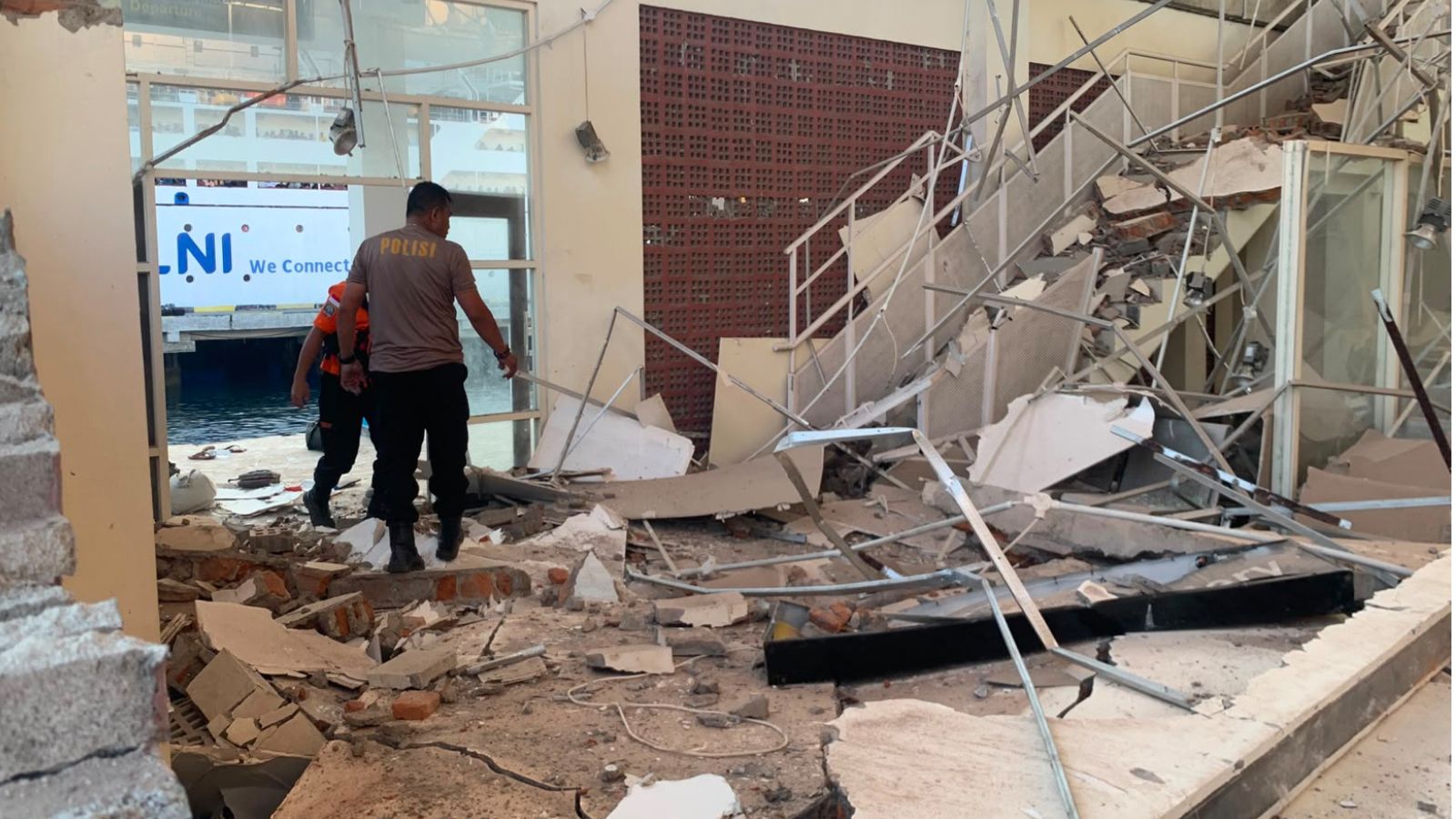
The Mechanics of Structural Collapse
A magnitude 7.7 tectonic rupture releases an immense amount of energy, yet the transition from subterranean shear stress to surface devastation is governed entirely by structural physics and geotechnical properties. When seismic waves propagate through alluvial basins, high-frequency oscillations attenuate while low-frequency surface waves amplify, imparting prolonged cyclic lateral loads on engineered structures. Most buildings are designed primarily to resist gravitational loads through vertical load paths. When subjected to severe lateral shear forces without adequate ductility, confinement reinforcement, or energy dissipation mechanisms, the structural integrity fails rapidly.
The catastrophic collapse of reinforced concrete and masonry buildings during high-magnitude earthquakes is rarely a random event. It is the predictable outcome of specific failure modes: If you found value in this piece, you might want to read: this related article.
- Soft-story vulnerability: Ground floors featuring expansive commercial glazing or open parking configurations lack the shear walls necessary to absorb lateral drift, concentrating inter-story displacement into a single weak level.
- Column-beam joint shear failure: Inadequate transverse reinforcement within intersection nodes prevents plastic hinge formation, leading to brittle diagonal tension cracking and sudden progressive collapse.
- Pounding damage: Insufficient seismic separation gaps between adjacent structures induce destructive impact forces during differential oscillation.
Understanding these failure modes shifts the analytical perspective from viewing earthquakes as unavoidable acts of god to evaluating them as stress tests of regional building code compliance and enforcement. The transition from minor tremors to mass casualties highlights systemic deficiencies in material quality, construction oversight, and retrofitting prioritization.
The Logistics Bottleneck in Immediate Emergency Response
The immediate aftermath of a severe seismic event creates a severe logistical paralysis. Critical infrastructure networks—including arterial roadways, electrical grids, telecommunication hubs, and potable water systems—suffer simultaneous disruptions. This isolates impact zones and complicates triage operations during the initial operational window, commonly referred to as the golden hours for urban search and rescue. For another perspective on this development, check out the latest coverage from TIME.
Command structures face an acute information deficit. Initial damage assessments rely on fragmented reports, satellite telemetry, and aerial reconnaissance, all of which suffer from atmospheric interference, cloud cover, and latency. Consequently, resource allocation operates under extreme uncertainty.
Deploying heavy rescue machinery, medical personnel, and emergency shelter supplies requires operational corridors that are frequently obstructed by rubble and structural debris. The failure of local municipal response capabilities forces a reliance on national and international disaster relief agencies, introducing coordination friction, jurisdictional disputes, and supply chain bottlenecks.
To model this operational friction, emergency management planners utilize the emergency response decay function, where the probability of survivor extraction diminishes exponentially past the seventy-two-hour threshold. Every hour spent clearing arterial blockages or waiting for inter-agency authorization reduces overall survivability metrics.
Geotechnical Variables and Amplification Zones
Seismic hazard mapping relies on probabilistic seismic hazard analysis to estimate peak ground acceleration across specific geographic grids. However, local site effects frequently invalidate generalized macro-seismic models. Sedimentary basins, ancient lakebeds, and reclaimed coastal lands exhibit significant site amplification due to impedance contrasts between bedrock and overlying soft soil strata.
When seismic waves enter soft sediment layers, their velocity decreases while their amplitude increases. This trapped wave energy reverberates within the basin, prolonging the duration of shaking and exacerbating structural fatigue. Buildings situated on unreinforced fill or liquefiable soils face an additional hazard: loss of bearing capacity.
Liquefaction occurs when saturated, loose granular soils experience cyclic shear stresses during shaking, generating excess pore water pressure that transforms the ground from a solid state into a viscous fluid suspension. Foundations lose their frictional resistance, causing heavy structures to tilt, settle unevenly, or sink entirely, even if the superstructure itself remains relatively intact.
Mitigating these geotechnical vulnerabilities requires rigorous microzonation studies prior to urban expansion. Standardized zoning laws that fail to mandate deep foundation systems or soil densification techniques in high-risk alluvial zones guarantee recurring structural failures during seismic events of this magnitude.
Economic and Structural Resilience Metrics
The total cost of a seismic event extends far beyond immediate fatality statistics and emergency medical expenditures. Economic impact assessment requires quantifying both direct losses and indirect macroeconomic repercussions over multi-year recovery horizons.
Direct losses encompass the capital replacement cost of destroyed housing stock, commercial real estate, industrial facilities, and public infrastructure. Indirect losses manifest as interrupted supply chains, lost commercial productivity, diminished tourism revenue, and escalated sovereign debt burdens required to finance reconstruction efforts.
Communities with low insurance penetration and inadequate municipal reserve funds face prolonged economic stagnation following a disaster. When capital is diverted from productive investments to emergency reconstruction, GDP growth contracts, and regional poverty rates escalate.
Resilience is therefore a function of pre-disaster capital allocation. Investment in structural retrofitting, rigorous code enforcement, and decentralized redundant utility networks exhibits a high return on investment when evaluated against the catastrophic cost of post-disaster reconstruction.
Strategic Resource Allocation and Prioritization
Optimizing disaster response requires transitioning from reactive panic management to data-driven algorithmic triage. Emergency management authorities must implement standardized decision frameworks that prioritize interventions based on expected marginal utility.
- Establish redundant communication networks: Deploy satellite-backed mesh networks immediately following seismic events to bypass compromised terrestrial cellular towers and maintain operational visibility.
- Enforce geotechnically informed urban planning: Restrict high-density residential and critical infrastructure development within identified liquefaction zones and active fault buffer strips.
- Mandatory seismic retrofitting amortization: Implement municipal financing vehicles that allow property owners to spread the capital cost of structural upgrades over long-term property tax assessments, eliminating upfront liquidity barriers.
- Decentralize cache depots: Distribute emergency medical supplies, potable water filtration units, and light search-and-rescue equipment into neighborhood-level secure lockers rather than central municipal warehouses, mitigating the risk of arterial road blockages isolating primary supplies.