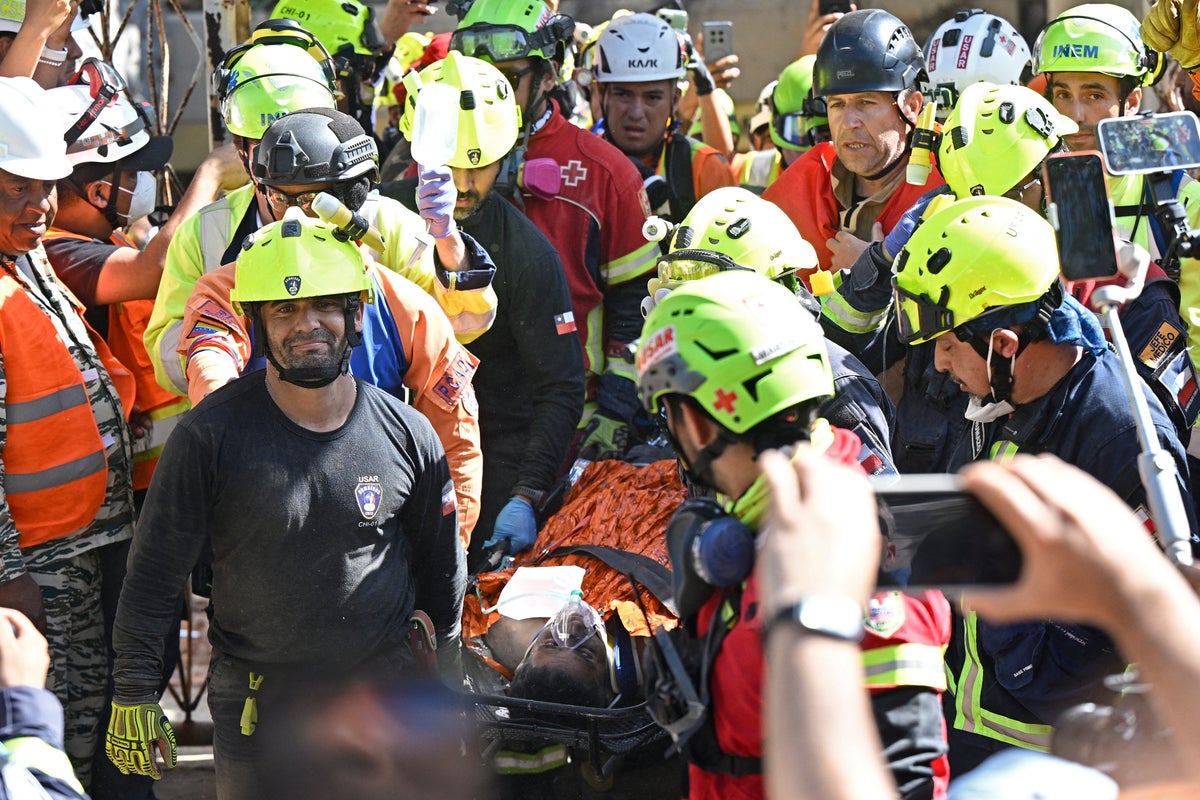
The survival of a human being after 192 hours trapped beneath structural debris challenges standard emergency medicine timelines, which dictate that the critical window for life preservation closes between 48 and 72 hours. When back-to-back earthquakes measuring magnitudes of 7.2 and 7.5 struck the coastal region of La Guaira, Venezuela on June 24, 2026, the resultant mass structural failures created an immediate humanitarian crisis. The subsequent extraction of 43-year-old security guard Hernán Alberto Gil Flores from the subterranean ruins of the Galerías Playa Grande shopping center on July 2 represents an anomaly in disaster logistics. Rather than viewing this event through the lens of random fortune, an examination of the precise physical, physiological, and operational variables reveals the exact mechanisms that make ultra-extended survival possible.
The Triad of Subterranean Survivability
Human endurance under structural collapse is governed by three interlinked environmental parameters. The absence or presence of any single element exponentially alters the mortality rate within the first 96 hours.
- Structural Shielding and Air Pockets: Mortality in collapsed buildings is primarily driven by mechanical trauma, asphyxiation due to direct chest compression, or inhalation of toxic particulate matter. In this instance, the survivor’s immediate environment—a small, reinforced security workstation cabin located within the basement—acted as a rigid exoskeleton. As the upper floors of the seven-story complex underwent a progressive collapse, the cabin deflated the incoming kinetic energy, preventing crushing injuries and isolating a static pocket of air.
- Thermal Regulation: Subterranean environments, particularly basements, offer distinct thermodynamic advantages. While surface conditions in coastal Venezuela expose victims to solar radiation and high ambient temperatures that accelerate dehydration, underground concrete masses maintain a more stable, cooler thermal baseline. This mitigation of environmental heat significantly reduced the survivor’s sweat rate, conserving systemic metabolic moisture.
- Exogenous Resource Delivery: The definitive barrier to extended survival is the rule of threes regarding water deprivation. The human renal system typically fails after three to five days without hydration due to acute kidney injury brought on by hypovolemia. The operational pivot that extended this timeline occurred on Sunday, June 28, when a specialized rescue unit from the Costa Rican Red Cross established physical and visual contact. By hollowing out a micro-shaft to deploy a telescopic camera, engineers solved the hydration bottleneck. Over the final 100 hours of the extraction, teams continuously fed water and liquid nutrients directly to the survivor, decoupling his biological clock from the physical constraints of the excavation timeline.
Technical Constraints of Urban Search and Rescue Mechanics
Extracting a live casualty from a deeply buried subterranean pocket is an intricate engineering problem where every action introduces systemic instability. The multi-nation Urban Search and Rescue (USAR) task force—comprising teams from Chile, the United States, Portugal, Mexico, Costa Rica, El Salvador, and Venezuela—had to navigate an operational environment balanced on a knife-edge.
The extraction phase required over four days of continuous execution due to a cascading series of compounding hazards. First, the structural integrity of the target site was profoundly compromised. The primary building was structurally interdependent with several adjacent multi-story edifices that had shifted during the twin temblors, creating a precarious leaning effect. Any mechanical vibration from heavy breaching equipment risked triggering a secondary, catastrophic domino collapse.
This threat was amplified by external environmental stressors. Persistent aftershocks continually redistributed the load vectors of the debris pile, while concurrent torrential rainfall saturated the loose concrete dust, transforming dry rubble into heavy, fluid mud that increased the dead load on the underlying voids.
To counter these vectors without causing fatal shifts in the debris field, the Chilean-led coordination team implemented a highly structured, low-impact tunneling strategy.
[Target Void: Basement Cabin]
       ^
[3-Meter Micro-Tunnel] <--- (Manual Deliberate Excavation)
       ^
[Hydraulic/Pneumatic Shoring] <--- (Load Stabilization)
       ^
[Debris Field Entry Point]
Rescuers utilized pneumatic and hydraulic shoring systems to actively brace the extraction pathway as they advanced. The final breach required operators to enter a confined, three-meter horizontal tunnel to manually cut through a reinforced metal structural plate using a rotary hammer. To mitigate the risk of localized ceiling collapse during this high-vibration phase, technical crews maintained constant positive air pressure via an auxiliary ventilation tube, simultaneously clearing toxic airborne dust and supplying oxygen to both the rescue technicians and the survivor.
Psychological Management in Confined Entrapment
The psychological toll of prolonged entrapment induces severe physiological strain. Prolonged panic responses trigger a continuous surge of cortisol and adrenaline, elevating the myocardial workload, accelerating oxygen consumption, and worsening metabolic acidosis.
Managing the survivor’s psychological state during the final, high-stress hours of the breach was handled as a core operational priority. Behavioral control was maintained by assigning a dedicated communication lead, a veteran firefighter from Chile, who held an open audio channel via the technical probe. By delivering consistent, transparent tactical updates, the specialist kept the survivor anchored to a predictable timeline.
To counteract cognitive drifting and panic, the survivor was encouraged to engage in structured, low-energy cognitive tasks, such as drawing, which effectively compartmentalized his immediate environmental anxiety. As the final breakthrough neared, tactical commands shifted toward immediate physical safety—directing the survivor to don protective goggles to safeguard against falling concrete micro-particles generated by the breaching tools.
Logistics and Post-Disaster Epidemiological Risks
While individual extractions provide critical operational data, they occur against a backdrop of wider systemic vulnerability. Satellite data assessments from NASA indicate that approximately 58,870 structures sustained critical damage or total destruction across northern Venezuela. With an official death toll tracking toward 2,300 and an estimated 50,000 individuals still unaccounted for, the focus of regional disaster management inevitably undergoes an operational shift.
Once the 192-hour mark passes, the statistical probability of finding additional live casualties drops rapidly toward zero. As a consequence, international and domestic resources must pivot away from high-density tactical rescue operations toward macro-level humanitarian stabilization. The primary logistical bottlenecks now shift from sub-surface engineering to surface-level public health management.
The displaced population, currently estimated at over 13,000 individuals, faces a breakdown in fundamental municipal infrastructure. The destruction of water treatment facilities and the rupture of sewage lines create an environment ripe for rapid waterborne pathogen transmission. Furthermore, the pre-existing deficit in regional healthcare infrastructure—compounded by low baseline vaccination coverage prior to the seismological event—presents an immediate threat of vaccine-preventable disease outbreaks, specifically measles and diphtheria.
The secondary phase of disaster response demands the immediate deployment of mobile water purification units, the establishment of structured temporary housing zones with decentralized sanitation facilities, and the execution of rapid mass-immunization campaigns. Localized security failures and resource scarcity necessitate that these medical distribution networks be tightly integrated with structured security cordons to prevent supply chain disruption and preserve regional stability.