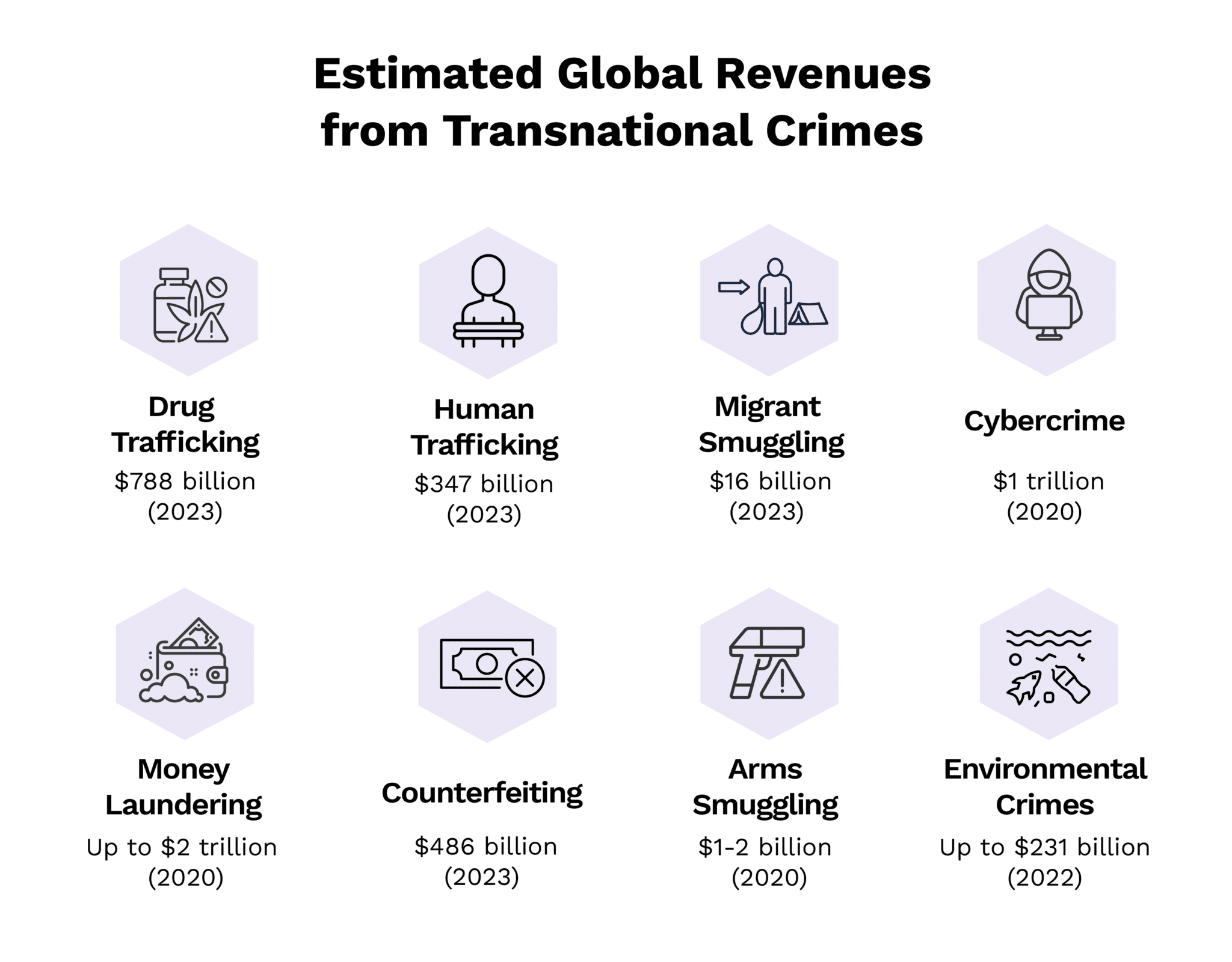
Federal law enforcement actions against cross-border criminal organizations rely on structural legal instruments designed to dismantle distributed nodes rather than isolated street-level operators. When the United States Federal Bureau of Investigation issues a wanted notice for foreign nationals tied to syndicates originating in regions like Punjab, India, the strategic objective extends far beyond an individual fugitive. It represents an operational intervention into transnational illicit supply chains. Decoding these enforcement actions requires analyzing the underlying mechanics of racketeering charges, the economics of unlicensed firearms distribution, and the jurisdictional frameworks that govern international multi-agency cooperation.
The Structural Mechanics of Racketeering Charges
The invocation of Racketeer Influenced and Corrupt Organizations statutes by federal prosecutors shifts the analytical focus from random acts of criminality to institutionalized enterprise behavior. Under standard criminal codes, prosecuting individual offenses across international borders creates severe friction due to evidentiary gaps and extradition complexities. Enterprise-level indictments bypass this friction by treating a criminal network as a unified corporate entity.
To establish a racketeering conspiracy in federal court, investigators must demonstrate a continuous pattern of predicate acts over an extended timeframe, operating under a shared command structure. For syndicates like the Jaggu Bhagwanpuria Organised Crime Group, whose operational footprint spans from South Asia to the Central District of California, prosecutors map out decentralized cells acting in functional alignment.
- The Command Node: Leadership figures who direct transnational resource allocation, capital flows, and operational directives from secure offshore locations.
- The Logistical Layer: Intermediaries responsible for procurement, safehouse management, and financial laundering across international banking channels.
- The Operational Node: Field-level actors executing enforcement tasks, extortion, drug distribution, and illicit weapons acquisition within target domestic jurisdictions.
By charging suspects under these sweeping federal frameworks, the judicial system penalizes every member for the foreseeable output of the enterprise. This neutralizes the defense strategy of compartmentalization, where lower-level operatives claim ignorance of upper-tier directives.
The Economics of Unlicensed Firearms Dealing Across Borders
Weapons trafficking within transnational networks operates on strict supply-and-demand elasticity, driven by the local scarcity of untraceable hardware. In the case of federal charges involving conspiracy to deal in firearms without a license, the economic driver is arbitrage. Illicit networks acquire weapons through straw purchases or domestic theft within loosely regulated markets and route them toward high-margin criminal enterprises where legal acquisition is restricted.
The mechanics of this black-market supply chain rely on specific vulnerabilities in domestic distribution systems:
- Straw Purchasing Velocity: Employing clean-record buyers to acquire multiple firearms simultaneously, introducing them into underground inventories before serial numbers can be flagged by routine retail monitoring.
- Fragmented Logistics Channels: Utilizing parcel shipping services and covert transport vectors to move hardware across state and international lines without triggering commercial freight audits.
- Capital Reinvestment: Channeling proceeds from narcotics distribution and localized extortion directly into weapons procurement, creating a self-sustaining loop of violent enforcement capability.
When federal agencies target unlicensed weapons dealing in conjunction with racketeering, they dismantle the physical enforcement mechanism of the syndicate. Without a secure, localized supply of firearms, a criminal enterprise loses its capacity to enforce debt collection, protect territory, or project intimidation.
Jurisdictional Friction and International Enforcement Cooperation
Cross-border enforcement operations face structural friction rooted in sovereign legal boundaries. Because domestic law enforcement agencies lack direct police powers on foreign soil, they must convert local intelligence into federal indictments that carry extradition weight or justify public fugitive alerts.
The issuance of a high-profile federal warrant and public wanted notice serves a dual strategic purpose within this jurisdictional gap. First, it creates an immediate compliance burden for international partners. When the Federal Bureau of Investigation places an individual on public registries, it activates bilateral information-sharing agreements with foreign agencies like the Central Bureau of Investigation in India. Second, it imposes financial and mobility restrictions on the fugitive. Active federal warrants compromise a suspect's ability to utilize formal banking systems, secure false identification, or move freely through commercial transit corridors.
This mechanism relies on public exposure to degrade the fugitive's operational security. As host-country law enforcement faces heightened scrutiny from international partners, the cost for local criminal protectors to harbor high-value targets increases exponentially.
Strategic Interdiction Pathways
Future federal crackdowns on India-linked transnational syndicates will depend on three distinct operational variables: the speed of financial intelligence sharing to track remittance vectors, the tightening of domestic firearms retail monitoring to choke off supply lines, and the expansion of multilateral extradition frameworks. Analysts monitoring these developments should measure institutional success not by the volume of initial indictments, but by the measurable degradation of the syndicate's cross-border capital and weapons liquidity.