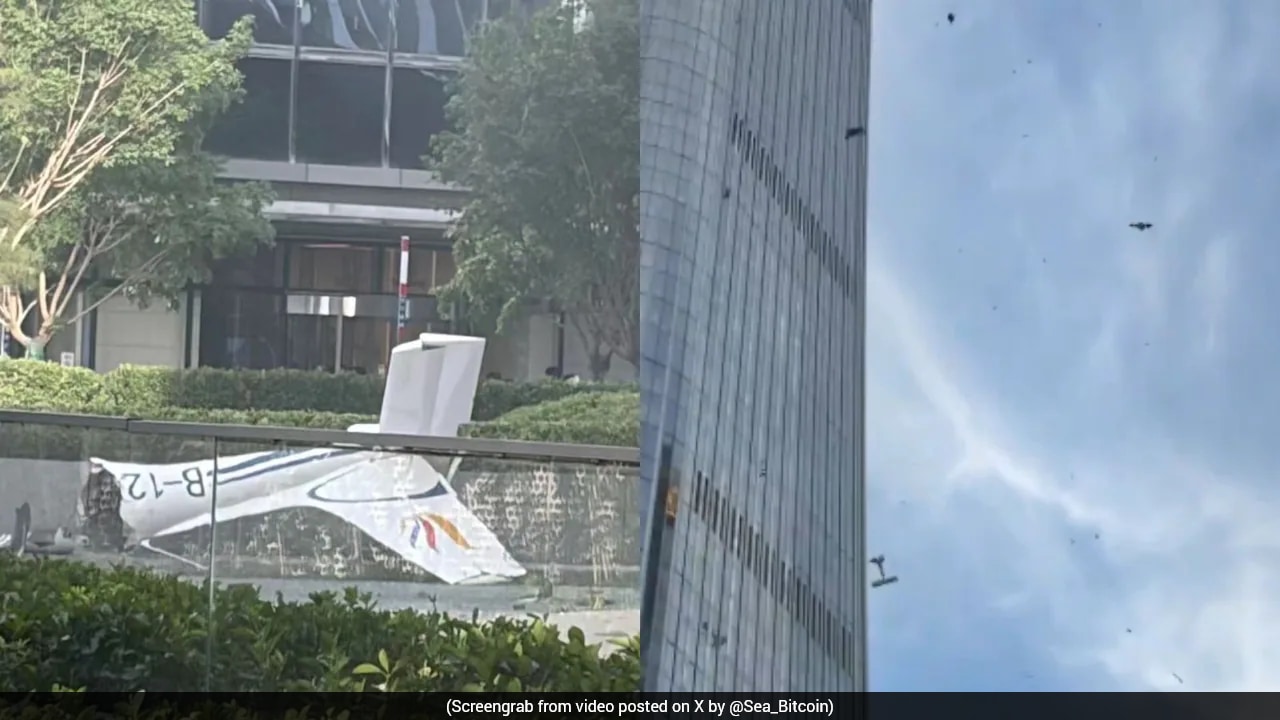
The collision of a light aircraft with Beijing's tallest building represents a critical intersection of three distinct systemic vulnerabilities: urban airspace management failures, structural engineering resilience under dynamic loading, and emergency mass-casualty triage in hyper-dense zones. When a low-altitude aircraft impacts a high-rise structure, the resulting crisis is not a singular event but a cascade of independent variables that determine the ultimate survival rate of both occupants and individuals on the ground. Minimizing fatalities in these rare but catastrophic scenarios requires understanding the specific mechanics of kinetic energy transfer, building facade vulnerability, and the containment of aviation fuel fires within vertical environments.
The Tri-Focal Architecture of Low-Altitude Aviation Incidents
To evaluate the impact of a light aircraft on a skyscraper, the event must be deconstructed into three operational phases: the pre-impact vector, the structural energy absorption phase, and the post-impact thermal envelope.
1. Pre-Impact Vector and Airspace Control Failure
Light aircraft operating in proximity to ultra-dense metropolitan cores are governed by strict Visual Flight Rules (VFR) or Instrument Flight Rules (IFR) corridors. A deviation resulting in a high-rise collision typically stems from a compounding failure in one of three areas:
- Avionics or Powerplant Failure: Loss of propulsion or control surfaces reduces the pilot's ability to maintain the glide slope, forcing an uncommanded descent into the urban canopy.
- Spatial Disorientation or Meteorological Degradation: Rapid drops in visibility (such as sudden smog, low-level cloud cover, or heavy fog) can blind a pilot operating under VFR, obscuring obstacles that exceed local minimum vectoring altitudes.
- Air Traffic Control (ATC) Latency: In highly restricted airspaces like Beijing's, any unauthorized transition from low-altitude corridors to commercial zones creates a narrow window for interception or corrective routing.
2. Kinetic Energy Dissipation and Structural Response
The physical destruction caused by a small plane impact is dictated by the kinetic energy formula:
$$E_k = \frac{1}{2}mv^2$$
Where $m$ represents the mass of the aircraft and $v$ represents its velocity at the moment of impact.
While a commercial airliner possesses massive weight and fuel capacity, a light aircraft relies primarily on velocity to breach a modern building's envelope. Skyscrapers like Beijing's tallest structures utilize high-performance curtain walls composed of double- or triple-glazed reinforced glass and heavy steel framing modules.
The structural response follows a predictable sequence. The aircraft's fuselage, composed largely of lightweight aluminum or composite materials, crumples upon contact with the external structural columns, absorbing a portion of the energy. The remaining kinetic energy is transferred directly into the curtain wall panels. If the energy exceeds the ultimate tensile strength of the glass and aluminum mullions, the facade breaches. This allows debris and the aircraft’s engine block—the densest component of the vehicle—to penetrate the interior floor plates.
3. The Post-Impact Thermal Envelope
The primary driver of injuries and secondary fatalities in light aircraft impacts is rarely the initial mechanical trauma; it is the ignition of aviation fuel (Avgas or Jet-A).
Light aircraft typically carry anywhere from 40 to 150 gallons of fuel. Upon impact, the fuel tanks rupture instantly, atomizing the liquid into a highly flammable mist. If ignited by hot engine components or severed electrical wiring, this mist creates a deflagration wave.
The interior distribution of this thermal energy is governed by stack effect and HVAC configuration. High-rise buildings act as giant chimneys; thermal currents naturally draw smoke and heat upward through elevator shafts, stairwells, and breached floor slabs. This creates an immediate toxic environment for occupants located floors above the actual impact zone.
Quantifying the Ground and Internal Casualty Mechanics
The distribution of the 13 injuries documented in this incident highlights the dual-risk profile of urban aviation accidents: internal occupants versus ground-level bystanders.
Total Casualties
├── Fatalities (1) ── Pilot (Kinetic deceleration/Thermal trauma)
└── Injuries (13)
    ├── Internal Occupants (Impact zone lacerations, smoke inhalation)
    └── Ground Bystanders (Falling glass, secondary debris impact)
Internal Vulnerabilities
Occupants within the immediate impact zone face primary blast or impact injuries from flying architectural fragments. The modern open-plan office layout offers zero structural shielding against high-velocity debris. Beyond the kinetic risk, the burning fuel consumes oxygen rapidly, generating high concentrations of carbon monoxide (CO) and hydrogen cyanide (CN) from burning synthetic office furnishings. The survival window within a uncompartmentalized floor plate breached by burning fuel is measured in minutes, dictated entirely by the speed of automated suppression systems.
Ground-Level Vulnerabilities
The risk radius on the ground is a function of the impact height and the composition of the building's facade. When a glass curtain wall fails at extreme heights, shattered fragments do not fall straight down. Aerodynamic forces and high-altitude winds scatter glass shards and lightweight aircraft components across a wide debris field. A single square meter of falling architectural glass can fragment into thousands of projectiles, capable of inflicting severe lacerations or blunt-force trauma to pedestrians blocks away from the base of the tower.
Mitigation Architecture for Ultra-Tall Structures
Defending modern metropolitan infrastructure against low-altitude aviation threats requires a dual strategy of passive architectural hardening and active airspace monitoring.
High-occupancy towers must incorporate reinforced perimeter columns capable of deflecting light aircraft engine blocks. Transitioning to impact-resistant laminated glass on lower and mid-tier floors reduces the volume of falling debris during a breach. Furthermore, automated fire suppression systems must be zoned with heavy redundancy, ensuring that a localized breach does not depressurize the water supply for the rest of the vertical column.
The secondary defense layer relies on rapid air traffic isolation protocols. Integrating real-time radar data with automated building management systems can allow high-rises to automatically seal HVAC intakes, pressurize escape stairwells, and alert security teams the moment an unaligned aircraft violates the inner metropolitan perimeter.