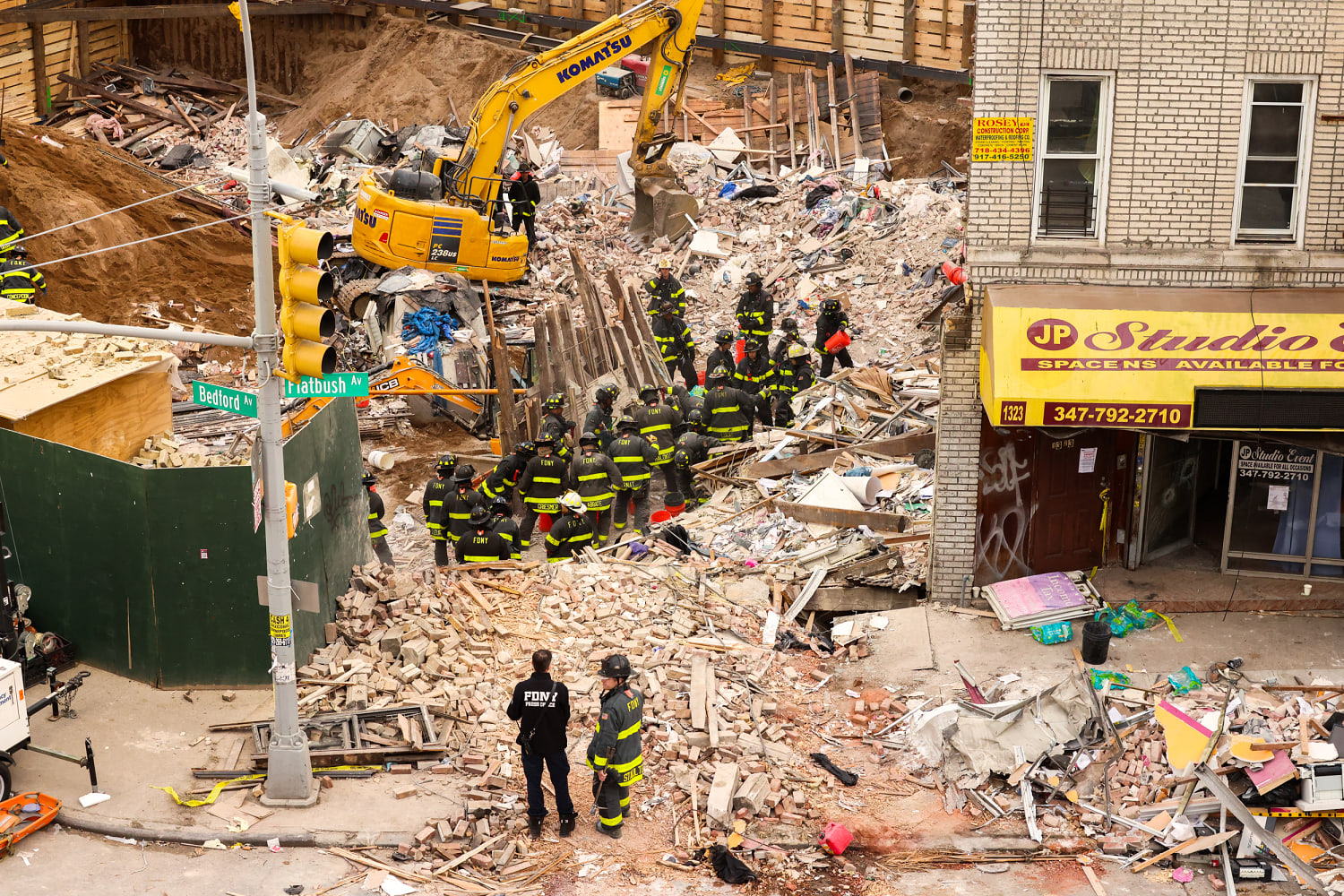
Catastrophic building collapses in dense urban centers like New York City rarely stem from a single, unpredictable structural anomaly; they are almost always the terminal phase of compounding regulatory, economic, and physical failures. When municipal officials confirm a mass-casualty event—such as a collapse resulting in eight fatalities, including two children—standard reporting typically stops at the casualty count, the immediate emergency response, and vague assurances of an investigation. That surface-level framing obscures the operational mechanics that allow aging infrastructure to reach critical load failure in one of the most heavily regulated real estate markets in the world.
To understand how an occupied residential or mixed-use structure fails catastrophically, analysts must strip away sensationalism and examine the building as a physical system operating under economic constraints. Every structure in New York City is governed by a continuous tension between gravitational load, material degradation, and the financial incentives of property maintenance. When a collapse occurs with high civilian mortality, it signals a breakdown across three distinct layers: physical load-path integrity, municipal inspection latency, and emergency rescue physics.
The Physics of Progressive Structural Collapse
Buildings do not fail all at once without warning unless subjected to an extreme external impulse, such as a gas explosion or seismic shock. In the absence of an acute blast, structural failure follows the mechanics of progressive collapse.
A building's primary function is to transfer dead loads (the weight of the structure itself) and live loads (occupants, furniture, environmental forces) safely down to the foundation. In older New York City construction—particularly pre-war masonry, cast-iron, or early steel-frame buildings—this load transfer relies heavily on redundancy and lateral bracing.
The Three Failure Vectors
- Bearing Wall Compromise: Unreinforced masonry buildings depend on thick exterior and interior load-bearing walls. Water infiltration, freeze-thaw cycles, and mortar washout gradually reduce the cross-sectional area capable of supporting compressive stress. Once localized crushing begins, adjacent masonry must absorb the redistributed load, often exceeding its shear capacity within seconds.
- Unpermitted Interior Alterations: The most common human catalyst for sudden collapse is the removal or modification of load-bearing partitions during illegal renovations. Removing a single interior wall or cutting into floor joists to accommodate plumbing or HVAC lines alters the building's center of gravity and severs critical lateral ties. Without lateral restraint, vertical columns buckle under loads they previously carried safely.
- Foundation and Subsurface Settlement: Adjacent excavation or failing subterranean infrastructure (such as leaking water mains) washes away soil bearing capacity beneath footings. Differential settlement introduces torsional stress into rigid structures, causing brittle fractures at beam-to-column connections.
When any of these vectors triggers a local failure, the kinetic energy of falling upper floors multiplies the static load by several factors—a phenomenon known as dynamic amplification. Lower floor plates, designed only for static loads, shear away sequentially. This pancaking effect eliminates the void spaces necessary for occupant survival, explaining why structural collapses in densely packed multi-family dwellings produce disproportionate casualties among vulnerable populations, such as children, who may be confined to specific rooms or unable to self-evacuate during the initial seconds of structural distress.
The Regulatory Latency Trap
New York City enforces some of the strictest building codes in North America, anchored by Local Law 11 (the Facade Inspection & Safety Program) and aggressive Department of Buildings (DOB) enforcement protocols. Yet fatal collapses persist. The root cause is not a lack of rules, but a structural mismatch between regulatory enforcement speed and physical decay rates.
The Inspection-to-Remediation Bottleneck
Municipal oversight operates on a reactive, complaint-driven, or cyclical model. Even when inspectors identify hazardous conditions—such as bulging masonry, compromised lintels, or active foundation cracks—the legal and administrative pathway to forced remediation moves slower than material fatigue.
- Class 1 Violations: Immediately hazardous conditions require urgent action, yet property owners frequently exploit administrative hearings, grace periods, and litigation to delay costly structural shoring.
- The Fine-to-Repair Arbitrage: For undercapitalized landlords or predatory operators, paying recurring municipal fines is often cheaper in the short term than securing engineering plans, permits, and union labor for major structural rehabilitation. This creates a perverse economic incentive to defer critical maintenance until the asset fails entirely.
- Visibility Blind Spots: Facade laws focus heavily on exterior envelopes to protect pedestrians from falling debris. However, interior structural skeletons—wooden joists, interior masonry piers, and cellar steel columns—remain largely invisible to street-level inspections unless a tenant files a specific complaint or an owner applies for a major alteration permit.
Known facts in these incidents generally establish the timeline of prior violations, open permits, and the ultimate death toll. What remains an educated hypothesis until forensic engineers clear the debris is the exact sequence of component failure—specifically whether an acute trigger (like a utility explosion or illegal construction work) accelerated an already weakened load path.
Urban Search and Rescue (USAR) Constraints
Once a structure pancakes, the operational environment shifts immediately to heavy urban search and rescue. The high fatality rate in dense residential collapses is dictated by the harsh physics of confined-space extraction and the "golden window" of survivability.
Rescuers cannot simply deploy heavy excavation machinery to clear rubble; doing so risks shifting unstable debris piles and crushing survivors trapped in surviving void spaces. Instead, teams must execute a slow, methodical sequence:
- Surface Reconnaissance and Triage: Utilizing acoustic listening devices, fiber-optic cameras, and canine units to locate heat or sound signatures beneath tons of pulverized concrete, brick, and timber.
- Cribbing and Shoring: Constructing temporary timber or pneumatic support structures to stabilize overhanging slabs before personnel can tunnel inward. Every foot of penetration requires engineered stabilization to prevent secondary collapses that could kill rescue personnel.
- Deliberate Delayering: Removing debris piece by piece using handheld hydraulic cutters, rotary hammers, and buckets.
This necessary caution creates an acute operational dilemma. While structural stabilization protects both victims and rescuers, the time required to execute it works directly against human physiology. Crush syndrome—where prolonged compression of muscle tissue releases toxic levels of potassium and myoglobin into the bloodstream upon release—as well as asphyxiation from concrete dust and dehydration, rapidly narrows survival probabilities after the first 24 to 48 hours. When fatalities reach eight or more, it indicates that the collapse geometry destroyed internal structural cavities almost entirely upon impact, leaving minimal survivable space regardless of response speed.
Forensic Accounting of Accountability
Following a mass-casualty collapse, public discourse inevitably centers on assigning blame. However, legal and financial accountability in urban real estate is often diffused across complex corporate structures. Properties are frequently held within single-purpose Limited Liability Companies (LLCs) that shield parent entities and individual investors from personal liability while limiting the capital pool available for victim compensation.
Furthermore, third-party contractors, expediting firms, and private engineers often share fragmented responsibility for sign-offs. If an architect self-certifies plans—a common practice designed to speed up municipal permitting—the city relies on professional attestation rather than independent plan examination. When self-certification is abused to disguise structural alterations as minor cosmetic work, the regulatory safety net fails entirely before a single hammer is swung.
Tactical Shifts for Urban Risk Mitigation
Preventing future mass-casualty collapses requires abandoning reactive complaint-based enforcement in favor of predictive structural monitoring and financial deterrence.
Municipal authorities and institutional asset managers must implement three non-negotiable operational changes:
First, eliminate self-certification for any building over 50 years old or any project touching structural elements. Independent, city-employed structural engineers must verify load calculations prior to permit issuance, removing the conflict of interest inherent in owner-paid expediters.
Second, close the fine-to-repair arbitrage through automatic receivership. When a property accumulates unresolved Class 1 structural violations past a strict 30-day threshold, the municipality must bypass administrative fines, place an immediate super-priority lien on the property, and deploy city-contracted engineers to execute emergency stabilization at the owner's expense.
Third, deploy continuous structural health monitoring on high-risk building stock. Low-cost wireless tiltmeters, crack gauges, and vibration sensors can transmit real-time telemetry on differential settlement and structural stress directly to municipal dashboards. Shifting from periodic human visual inspections to continuous sensor-driven alerts is the only viable mechanism to detect impending load-path failure before a building turns into rubble.