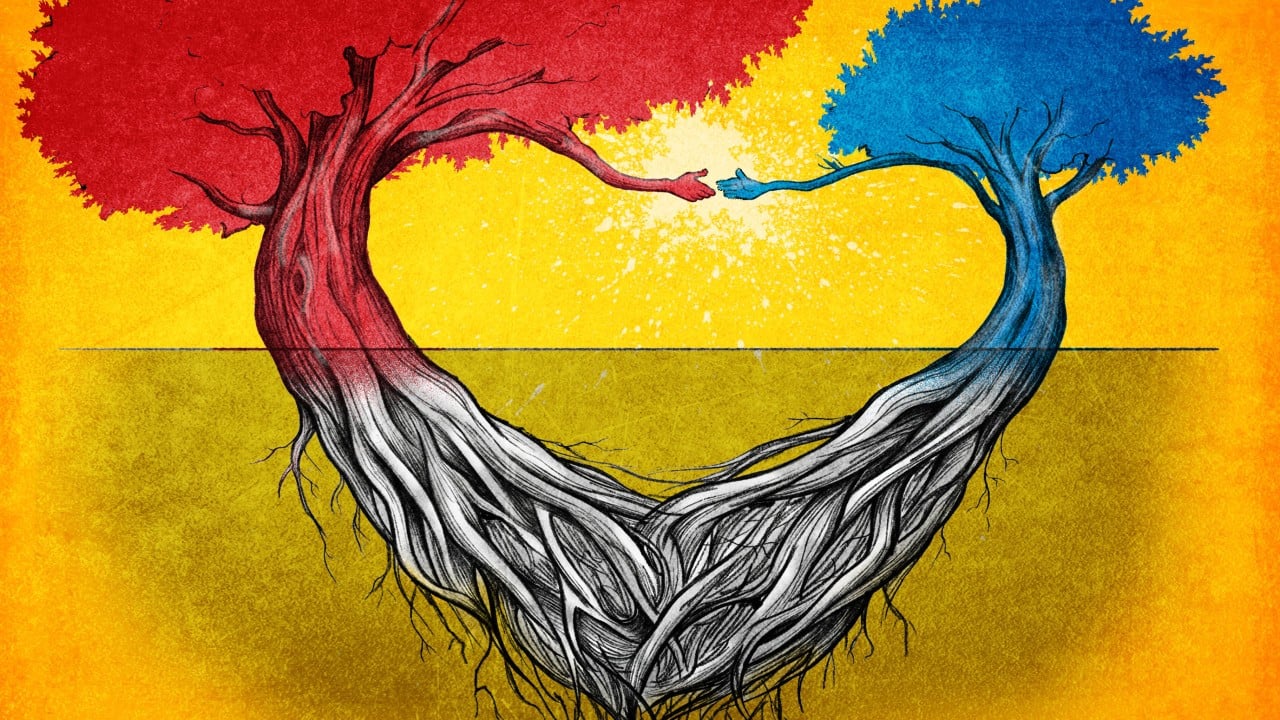
Beijing has found a new way to pressure Taipei that doesn't involve fighter jets or naval blockades. It involves dust-covered genealogy books and the quiet whispers of village elders in Fujian province. Specifically, the Chinese Communist Party (CCP) is turning its sights on the ancestral roots of Taiwan’s President, William Lai Ching-te, attempting to use his own family history as a tool for political unification.
This is not just about nostalgia. It is a calculated psychological operation designed to undermine the sovereignty of the Republic of China (Taiwan) by tethering its leaders to the mainland through blood and soil. By focusing on the Lai family’s origins in Fujian, Beijing is trying to frame the current political divide as a family spat rather than a conflict between a democracy and an autocracy.
The Geography of Bloodlines
The strategy centers on the concept of zuzhai or ancestral homes. For many in Taiwan, these connections are historical artifacts. For Beijing, they are leverage. In the village of Banling, nestled in the mountains of Fujian, local officials have spent significant resources identifying and "preserving" the purported ancestral home of William Lai. They aren’t doing this out of a sudden passion for genealogy. They are doing it to build a narrative of inevitability.
The United Front Work Department, the CCP’s primary organ for overseas influence, manages these sites. They transform humble villages into shrines of "cross-strait kinship." When a Taiwanese politician’s family tree is mapped out by mainland authorities, it serves a dual purpose. It reminds the Taiwanese public that they are "Chinese by blood," and it suggests that their leaders are somehow betraying their ancestors by seeking a path independent of Beijing.
Weaponized Genealogy as Statecraft
This isn't the first time Beijing has played the "ancestor card," but the intensity has shifted. In previous decades, these links were used to facilitate business deals and tourism. Now, they are part of a broader "cognitive warfare" campaign. The goal is to create a sense of cognitive dissonance within the Taiwanese electorate.
Beijing’s logic is simple: if you can prove a leader belongs to a specific patch of dirt in Fujian, you can argue that their political identity is a fabrication. This ignores the reality of the last 75 years. Taiwan has developed a distinct national identity rooted in democratic values, civil liberties, and a unique social contract. Beijing’s focus on 500-year-old family records is a desperate attempt to bypass the modern political reality.
The Mechanics of Village Influence
How does this work on the ground? It starts with local researchers. They comb through "Zupu"—clan records—to find matches with prominent Taiwanese families. Once a link is established, the village receives funding for "cultural restoration."
- Infrastructure upgrades: Roads leading to the ancestral temple are paved.
- Media blitz: State-run outlets produce documentaries about the "long-lost brothers" across the strait.
- Invitations: Relatives in Taiwan are invited for "roots-seeking" tours, often with all expenses paid.
These tours are rarely just about visiting graves. They include briefings on "favorable policies" for Taiwanese businesses and subtle reminders of the benefits of "reunification." It is a soft-power play wrapped in the guise of traditional Confucian piety.
The Failure of the Ethnic Argument
Beijing’s obsession with bloodlines reveals a fundamental misunderstanding of modern Taiwan. Identity in Taipei is not defined by where your great-great-grandfather farmed rice. It is defined by the right to vote, the right to protest, and the right to live without the shadow of the Social Credit System.
William Lai’s administration has consistently pushed back against this "blood-based" sovereignty. The President often emphasizes that being ethnically Chinese or having ancestors from the mainland does not obligate a person to accept the rule of the CCP. This is a crucial distinction. One can celebrate the Lunar New Year and still want nothing to do with the political system in Beijing.
By weaponizing the Lai family tree, the CCP actually risks alienating the younger generation in Taiwan. For a 20-year-old in Kaohsiung, a village in Fujian is as foreign as a village in France. They see these genealogical claims as an invasive reach into their personal history.
The Economic Bait Beneath the Roots
The "clan village" strategy is frequently paired with economic incentives. Beijing often designates these ancestral regions as special zones for Taiwanese investment. The message is clear: "Come home to your ancestors, and we will make you rich."
This creates a complicated dynamic for Taiwanese businessmen. They are pressured to show "patriotism" by investing in their ancestral villages. If they refuse, they risk losing access to the wider Chinese market. It is a form of corporate hostage-taking disguised as cultural appreciation. The "Faith, Hope, and Ancestry" narrative is the velvet glove covering the iron fist of economic coercion.
Countering the Narrative of Inevitability
Taiwan’s defense against this cultural encroachment is its own vibrant democracy. The government in Taipei has begun to emphasize a "multicultural Taiwan" narrative that includes Indigenous peoples, the legacy of Dutch and Spanish presence, and the Japanese colonial era, alongside the Han Chinese migration. This dilutes the CCP's "single source" theory of Taiwanese identity.
If Taiwan is a melting pot of various historical influences, then no single village in Fujian can claim to be its "origin." This ideological battle is just as important as the physical defense of the islands. It is a fight over the right to define one's own future regardless of one's past.
The Risk of Backfire
There is a growing resentment in these mainland "ancestral villages" among the locals who aren't part of the propaganda machine. They see massive amounts of state money being poured into temples and museums dedicated to "Taiwanese compatriots" while their own schools and hospitals remain underfunded. The CCP’s focus on the Taiwanese elite through genealogy creates local inequality.
Furthermore, by shining a spotlight on William Lai’s roots, Beijing accidentally humanizes a leader they have spent years demonizing as a "separatist." They show him as a man with a family, a history, and a lineage. This often has the opposite effect of what state censors intended, making the "enemy" relatable to the mainland public.
The Data Gap in Beijing’s Strategy
Despite the millions spent on these village projects, polling in Taiwan shows that the "Chinese identity" is at an all-time low. The more Beijing pushes the "we are one family" narrative, the more the Taiwanese public identifies as "exclusively Taiwanese."
$$Identity_{Taiwan} \propto \frac{1}{Pressure_{Beijing}}$$
This inverse relationship suggests that the weaponization of ancestry is not just failing; it is actively accelerating the divergence of the two societies. The CCP is using an 18th-century solution for a 21st-century geopolitical reality. They are trying to solve a crisis of political legitimacy with a book of names.
The Digital Front of Ancestral Mapping
Beijing is now moving these efforts into the digital space. Large-scale databases are being built to map the family trees of millions of Taiwanese citizens. This isn't just for propaganda. It's for surveillance.
Knowing the family connections of every mid-level official in the Taiwanese government allows Beijing to target their relatives on the mainland for "persuasion." It is a high-tech version of the ancient practice of holding families accountable for the actions of one member. This digital "Zupu" is perhaps the most dangerous iteration of the ancestry weapon.
The Sovereignty of the Individual
The battle over William Lai’s ancestral village is ultimately a battle over the concept of agency. Beijing believes that history and biology dictate destiny. Taiwan believes that choice dictates destiny.
As long as the CCP continues to view the Taiwan Strait through the lens of a family dispute, they will continue to miss the point. The people of Taiwan have moved beyond the clan structures of the Qing Dynasty. They have built a modern state that values the individual over the collective bloodline.
Beijing can pave every road in Banling and polish every headstone in the Lai family graveyard, but it cannot buy the loyalty of a people who have already tasted freedom. Ancestry is a history lesson, not a political contract. The attempt to turn William Lai’s heritage into a cage for Taiwan’s future is a strategic error that ignores the power of modern national identity. History shows that when people are forced to choose between their ancestors and their children’s freedom, they choose their children every time.