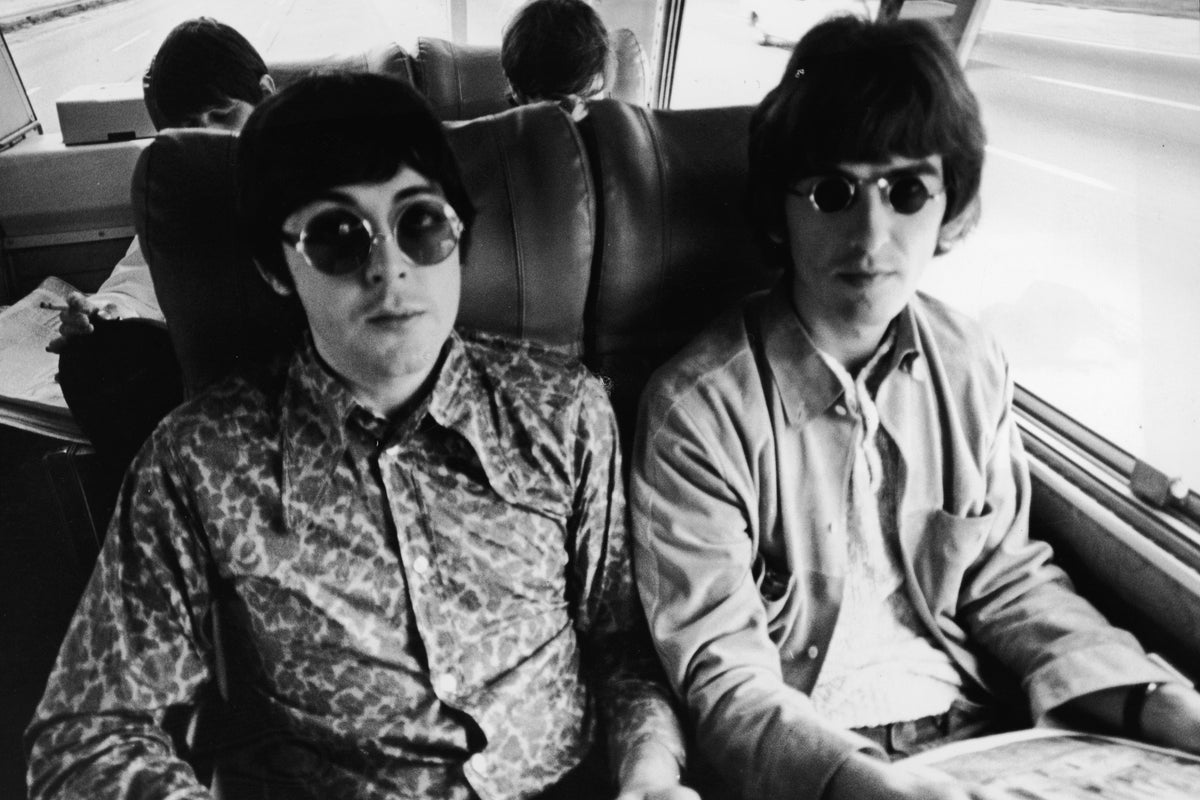
The valuation of "celebrity-associated real estate" typically suffers from a sentimentality bias that obscures the underlying asset performance. In the case of the Benton, Illinois, bungalow—famously inhabited by George Harrison in September 1963—the property functions less as a residential unit and more as a singular historical artifact. This distinction is critical because the home represents the final data point of Harrison’s anonymity before the onset of global Beatlemania. Assessing this property requires a move away from standard comparable sales (comps) and toward a structural analysis of cultural provenance, geographic isolation, and the economics of niche tourism.
The Tri-Factor Valuation Framework for Musical Heritage Sites
Standard appraisal methods fail to capture the premium of this specific location because the utility of the house is decoupled from its square footage. To determine its actual market worth, one must apply a Tri-Factor Framework: If you found value in this post, you might want to check out: this related article.
- Temporal Proximity to Inflection Points: Harrison visited his sister, Louise Harrison Caldwell, at this 113 McCann Street address just weeks before I Want to Hold Your Hand was released in the United States. This period is the "pre-inflection" window. Assets associated with a figure immediately prior to a massive value spike carry a higher narrative density than those acquired post-fame.
- Narrative Integrity and Preservation: The property’s value is a function of its physical state relative to the 1963 occupancy. Unlike many celebrity homes that undergo aggressive modernization, stripping away the "historical skin," this site has been maintained as a period-accurate capsule. This preservation maintains the "linkage" between the physical space and the historical event.
- Geographic Scarcity vs. Accessibility: Benton, Illinois, sits outside major urban hubs. This creates a supply-side scarcity (it is the only Beatles-linked site in the American Midwest of this caliber), but introduces a demand-side bottleneck regarding foot traffic and commercial viability for a potential museum model.
The Structural Mechanics of the 1963 Benton Visit
The historical significance of the Benton house is rooted in a specific cultural exchange that preceded the British Invasion. During his two-week stay, Harrison performed with a local band, The Four Vets, at a VFW hall and purchased a Rickenbacker 425 at a music store in Mt. Vernon. These interactions represent the first professional footprints of a Beatle on American soil.
From a data-driven perspective, this visit serves as a control group for celebrity behavior. Harrison was able to walk the streets of Benton unrecognized—a state of being that became impossible less than five months later. The house at 113 McCann Street is the container for this specific, unrepeatable atmospheric condition. The cause-and-effect relationship here is clear: the isolation of Southern Illinois provided a sanctuary that allowed for the last "normal" interaction Harrison would have with American culture, thereby embedding a unique psychological value into the property’s walls. For another perspective on this development, check out the recent update from Refinery29.
Property Specifications and Operational Realities
The structure itself is a 1.5-story bungalow. While the aesthetic is modest, the operational value lies in its zoning and current configuration as a bed-and-breakfast/museum hybrid.
- Total Square Footage: Approximately 2,000 square feet.
- Architectural Style: Mid-century modest / Craftsman influence.
- Interior Configuration: Multiple bedrooms curated to reflect 1960s décor, specifically the room Harrison occupied.
- Lot Dynamics: Standard residential lot within a low-density neighborhood, which limits large-scale commercial expansion but protects the "authentic" feel of the 1963 environment.
The primary bottleneck for this asset is its location. In real estate terms, the "highest and best use" of a property usually aligns with its surrounding market. In Benton, residential comps might sit in the $100,000 to $150,000 range. However, the "Harrison Premium" creates a price-to-value disconnect. A buyer is not purchasing shelter; they are purchasing a restricted-entry ticket to a specific moment in musicology. The cost of maintenance versus the projected revenue from specialized tourism (Hard Day's Night B&B) determines the sustainability of the investment.
The Economic Impact of the Harrison Premium
When a property is marketed based on celebrity provenance, the "Premium" is often calculated as:
$$P = (V_{historical} - V_{market}) / V_{market}$$
Where $P$ is the premium percentage, $V_{historical}$ is the sale price based on heritage, and $V_{market}$ is the baseline price for a similar non-famous home in the same ZIP code. For heritage sites of this magnitude, $P$ can exceed 300%. However, this premium is highly illiquid. The pool of buyers is limited to high-net-worth fans, institutional preservationists, or niche hospitality investors.
The second limitation is the "Erosion of Relevance." As the primary demographic that experienced the 1960s firsthand ages, the emotional resonance of the site must be converted into broader historical significance to maintain its value. The transition from "the house where George stayed" to "a site of National Musical Heritage" is the necessary pivot for long-term capital appreciation.
Preservation as a Defensive Investment Strategy
The current owners have utilized a strategy of "Curated Authenticity." By retaining period-specific features and memorabilia, they have mitigated the depreciation of the physical structure by inflating the appreciation of the cultural asset.
There are three distinct risks to this strategy:
- Maintenance of Specialized Fixtures: Sourcing 1960s-era replacement materials increases operational expenditures (OPEX).
- Regulatory Constraints: Transitioning from a private residence to a public-facing museum involves navigating local ordinances that may not be equipped for high-intensity tourism.
- Intellectual Property Boundaries: While the owner owns the physical house, they do not own the "George Harrison" brand or Beatles trademarks. This creates a legal ceiling on how the property can be marketed and monetized.
The Strategic Shift Toward Niche Hospitality
The most viable economic path for 113 McCann Street is the "Immersive Experience" model. In the modern attention economy, consumers prioritize "access" over "ownership." The house functions effectively as a time machine. The logic follows that the revenue potential is higher as a high-premium short-term rental than as a static museum.
The "Stay Where George Stayed" value proposition allows for a nightly rate that far exceeds the local hospitality average. By leveraging the specific room where Harrison slept, the property utilizes a "Scarcity within Scarcity" model. There is only one such room in the United States. This provides the owner with significant pricing power, provided the marketing remains targeted at the global Beatles fan base rather than the local Illinois market.
Strategic Recommendation for Potential Acquisition
An investor looking at this property must evaluate it through the lens of a "Legacy Asset." The purchase price will inevitably be decoupled from local real estate realities. The play is not a "fix and flip," but a "protect and monetize."
The first priority is the formalization of the site’s historical status. Securing state or national historic registry status would provide a defensive moat against future zoning changes and potentially open avenues for preservation grants.
The second priority is digital integration. The physical isolation of Benton can be offset by creating a virtual twin or an augmented reality (AR) experience tied to the property. This expands the "addressable market" from the few hundred people willing to drive to Benton each year to the millions of Beatles enthusiasts globally.
The final move is the establishment of an annual "Benton Invasion" event. By anchoring a recurring cultural festival to the property, the owner can create a seasonal surge in revenue that subsidizes the year-round carrying costs. The asset must be treated as the center of a specialized ecosystem, not just a structure on a plot of land. Success depends on the ability to quantify the intangible "spirit of 1963" and convert it into a repeatable, high-margin consumer experience.