The map on the wall of a windowless basement in Kyiv does not look like the maps found in geography textbooks. It is stripped of color, save for thousands of tiny, overlapping red arcs that bloom outward from the eastern border, reaching deep into the Russian heartland. Each arc represents a flight path, a fuel calculation, a window of electronic vulnerability, and, ultimately, a choice.
For two years, the war was defined by the mud of the trenches. It was measured in meters, won or lost by exhausted infantrymen staring through the smoke at a tree line fifty yards away. But wars change when the horizon moves.
Ukraine has quietly established a dedicated, centralized long-range command. This is not just a bureaucratic shuffling of papers or a new acronym on a military org chart. It is a fundamental rewiring of how a nation under siege fights back against a massive neighbor. It is an admission that to survive, Ukraine must reach beyond the immediate carnage of the frontline and strike at the deep, systemic muscles that feed the machine.
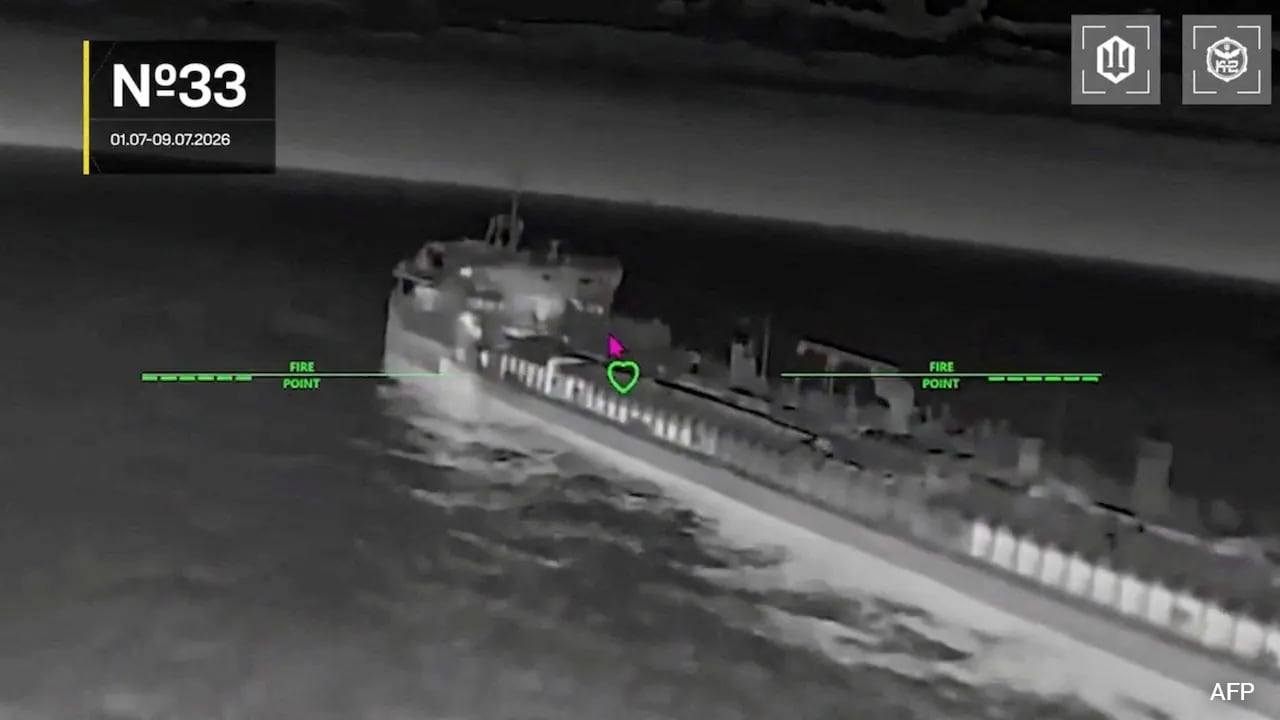
Imagine a logistics officer—let us call him Artem, a composite of the tech-minded planners now running these operations. Artem does not wear mud-stained fatigues. He wears a clean uniform in a room that smells of ozone and stale coffee. His weapon is a keyboard, a secure satellite link, and an array of domestic drones that look less like fighter jets and more like heavy-duty plumbing projects with wings. When Artem presses a button, the ripples are felt six hundred miles away in an oil refinery or an ammunition depot outside Voronezh.
This is the reality of the new long-range command. It centralizes the planning, intelligence gathering, and execution of deep strikes under a single, highly coordinated umbrella.
Previously, deep strikes were often opportunistic, carried out by a patchwork of different intelligence agencies and military branches acting independently. The Main Intelligence Directorate (HUR) had its targets; the Security Service of Ukraine (SBU) had theirs; the regular armed forces had another list entirely. They competed for the same scarce resources, the same carbon-fiber components, the same satellite imagery.
That fragmentation was a luxury a cash-strapped, outgunned nation could no longer afford.
The new command operates like a modern corporate supply chain, but with explosive outcomes. It pools intelligence from Western satellites, partisan networks on the ground inside Russia, and signals interception into a single data lake. Analysts strip away the noise to find the critical vulnerabilities in Russia's domestic infrastructure. By focusing entirely on deep-tier strikes, this unit allows the frontline commanders to concentrate strictly on the immediate tactical nightmare of the Donbas, while the long-range command focuses on the strategic horizon.
The shift is born out of a stark, mathematical necessity. Russia’s advantage has always been its depth—its ability to pull tanks from deep storage in Siberia, to refine fuel thousands of miles from the front, and to launch glide bombs from aircraft flying safely within its own sovereign airspace. For a long time, that sanctuary was absolute. Western allies, terrified of escalation, restricted the use of their high-tech, long-range weapons to Ukrainian territory.
Ukraine's response was to build its own long-range capabilities from scratch.
They turned to domestic innovation, transforming light commercial aircraft into uncrewed flying bombs and stitching together guidance systems using off-the-shelf electronics. The creation of a unified command is the maturation of this DIY industry. It signifies that the era of experimental, ad-hoc drone raids is over. The era of systematic, industrialized deep warfare has begun.
But the true complexity of this command is not the technology; it is the agonizing calculus behind every mission.
Every long-range drone launched is a gamble against time and air defenses. A drone traveling deep into Russian territory must navigate through thick webs of electronic warfare jamming that can blind its GPS guidance. It must slip past radar networks designed to spot low-flying objects. The planners must calculate the wind speeds over the steppes, the degradation of battery life in freezing high-altitude air, and the probability that Russia has moved its air defense assets since the last satellite pass.
Consider the targets. Striking an oil refinery is not just about causing a spectacular explosion for social media. It is an exercise in economic starvation. By hitting the specific distillation towers—highly complex pieces of equipment that Russia cannot easily replace due to international sanctions—the long-range command chokes off the fuel lines supplying the tanks in Zaporizhzhia. It forces Moscow to make a brutal choice: pull air defense systems away from the front lines to protect domestic infrastructure, or leave the factories that feed the war effort completely exposed.
There is a profound psychological weight to this shift, one that alters the very nature of how this war is experienced by ordinary people on both sides.
For the civilian population in Ukraine, the long-range command offers a grim sense of symmetry. For years, they have endured the terrifying wail of air raid sirens, spending sleepless nights in subway stations while Russian missiles rained down on their power grids and apartment buildings. The deep strikes managed by the new command bring the reality of the war back to the society that sanctioned it. When an oil depot burns in Rostov, the smoke is visible from the windows of citizens who believed the conflict was something happening safely far away, confined to a television screen.
Yet, the leaders of this command operate with a profound sense of constraint. They know that a single errant strike—one drone that malfunctions and hits a civilian apartment block instead of an industrial target—could jeopardize the fragile international support Ukraine relies upon. They must be more precise, more disciplined, and more ethical than the adversary they are fighting. They are fighting with a scalpel while their opponent uses a sledgehammer.
The basement in Kyiv remains quiet. The red arcs on the screen flicker as new data streams in. Artem watches a blinking cursor that represents a drone currently flying three hundred feet above the Russian countryside, invisible to the naked eye in the dark, humming its way toward a target determined weeks ago by a team of economists, analysts, and generals.
The war will not end tomorrow because of this new command. A centralized drone strategy cannot replace the grueling, bloody necessity of holding ground on the frozen fields of the east. But it has permanently erased the illusion of distance. The sanctuary of the rear guard has vanished, replaced by the cold realization that in the modern era, the front line is wherever a coordinated mind decides to point the arc.