Stop looking at skyscrapers and seeing a "reflection of our values." That is the comfortable lie fed to first-year design students to make them feel like philosophers instead of service providers. The "lazy consensus" among critics is that architecture acts as a structural diary of civilization—that if we are greedy, our buildings are tall; if we are communal, our buildings are open.
It is a beautiful sentiment. It is also entirely wrong.
Architecture is not a portrait of society. It is a lagging indicator of capital concentration and a curated mask designed to hide the very social realities critics claim it reveals. If you want to understand a culture, look at its trash or its tax codes. If you want to understand who held the most debt in 2024, look at the skyline.
Architecture does not reflect who we are. It reflects who is paying the bill and what they want us to believe about them.
The Lagging Indicator Fallacy
The most common mistake is the belief in real-time architectural expression. It takes five to ten years to move a major project from a napkin sketch to a ribbon-cutting ceremony. In that decade, entire regimes fall, economic bubbles burst, and social norms flip.
When a "state-of-the-art" headquarters opens today, it is actually a physical monument to the boardroom priorities of 2018. We are living in the skeletal remains of dead ideas. To call a building a "portrait of society" is like calling a star's light a real-time image of the galaxy. By the time you see it, the source has often already burned out.
I have sat in the rooms where these "monuments to society" are conceived. Not once did a developer ask, "How can we manifest the collective subconscious of the local population?" They asked about floor-area ratio (FAR), tax abatements, and how many "amenity spaces" they could squeeze in to justify a 20% rent premium. The building isn't a portrait; it’s a pro forma with a facade.
The Cult of "Human-Centric" Design
You’ve heard the buzzwords. "Biophilic design." "Third spaces." "Activated streetscapes."
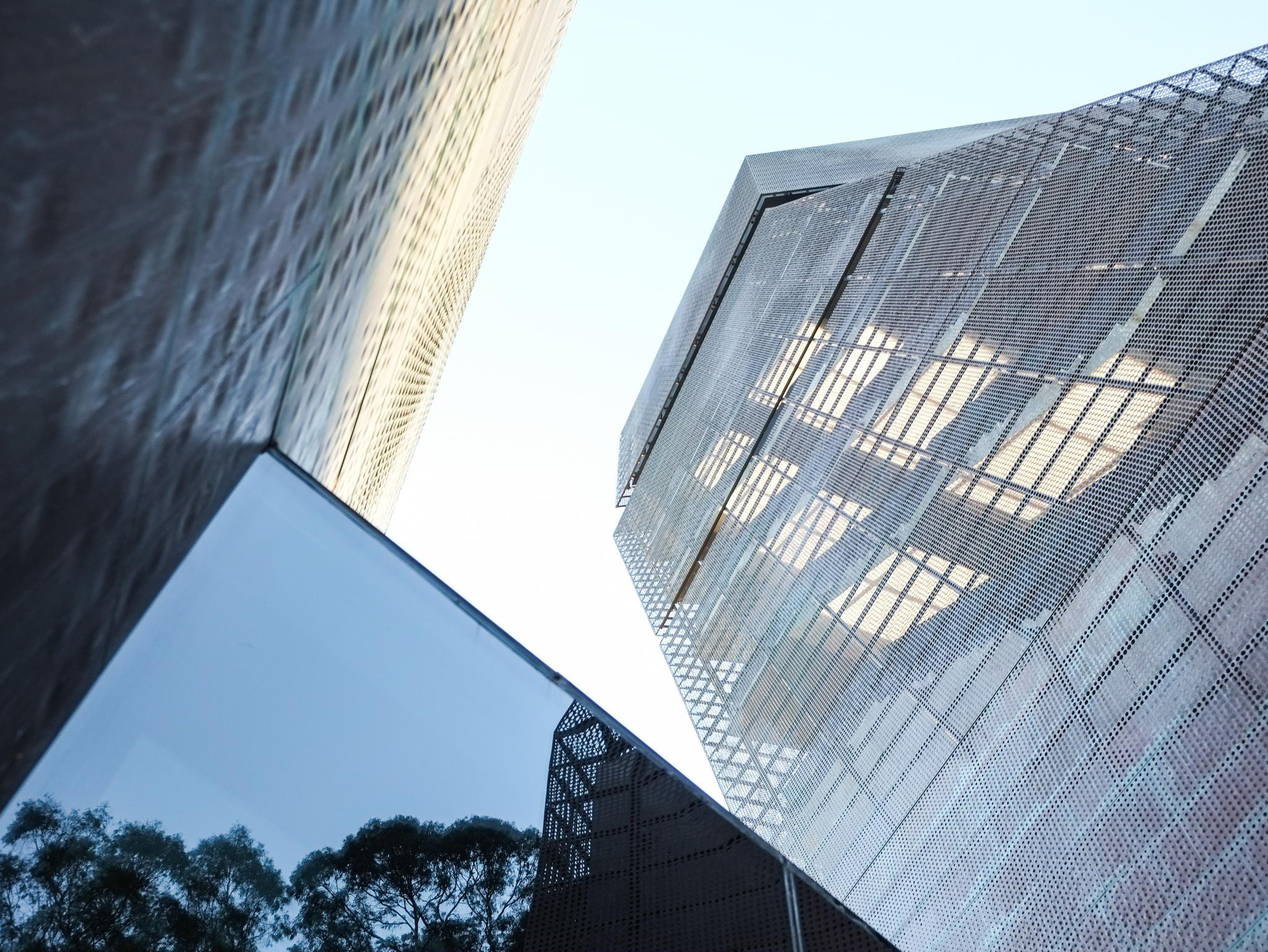
These are not architectural movements. They are marketing layers applied to the same concrete boxes we’ve been building since the 1970s. We talk about "transparency" by using floor-to-ceiling glass, yet the people inside those glass boxes are more siloed and monitored than ever before.
The glass isn't there to invite society in. It’s there because it’s the cheapest way to meet energy codes while maintaining a "premium" aesthetic. We mistake transparency for honesty. In reality, a glass curtain wall is the most effective way to hide the fact that nothing interesting is happening inside.
True "human-centric" design would prioritize longevity, repairability, and adaptability. Instead, we build 40-story glass towers with a 30-year lifespan before the seals fail and the HVAC becomes obsolete. We aren't building for society; we are building for the next quarterly exit.
Architecture as an Engine of Displacement
If architecture were a portrait of society, our cities would look like a chaotic, vibrant mess of conflicting needs. Instead, they look like a sanitized, globalized aesthetic often derided as "AirSpace." Whether you are in Brooklyn, Berlin, or Bangkok, the "modern" architecture is identical.
- Exposed brick.
- Edison bulbs.
- Light wood accents.
- Industrial steel.
This isn't a global society finding its voice. This is the homogenization of space to facilitate the frictionless movement of capital. Architecture has become a standardized product, like an iPhone. It is designed to be familiar to a specific class of global traveler, ensuring they never have to feel the friction of a "local" culture.
The "portrait" is a stock photo.
The Brutalist Truth
Critics love to hate Brutalism. They call it cold, dehumanizing, and "failed." But Brutalism was perhaps the last time architecture was actually honest.
Post-war Brutalism was a genuine attempt to provide mass housing, education, and healthcare using the most affordable, durable material available: concrete. It didn't try to look like a cloud or a forest. It looked like a building. It was heavy because life is heavy. It was raw because the budget was raw.
Today’s architecture is the opposite. It uses "starchitects" to wrap predatory real estate deals in "organic" shapes. We see a building that looks like a twisting ribbon and think, "How innovative!" We should be thinking, "Who is paying for the 30% waste in structural steel required to make that shape?"
The answer is usually a sovereign wealth fund or a tech monopoly looking to distract you from their labor practices. The more "whimsical" the architecture, the more likely it is functioning as a distraction.
The Technology Trap
We are told that "Smart Cities" and "Responsive Architecture" will finally align our environment with our needs. This is the ultimate "lazy consensus."
A building that tracks your movement to optimize lighting isn't a "responsive portrait" of your lifestyle. It is a data-harvesting node. By integrating sensors into every lintel and doorframe, we are turning the built environment into a physical extension of the browser.
Imagine a scenario where your office building adjusts its layout based on "productivity metrics" derived from your keystrokes. That isn't architecture serving society; that is architecture domesticating society. We are moving toward a world where the "portrait" starts painting you.
The Cost of the "Iconic"
The obsession with "iconic" architecture has devastated the middle tier of the built environment. In the pursuit of the "Bilbao Effect," cities pour billions into a single, flashy museum or stadium while the surrounding infrastructure rots.
This creates a "Starway" effect:
- The Magnet: A high-concept building by a Pritzker Prize winner is commissioned.
- The Surge: Property values in a 5-block radius skyrocket.
- The Purge: Small businesses and residents are priced out.
- The Result: A stunning architectural "portrait" surrounded by a cultural desert.
If the building were truly a portrait of that society, it would include the people it displaced. Instead, it acts as a tombstone for the neighborhood that existed before the "visionary" arrived.
Why We Need More "Ugly" Buildings
If we want architecture to actually serve us, we have to stop demanding it be a masterpiece. The most successful parts of our cities are often the "ugly" ones: the warehouses converted into studios, the strip malls that host immigrant-owned businesses, the sturdy old tenements.
These buildings are successful because they are loose-fit. They weren't designed to be a "portrait" of a specific moment. They were built to be useful.
Modern architecture is too "tight-fit." It is designed for a specific tenant, with a specific technology, in a specific economic climate. When that tenant leaves or that technology changes, the building is useless. It cannot be adapted; it can only be demolished.
The High Price of "Sustainability"
Let’s address the greenwashing. LEED certification is often more about the "business of being green" than actual ecology. I’ve seen developers spend hundreds of thousands on "green walls" that die within six months because the maintenance costs were never factored into the pro forma.
True sustainability is the building that stays standing for 200 years. But there is no profit in 200 years for a developer on a 7-year fund cycle. So, we build "sustainable" towers with high-tech glass that will be in a landfill before the children of the architects hit middle age.
We are decorating the apocalypse and calling it progress.
Stop Reading the Facade
If you want to know what a society values, don't look at the curves of the museum. Look at the height of the fences. Look at the lack of public benches. Look at the way the shadows of luxury towers fall over public parks, stealing the sun from the "society" the building supposedly represents.
Architecture is an exercise in power. It is the physical manifestation of who is allowed to occupy space and who is not. Every "open, airy lobby" that requires a keycard to enter is a lie. Every "public plaza" that bans loitering is a contradiction.
Stop treating architects like artists. Start treating them like lawyers. They are negotiating a contract between their client and the city. The building is the closing document.
Next time you see a new skyscraper, don't ask what it says about "us." Ask who it's keeping out. Ask how long it’s built to last. Ask what was demolished to make room for it.
The "portrait" is a distraction. The reality is the shadow it casts.
Stop admiring the mask. Look at the scars.