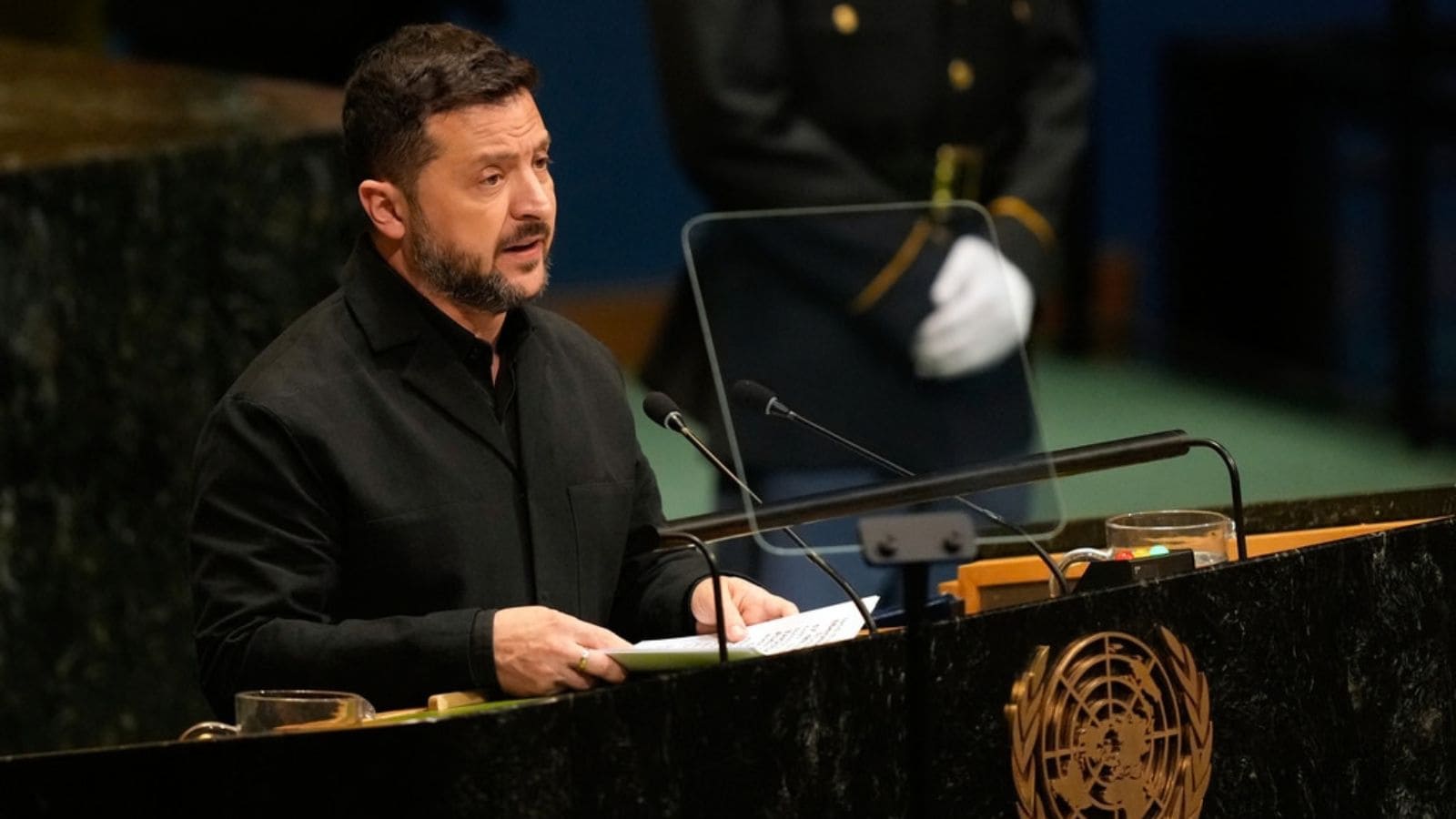
The scheduling of direct, United States-mediated negotiations between Ukraine and Russia in Abu Dhabi on November 10–11 represents a structural shift from open-ended attrition toward formalized diplomatic bargaining. Rather than signaling an immediate resolution to territorial disputes, this summit functions as a high-stakes calibration mechanism where Washington attempts to convert battlefield stalemates and economic fatigue into a verifiable ceasefire framework. Understanding the viability of these talks requires stripping away diplomatic rhetoric and examining the underlying incentive structures, asymmetric leverage points, and enforcement bottlenecks governing Kyiv, Moscow, and the American mediating apparatus.
The Structural Logic of the Abu Dhabi Venue
Selecting the United Arab Emirates as the physical theater for the November 10–11 summit solves a critical operational bottleneck in modern conflict resolution: neutral jurisdictional custody. Neither Brussels nor Geneva offers the political insulation required by the Russian delegation, as European Union member states and Switzerland have aligned with Western sanctions regimes and International Criminal Court arrest warrants.
Abu Dhabi operates outside the Western sanctions coalition while maintaining deep security and intelligence integration with Washington. This dual alignment creates a permissive environment for high-level principals to convene without triggering diplomatic protocol failures or domestic political blowback regarding capitulation. In negotiation theory, venue selection acts as a pre-commitment filter. By agreeing to travel to the Persian Gulf, both Moscow and Kyiv tacitly acknowledge that third-party mediation is necessary to break a mutually hurting stalemate—a condition defined by political scientist I. William Zartman as the primary prerequisite for ripe negotiations.
The timing—specifically the November 10–11 window—aligns directly with seasonal and fiscal inflection points. Military operations across Eastern Europe face severe logistical degradation during the late autumn mud season (rasputitsa) and the subsequent onset of winter freeze. Concurrently, fiscal appropriations in both the United States Congress and European capitals enter critical budget cycles. Locking in a negotiation window in mid-November forces all parties to price in the projected winter energy grid vulnerabilities in Ukraine and the compounding macroeconomic costs of defense industrial mobilization in Russia before committing to a 2027 campaign season.
The Three-Pillar Bargaining Matrix
Standard reporting treats peace talks as a binary choice between territorial surrender and continued warfare. In practice, US mediators structure these negotiations around three distinct, interlocking variables. Progress in one variable cannot be finalized without reciprocal concessions in the others.
1. The Territorial Freeze vs. Legal Recognition Dichotomy
The primary friction point remains the divergence between de facto control and de jure sovereignty.
- The Russian Position: Moscow seeks permanent legal recognition of its annexed territories alongside administrative control over the entirety of the Donetsk, Luhansk, Zaporizhzhia, and Kherson oblasts, regardless of current front-line positions.
- The Ukrainian Position: Kyiv cannot legally cede sovereign territory without violating its constitution and triggering internal political collapse.
- The US Mediated Compromise: Washington’s operational blueprint relies on a Korean Peninsula model—establishing a demilitarized line of contact that freezes kinetic operations without requiring Kyiv or the international community to grant legal recognition to Russian occupation. This separates the immediate cessation of violence from long-term status negotiations, postponing the sovereignty question for a multi-year diplomatic track.
2. Asymmetric Security Guarantees
A ceasefire without an enforcement mechanism merely provides the aggressor an operational pause to reconstitute degraded armored brigades and replenish artillery stockpiles. Ukraine’s baseline requirement for halting offensive operations is an ironclad security architecture that deters a renewed Russian invasion within a three-to-five-year horizon.
Because immediate NATO Article 5 accession remains politically blocked by consensus rules within the alliance, US mediators must construct an alternative deterrence package. This involves bilateral defense treaties, guaranteed multi-year air defense replenishment schedules, and the deployment of European monitoring forces along a buffer zone. Moscow’s counter-objective is the permanent neutralization of Ukraine—specifically, strict caps on the size of the Armed Forces of Ukraine (AFU), bans on long-range strike capabilities, and the exclusion of foreign military trainers. The Abu Dhabi talks will test whether Washington can force Moscow to accept a heavily armed, Western-aligned Ukraine outside of NATO as the price for lifting targeted economic restrictions.
3. Sanctions Relief as a Calibrated Escrow Mechanism
Economic warfare serves as Washington’s primary non-kinetic lever. However, immediate, unconditional sanctions relief removes all post-agreement compliance incentives from the Kremlin. To prevent unilateral Russian defection after a ceasefire is signed, American strategists utilize a phased escrow model:
- Phase One (Kinetic Halt): Cessation of long-range missile and drone strikes against energy infrastructure and port facilities, paired with a localized freeze along the line of contact. Reward: Partial unfreezing of specific sovereign assets into a dedicated reconstruction escrow account and minor waivers on agricultural and fertilizer transit logistics.
- Phase Two (Buffer Demilitarization): Withdrawal of heavy artillery and electronic warfare systems 30 kilometers back from the line of contact under third-party verification. Reward: Easing of secondary sanctions on select Russian financial institutions and energy technology imports.
- Phase Three (Sustained Compliance): Twelve consecutive months without verified ceasefire violations. Reward: Gradual reintegration of specific commodities into global insurance and shipping markets, while maintaining high-tech dual-use export controls indefinitely.
Asymmetric Leverage and the Cost Function of Attrition
To predict the outcome of the November 10–11 sessions, one must quantify the differing cost functions absorbing each belligerent. Neither side is negotiating from a position of absolute strength; both are attempting to manage accelerating structural deficits.
For Ukraine, the binding constraint is manpower and electrical grid survivability. While Western defense industrial base output has scaled significantly, artillery shell production and interceptor missile supplies remain finite. Attrition warfare favors the larger demographic pool over extended timelines. Furthermore, systemic degradation of thermal and hydroelectric power generation threatens severe humanitarian displacement during winter months, placing immense domestic pressure on Kyiv to secure a moratorium on infrastructure strikes.
For Russia, the binding constraint is macroeconomic distortion and equipment attrition. While the Kremlin has successfully transitioned to a war economy, doing so has generated acute labor shortages, double-digit inflation, and punitive central bank interest rates that stifle non-military capital formation. Simultaneously, the Soviet-era armored vehicle depots that buffered Russian battlefield losses are approaching exhaustion for modern combat-ready hulls. Moscow faces a narrowing window where its current territorial leverage exceeds its long-term economic sustainability.
The United States holds the decisive meta-leverage over both parties. Washington controls the spigot of intelligence, surveillance, and reconnaissance (ISR) data, precision-guided munitions, and financial liquidity that sustains Ukraine’s defensive capability. Simultaneously, the US Treasury controls the secondary sanctions architecture that throttles Russian trade with neutral intermediaries in Asia and the Middle East. In Abu Dhabi, US mediators are not neutral facilitators; they are active power brokers capable of altering the cost-benefit calculus of both delegations in real time by threatening either an escalation of military aid to Kyiv or a sharp contraction of it.
Verification Bottlenecks and the Failure Modes of Ceasefires
Historical precedent demonstrates that mediated ceasefires in high-intensity conventional wars fail primarily due to verification deficits rather than diplomatic ambiguity. The Minsk I and Minsk II agreements collapsed largely because the Organization for Security and Co-operation in Europe (OSCE) lacked the mandate, physical access, and technical sensors required to attribute artillery violations accurately along a sprawling front line.
A line of contact stretching over 1,000 kilometers presents unprecedented monitoring challenges, particularly given the ubiquity of commercial first-person-view (FPV) drones and electronic warfare jamming. Any agreement emerging from Abu Dhabi must solve three specific operational problems:
- Attribution of Low-Level Kinetic Events: When a reconnaissance drone is downed or a mortar shell lands in a gray zone, both sides will claim defensive retaliation. Without automated, neutral sensor networks—combining satellite imagery, acoustic gunshot detection, and continuous aerial radar—localized skirmishes rapidly escalate back into full-scale brigade-level engagements.
- The Spoiler Dynamic: Rogue elements, irregular militias, or hardline factions within either military apparatus can deliberately shell civilian areas to collapse the diplomatic process. A viable framework requires pre-agreed disciplinary protocols where command structures must publicly disavow and arrest units that violate fire-control orders, rather than allowing isolated incidents to void the entire treaty.
- Airspace and Maritime Deconfliction: A ground freeze is unsustainable if naval blockades in the Black Sea or aerial bombardment campaigns continue. Mediators must synchronize ground cessation timelines with strict maritime transit corridors and air defense engagement rules, creating a unified operational theater.
Strategic Limits of the US Mediation Model
No diplomatic framework eliminates the fundamental geopolitical incompatibility between Russian imperial revisionism and Ukrainian sovereign survival. The primary limitation of the Abu Dhabi track is that it optimizes for conflict management rather than conflict resolution.
By deferring the legal status of occupied territories and relying on conditional sanctions relief, the US approach constructs an inherently unstable equilibrium. It assumes that rational economic self-interest will eventually override ideological objectives in Moscow—an assumption that has repeatedly failed when applied to authoritarian regimes prioritizing regime survival over GDP growth. Furthermore, a frozen conflict leaves Ukraine vulnerable to hybrid warfare, cyberattacks, and political subversion aimed at fracturing its domestic consensus while western attention shifts toward competing strategic theaters in the Indo-Pacific.
If the November 10–11 negotiations produce a framework, it will not be a permanent peace treaty. It will be a heavily armed, technologically monitored armistice maintained solely by the continuous application of American economic and military deterrence.
The Operational Play for Washington and Kyiv
To prevent the Abu Dhabi summit from degenerating into a Russian stalling tactic designed to survive the winter campaign season, US and Ukrainian negotiators must enforce strict structural discipline across the two-day session.
First, reject open-ended working groups. Negotiators must establish a hard 30-day implementation deadline for a reciprocal moratorium on long-range energy infrastructure strikes as a mandatory confidence-building measure. If Moscow refuses to halt aerial attacks on the Ukrainian power grid during the negotiations, Washington must immediately authorize the release of remaining frozen Russian sovereign assets to fund Ukrainian air defense procurement, establishing an immediate financial penalty for bad-faith bargaining.
Second, decouple ceasefire verification from political settlement. Do not allow Russian negotiators to hold the operational mechanics of a demilitarized buffer zone hostage to demands for Ukrainian constitutional amendments or language laws. Lock in the technical parameters—satellite sharing, neutral observer corridors, and heavy weapon withdrawal distances—first, forcing Moscow to accept physical constraints on its military posture before any discussions regarding sanctions relief or diplomatic normalization commence.


