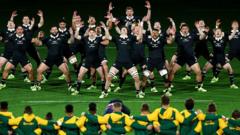
Mass sporting events function as highly engineered mechanisms for the rapid generation and distribution of social capital. While casual commentary attributes the collective euphoria of a football tournament to vague notions of national identity or communal spirit, the underlying phenomenon is driven by specific psychological, structural, and economic inputs. Understanding how a simple athletic contest temporarily realigns fractured demographics requires mapping the precise channels through which shared attention translates into systemic trust.
When millions of individuals synchronize their attention toward a singular, unpredictable outcome, they enter a state known in sociology as collective effervescence. This is not an accidental byproduct of entertainment; it is a predictable systemic response to highly concentrated emotional energy. By dissecting this process into its component parts, organizations and policymakers can better understand the durability—and the distinct limitations—of sports as a tool for societal stabilization.
The Tripartite Engine of Communal Alignment
The temporary unification observed during major football tournaments relies on three structural pillars that differentiate sport from other cultural phenomena like cinema, politics, or religion. Each pillar serves a distinct function in lowering the barriers to cross-demographic interaction.
                  [High-Stakes Unpredictability]
                                │
                                ▼
[Radical Equality of Access] ──┼──> [Low-Barrier Shared Vocabulary]
                                │
                                ▼
                [Temporary Social Cohesion]
1. Radical Equality of Access and Status
Within the framework of a major tournament, the traditional hierarchies of wealth, education, and geographic location are momentarily flattened. The baseline requirement for participation in the shared experience is merely awareness of the event. Because the rules of the sport are universally understood, the entry barrier is near zero. A corporate executive and a hourly wage worker occupy identical analytical standing when evaluating a penalty shootout. This equalization creates a rare neutral ground where cross-class communication occurs without the friction of socioeconomic sorting.
2. High-Stakes Unpredictability
Unlike scripted entertainment, the utility of live sport as a social binding agent depends entirely on its structural uncertainty. The variance inherent in a 90-minute football match creates a high-stakes environment where outcomes cannot be bought or guaranteed. This unpredictability triggers a highly coordinated dopaminergic response across an entire population simultaneously. When a goal is scored in extra time, the sudden release of tension occurs at scale, forcing an immediate, involuntary alignment of emotional states across disparate groups.
3. Low-Barrier Shared Vocabulary
Societal fragmentation is frequently accelerated by the specialization of language; different political, professional, and cultural subcultures develop distinct idioms that alienate outsiders. Sport provides a universally understood, non-threatening lexicon. A tournament introduces a simplified set of symbols, narratives, and objectives that require no specialized training to decode. This shared vocabulary replaces complex, politically charged discussions with a simplified binary framework (winning or losing) that people can rally around without ideological conflict.
The Social Cost Function of Distributed Attention
The primary error in standard commentary is treating the positive sentiment generated by football as a permanent asset. In reality, this sentiment operates under a strict decay function. The social capital built during a successful tournament run is highly volatile and depreciates rapidly once the external stimulus is removed.
To quantify the sustainability of this phenomenon, we must examine the friction points that actively erode collective goodwill post-tournament.
The Attention Amortization Schedule
The peak of national alignment occurs within a specific window: roughly 48 hours before a major match to 72 hours following a victory. During this peak, indicators of generalized social trust—such as micro-transactions between strangers, positive sentiment in public digital spaces, and willingness to cooperate on localized civic tasks—increase measurably.
However, this state demands immense cognitive and emotional bandwidth. Human networks cannot maintain a state of heightened hyper-focus indefinitely. As the immediate emotional payoff subsides, individuals revert to their baseline tribal identities. The pre-existing structural divides—economic inequality, political polarization, and cultural sorting—reassert themselves because the sporting event altered the collective mood, not the underlying institutional material.
The Problem of Synthetic Inclusion
Sporting euphoria offers a form of synthetic inclusion. It simulates the feeling of structural unity without requiring the hard policy concessions necessary to achieve actual equity. For example, a diverse national squad winning a trophy is frequently cited as evidence of successful multicultural integration. This conclusion mistakes symbolic representation for systemic health.
When the tournament concludes, the structural vulnerabilities faced by marginalized groups remain unchanged. If the public substitutes the superficial harmony of a stadium celebration for substantive civic engagement, the sporting event inadvertently acts as a palliative, delaying necessary systemic reforms by masking the symptoms of deep-seated friction.
Structural Bottlenecks in Sentiment Transmission
If the social utility of football joy is real yet fleeting, the question becomes why this energy fails to crystallize into permanent institutional strength. The transmission of energy from the stadium to the civic sphere fails due to three specific bottlenecks.
The Vehicle Misalignment
The mechanisms used to express sporting passion are inherently non-transferable to civic execution. Cheering, flag-waving, and synchronized chanting are expressive, low-utility behaviors designed for consumption and emotional release. They do not scale into organized political action, policy formulation, or community organizing. There is no structural pipeline that converts the energy spent watching a match into the long-term, unglamorous work of maintaining public infrastructure or funding local education. The medium of consumption restricts the utility of the emotion.
The Binary Outcome Trap
Sport operates on a strict zero-sum architecture: one side wins, the other loses. Civic progress, conversely, requires non-zero-sum negotiation, compromise, and the toleration of ambiguity. The habits of mind reinforced by sports fandom—unconditional loyalty to one's group, demonization of the opposition, and an obsession with immediate, definitive outcomes—are poorly suited for complex governance. When populations attempt to apply the emotional logic of sports to public policy, the result is an amplification of partisan entrenchment, not a reduction of it.
Commercial Capture
Modern sports tournaments are hyper-monetized corporate properties designed to extract maximum financial value from consumer attention. The primary objective of governing bodies and corporate sponsors is not the cultivation of civic virtue, but the optimization of merchandising revenue, broadcasting rights, and ad impressions.
This intense commercialization commodifies the genuine human desire for connection. By transforming a organic communal moment into a series of transactional opportunities, the long-term trust-building capacity of the event is compromised. The audience is systematically transitioned from active participants in a shared cultural ritual to passive consumers of a branded product.
Strategic Deployment of Sporting Infrastructure
Organizations, municipal leaders, and institutional strategists looking to capture the transient value of sporting sentiment cannot rely on spontaneous goodwill. They must treat the post-tournament window as an operational opportunity with a finite lifespan.
Instead of treating the tournament as a celebratory destination, it must be used as a customer acquisition funnel for civic engagement. The heightened trust levels observed during a winning run can be leveraged to launch complex, multi-stakeholder initiatives that would normally face heavy bureaucratic or partisan resistance.
- Immediate Infrastructure Activation: Launching localized public works, community funding drives, or cross-partisan legislative sessions within the 72-hour peak-sentiment window capitalized on the temporary reduction in social friction.
- De-escalation Funding: Redirecting a fixed percentage of tournament-generated tax revenues directly into permanent, grassroots sports facilities in systematically underfunded sectors, transforming transient commercial attention into fixed physical assets.
- Structured Narrative Transition: Deliberately shifting the media focus from the symbolic triumph of the athletes to the concrete, operational challenges faced by the communities those athletes originated from, utilizing the high-attention environment to illuminate structural realities.
The value of football joy lies not in its ability to permanently erase societal fault lines, but in its capacity to show that those lines are temporarily malleable. It provides a brief proof of concept for collective action, demonstrating that a fragmented population still retains the hardware required for synchronized purpose. The durability of that unity depends entirely on the structural work that begins the moment the stadium lights are extinguished.