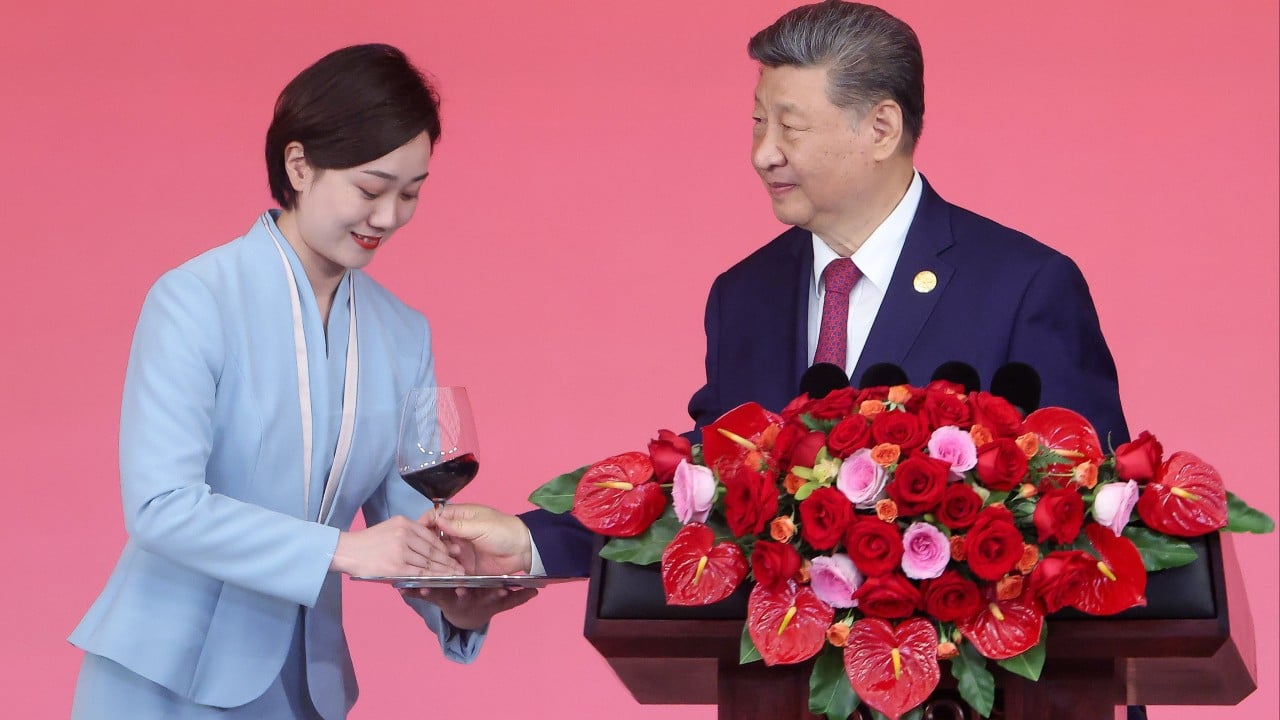
State banquets at multilateral summits do not function as mere hospitality; they operate as low-friction diplomatic signaling mechanisms designed to manage geopolitical tension through sensory consensus. When the Asia-Pacific Economic Cooperation (APEC) hosts deploy classic Cantonese dim sum alongside an international musical repertoire, they are executing a calibrated dual-track strategy. The culinary selection anchors the host's regional identity and historical legitimacy, while the auditory programming neutralizes zero-sum cultural dominance by distributing symbolic representation across participating economies.
Most coverage treats summit menus and entertainment schedules as lifestyle trivia, missing the operational constraints and diplomatic calculus governing every course and chord. In high-stakes multilateral environments—where formal communiqués frequently stall over trade tariffs, maritime disputes, or supply chain decoupling—the banquet hall remains one of the few controlled environments where leaders must sit in physical proximity without prepared talking points. Designing that environment requires solving a complex optimization problem: maximizing cultural authenticity without alienating foreign palates, violating dietary restrictions, or triggering unintended political subtext.
The Structural Logic of Culinary Diplomacy
Gastrodiplomacy, the deliberate use of food to advance diplomatic objectives, relies on predictable psychological and physiological mechanisms. Shared meals lower cortisol levels and activate social bonding pathways, creating a temporary baseline of cooperative behavior before leaders return to bilateral negotiations. However, a multilateral summit involving 21 distinct economies introduces severe logistical and symbolic bottlenecks that standard state dinners do not face.
Menu Engineering Under Multilateral Constraints
A single-nation state dinner requires aligning only two culinary traditions. An APEC banquet requires accommodating nearly two dozen cultural, religious, and dietary frameworks simultaneously. Serving classic Cantonese dim sum solves three distinct operational problems at once:
- Modularity and Portion Control: Unlike heavy, multi-course Western banquet entrees or monolithic family-style feasts, dim sum is built on discrete, bite-sized units—such as har gow (shrimp dumplings), siu mai (open-topped pork or seafood dumplings), and baked pastries. Modularity allows kitchen brigades to execute precise dietary substitutions (halal, kosher, vegetarian, allergen-free) without visibly altering the plate presentation for individual leaders, preserving visual parity across the head table.
- Thermal Stability at Scale: State banquets suffer from a notorious service bottleneck: plating and delivering food to hundreds of delegates simultaneously while maintaining optimal serving temperature. Steamed dim sum varieties retain heat and moisture inside bamboo or porcelain vessels far better than seared proteins or delicate emulsions, reducing the variance between the first plate served and the last.
- Neutrality Through Familiarity: Cantonese cuisine represents the most globally diffused regional Chinese culinary tradition, largely due to historical migration patterns from Guangdong and Hong Kong across the Pacific Rim. Because delegates from North America, Southeast Asia, and Oceania already possess sensory familiarity with dim sum formats, the menu avoids the neophobia—the instinctive reluctance to eat unfamiliar foods—that can derail diplomatic dining.
The Semiotics of Cantonese Selection
Choosing Cantonese dim sum over northern imperial cuisines (such as Peking duck or Shandong banquet dishes) carries specific geopolitical weight. Imperial court cuisines project centralized state power, hierarchy, and historical empire. By contrast, Cantonese yum cha (tea drinking) culture originated in commercial port cities and merchant guilds along the Pearl River Delta.
Selecting a merchant-class culinary tradition subtly reinforces APEC's foundational mandate: free trade, open ports, and commercial integration across the Asia-Pacific. The food itself acts as a physical metaphor for maritime commerce and cross-border exchange. Furthermore, pairing delicate steamed items with high-grade Chinese teas (such as Pu-erh, Tieguanyin, or Longjing) introduces a pacing mechanism. Tea service enforces pauses in conversation, giving interpreters time to work and allowing principals to digest both food and complex policy proposals without awkward silences.
Auditory Programming as Geopolitical Equilibration
While the menu establishes the host's identity, the musical program performs the opposite function: it decentralizes cultural authority. In diplomatic protocol, an all-domestic musical lineup risks projecting cultural hegemony, which can irritate visiting delegations during periods of heightened nationalist friction. Incorporating music from around the world—specifically drawing from the diverse traditions of APEC member economies—serves as a deliberate counter-balance.
Acoustic Diplomacy and Cognitive Load
Background and interlude music at state banquets must navigate a narrow acoustic corridor. If the arrangement is too complex, percussive, or loud, it interferes with speech intelligibility, forcing leaders to raise their voices and increasing cognitive fatigue during critical off-the-record exchanges. If it is too bland, it fails to register as a diplomatic gesture.
Curators solve this by translating folk melodies, classical motifs, and recognizable popular standards from member economies into chamber arrangements—typically utilizing string quartets, acoustic ensembles, or blended East-West instrumentation (such as pairing the erhu or guzheng with Western cellos and flutes). This orchestration strips away jarring dynamic shifts while preserving melodic recognition. When a visiting head of state hears a traditional melody from their home region played on instruments native to the host country, the arrangement signals institutional respect and meticulous preparation.
The Roster Balancing Equation
Constructing an international setlist for a 21-economy forum operates like a zero-sum allocation exercise. Protocol officers must audit the musical selections against three strict criteria:
- Proportional Representation: Major economic powers cannot monopolize the runtime, nor can smaller island or developing economies be omitted without risking diplomatic slights. Medleys and cross-cultural fusion pieces are frequently deployed to compress representation into tight time windows without turning the banquet into an endurance test.
- Historical Depoliticization: Every piece of music carries historical baggage. Curators must scrub the repertoire of compositions associated with territorial conflicts, colonial subjugation, or internal political strife. Folk songs celebrating harvest, maritime navigation, natural landscapes, or seasonal transitions dominate these playlists because their thematic content is universally benign.
- Tempo Regulation: Musical pacing directly influences eating speed and emotional arousal. Protocol teams sequence slower, legato movements during the initial courses to lower ambient anxiety, gradually introducing brighter, moderately paced compositions during the middle courses to stimulate conversation, before tapering back down prior to formal toasts.
The Operational Mechanics of Banquet Execution
Behind the symbolic choices lies a rigid logistical architecture. A major multilateral banquet operates less like a restaurant and more like an aerospace launch, governed by strict tolerances for timing, security, and error recovery.
The Synchronization Matrix
Every phase of an APEC banquet is mapped onto a minute-by-minute synchronization matrix that aligns culinary production, security sweeps, audio-visual cues, and diplomatic protocol.
The first critical bottleneck occurs at the security perimeter. Every raw ingredient must undergo supply-chain verification, toxicological screening, and continuous chain-of-custody monitoring before entering the prep kitchen. This constraint automatically eliminates ultra-perishable ingredients that cannot survive extended quarantine and testing protocols, further explaining why disciplined, prep-friendly dim sum items outperform fragile, last-minute culinary preparations.
The second bottleneck is service choreography. To prevent visual hierarchy errors—where one leader is served noticeably earlier than a rival—service teams operate in synchronized waves. Waitstaff enter the dining room in formation, pause at designated floor markers, and place plates simultaneously on an auditory or visual cue from the floor captain. Dim sum baskets and uniform plated assortments standardize the weight and balance of trays, minimizing the risk of physical spills in a room packed with close-protection security details.
Failure Modes and Risk Mitigation
Even the most tightly scripted banquets encounter operational failure modes. Protocol directors design redundancies around three primary vulnerabilities:
- Schedule Slippage: Bilateral meetings running overtime frequently delay banquet seating by 30 to 60 minutes. Traditional roasted meats dry out under heat lamps during delays, whereas steamed dim sum can be held in staggered production batches, with final steaming triggered only when the motorcade sequence is confirmed.
- Unintended Cultural Offenses: Visual motifs on tableware, floral arrangements, and menu typography are vetted by diplomatic historians. Certain flower species, color combinations (such as stark white and black palettes associated with mourning in East Asian traditions), or numeric groupings (such as four-item arrangements) are systematically purged from the design brief.
- Acoustical Feedback and Translation Interference: Live musical performances must be frequency-isolated from the infrared or radio channels used by simultaneous interpreters. Sound engineers notch out specific vocal frequencies in the live house mix so that ambient music does not bleed into the microphones of interpreters translating table-side conversations.
Strategic Implications for Multilateral Event Architecture
The pairing of Cantonese dim sum and global music at an APEC banquet demonstrates a mature model of soft-power execution. Rather than relying on grandiose displays of wealth or monolithic cultural dominance, the host utilizes modular, accessible cultural artifacts to create a neutral, low-friction environment for high-level diplomacy.
For organizations, sovereign entities, or institutions architecting high-stakes international summits, this framework yields three actionable directives:
- Deploy Modular Hospitality: Replace rigid, monolithic dining formats with modular, small-portion culinary architectures. Modularity absorbs dietary variance, stabilizes food quality against schedule delays, and ensures visual parity across diverse stakeholders.
- Separate Identity from Hegemony: Anchor the physical and culinary baseline in authentic local tradition to establish host credibility, while using ambient programming—music, visual art, and spatial design—to reflect the diverse origins of the participants.
- Engineer for Conversational Flow: Treat acoustic design, table geometry, and service pacing as communication tools rather than aesthetic afterthoughts. Every operational decision in a diplomatic venue must ultimately serve one metric: reducing the friction between principals so substantive negotiation can occur.