The Pentagon is about to waste billions of dollars turning tow trucks into multi-million-dollar AI death traps.
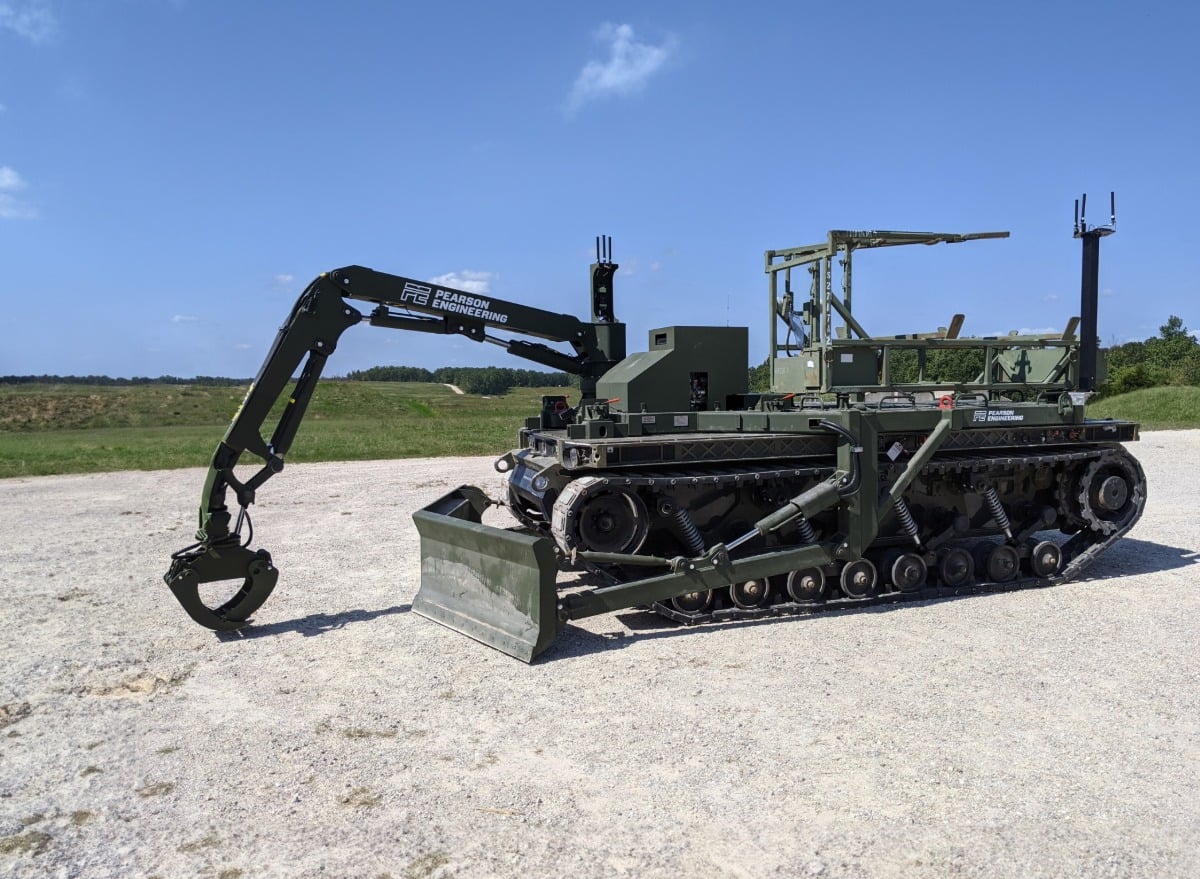
Recent military tech briefings reveal the U.S. Army is actively hunting for autonomous and robotic solutions to handle battlefield recovery. The logic seems simple on paper. When an M1A2 Abrams tank gets immobilized in a hot zone, you do not want to risk human mechanics to go hook up a tow cable. Send a robot instead. Save lives.
It is a comforting, high-tech narrative that completely collapses the moment it hits actual mud and artillery fire.
The defense tech sector is suffering from a severe case of automation bias. For years, I have watched defense contractors pitch overly complex robotic platforms to solve problems that actually require raw muscle, heavy steel, and human improvisation. This drive to automate combat recovery is not just a waste of taxpayer money. It is a tactical liability that will get more soldiers killed, not fewer.
The Mud Does Not Care About Your Algorithms
The core premise of autonomous vehicle recovery is flawed because it misunderstands the physics of the battlefield.
We are not talking about an autonomous Tesla picking up a broken-down sedan on a clean asphalt highway. We are talking about a 70-ton main battle tank buried up to its turrets in Ukrainian rasputitsa, or high-centered on concrete barriers in a dense urban environment.
Vehicle recovery is an art form rooted in brutal, unpredictable physics. It requires calculating soil mechanics, mechanical advantage, winch angles, and structural integrity under immense pressure.
- The Rigging Problem: A robot cannot walk up to a twisted, smoking piece of armor and figure out how to thread a heavy-duty recovery winch through a deformed towing eyelet.
- The Sensory Blindspot: Mud, smoke, oil, and debris instantly blind the LiDAR, radar, and optical sensors that autonomous systems rely on to navigate.
- The Adaptability Gap: Human recovery crews routinely use improvised solutions—welding scrap metal on the fly, using trees as natural anchors, or operating winches by acoustic feedback. AI cannot improvise a rigging setup when the factory-spec attachment points are blown off.
If you send an unmanned recovery vehicle into a chaotic zone, it will get stuck. Now, instead of recovering one tank, you have to send a second team to recover the multi-million-dollar robot that was supposed to save the day.
The Real Target on a Robots Back
Proponents of robotic recovery argue that taking humans out of the driver's seat reduces casualties. They are ignoring how modern electronic warfare actually works.
A heavy, slow-moving autonomous recovery vehicle is a massive emitting target. To operate effectively, these systems require high-bandwidth data links, constant GPS telemetry, or predictable localized algorithms. In a contested peer-to-peer conflict against adversaries equipped with sophisticated electronic warfare capabilities, that radio frequency signature is a homing beacon.
Imagine a scenario where an autonomous recovery vehicle is dispatched to retrieve a disabled infantry fighting vehicle. The enemy does not even need to destroy it with an anti-tank missile. They simply jam its GPS guidance or flood its sensor suite with cheap laser dazzlers. The robot freezes in place, completely useless, turning a recovery operation into a sitting duck for enemy drone strikes.
Furthermore, you create a massive cybersecurity vulnerability. A captured or hacked autonomous recovery vehicle transforms from a logistics asset into an enemy tool that can be used to block supply routes or harvest proprietary military tech.
Dismantling the People Also Ask Consensus
Whenever you question the push for automation, military tech evangelists throw a predictable set of objections at you. Let's break down the lazy assumptions dominating the defense sector right now.
Aren't unmanned systems already proving successful in logistics?
Yes, in sterile, predictable environments. Palletized cargo movers operating in rear-echelon supply depots or predictable supply routes do fine. But a supply depot is not a dynamic frontline. Equating an autonomous warehouse forklift to an active-combat recovery vehicle is a catastrophic false equivalence. The chaos of a hot zone defies predictability.
Won't this save lives by keeping soldiers out of the line of fire?
Only in the briefest, most short-sighted view. When a robotic recovery system fails on the battlefield—which it will—human soldiers will still have to go out and finish the job. Except now, they are operating under worse conditions, dealing with two disabled vehicles instead of one, and giving the enemy extra time to zero in their artillery on a fixed location.
Can't remote teleoperation solve the improvisation problem?
Teleoperation sounds like a great compromise. Put a human in a bunker miles away with a VR headset and a joystick. But teleoperation relies entirely on unjammed, low-latency communications. In a near-peer conflict, those communications are the very first thing to get severed. A teleoperated vehicle with a dropped connection is just a very expensive paperweight.
The Heavy Hitters are Already Warning Us
This is not just cynical speculation. The limits of automation under fire are well-documented by defense institutions like the Royal United Services Institute (RUSI) and various lessons learned from recent conflicts in Eastern Europe.
Modern artillery and low-cost loitering munitions have compressed the kill chain down to minutes. If a vehicle stops moving, it has a terrifyingly short lifespan before an FPV drone finds it. The bottleneck in vehicle recovery is not the speed of the engine; it is the time it takes to hook up the heavy rigging and pull.
Humans can assess a damaged vehicle, hook up a tow bar in under two minutes using brute force and adrenaline, and get moving. A robotic system attempting to precisely align its mechanical arms, verify its sensor data, and execute a pre-programmed macro will take three times as long, making it a perfect target for incoming mortar fire.
Look at the Real Trade-Offs
To be fair, pursuing autonomous tech isn't entirely without merit. There are valid use cases for unmanned ground vehicles, but we must be brutally honest about the downsides of forcing them into heavy recovery roles.
| Factor | Human-Led Recovery Teams | Autonomous Robotic Systems |
|---|---|---|
| Adaptability | Extreme. Can use scrap, change plans instantly, and ignore minor system faults. | Poor. Dependent on clean sensor data and strict pre-programmed parameters. |
| Electronic Warfare Resilience | Total. Humans do not stop working when the GPS signal drops or the radio is jammed. | Vulnerable. Blinded or neutralized by basic electronic jamming and spoofing. |
| Cost & Scalability | Low mechanical cost; high investment in personnel training and protection. | Astronomic acquisition and maintenance costs for a highly specialized asset. |
| Speed under Pressure | Fast, improvised hookups driven by survival instincts. | Slow, methodical positioning determined by safety algorithms. |
Fix the Doctrine, Not the Machinery
Instead of burning through research budgets trying to make a machine mimic the grit of a combat engineer, the military needs to focus on what actually works.
We do not need smarter tow trucks. We need tougher, simpler, human-operated recovery vehicles with better active protection systems. If you want to protect recovery crews, wrap them in heavy armor, equip the vehicle with advanced smoke-screening systems, and deploy counter-drone hard-kill systems directly on the recovery platform.
Invest in better auxiliary power units so crews can operate winches without running loud, hot engines that trigger thermal imaging sensors. Focus on modular vehicle designs that allow combat crews to quickly detach damaged components themselves, without needing a dedicated recovery vehicle to come rescue them in the first place.
Stop treating every tactical challenge as a software problem waiting for an AI solution. Some jobs require grease, muscle, and human judgment. Vehicle recovery is one of them. Take the robots off the drawing board and put human crews back into heavily armored, resilient vehicles that can actually survive the fight.