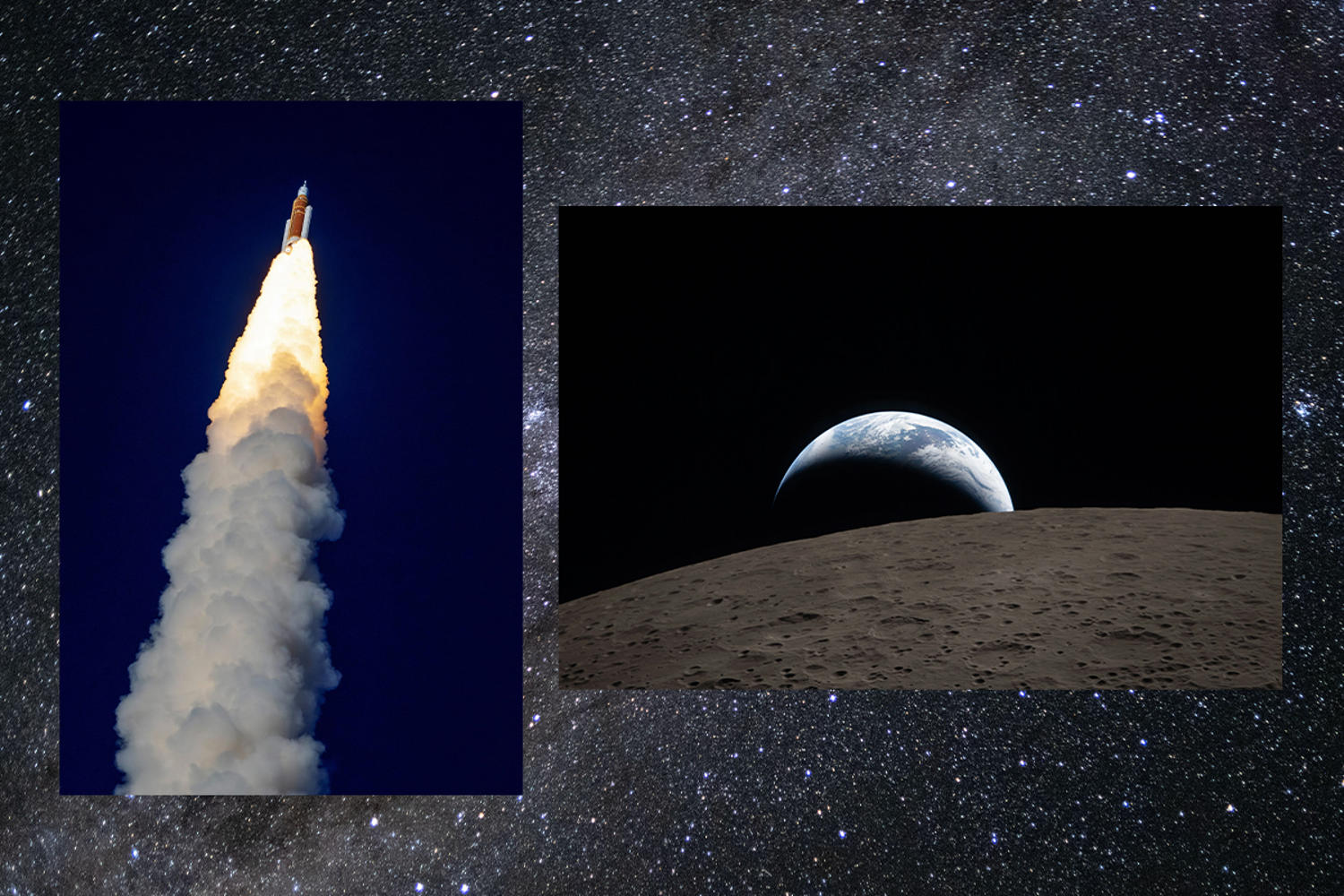
The parachutes deployed. The capsule bobbed in the Pacific. The world cheered. We are told this is a triumph, a "return to the moon," and a milestone for humanity.
It isn't.
Artemis II is a glorified loop-de-loop. It is a $4 billion victory lap for 1960s physics, wrapped in modern PR and sold as progress. While the media fawns over the "heroic return" of four astronauts, they are ignoring the reality that NASA just spent a decade and enough money to fix a small country’s power grid to do something we already mastered during the Nixon administration.
The "lazy consensus" says we need Artemis II to "test systems" for a moon landing. That is a convenient narrative for a bureaucracy that has forgotten how to take risks. If you want to go to the Moon, go to the Moon. Don't spend $4 billion to fly past it.
The SLS Is an Architectural Dead End
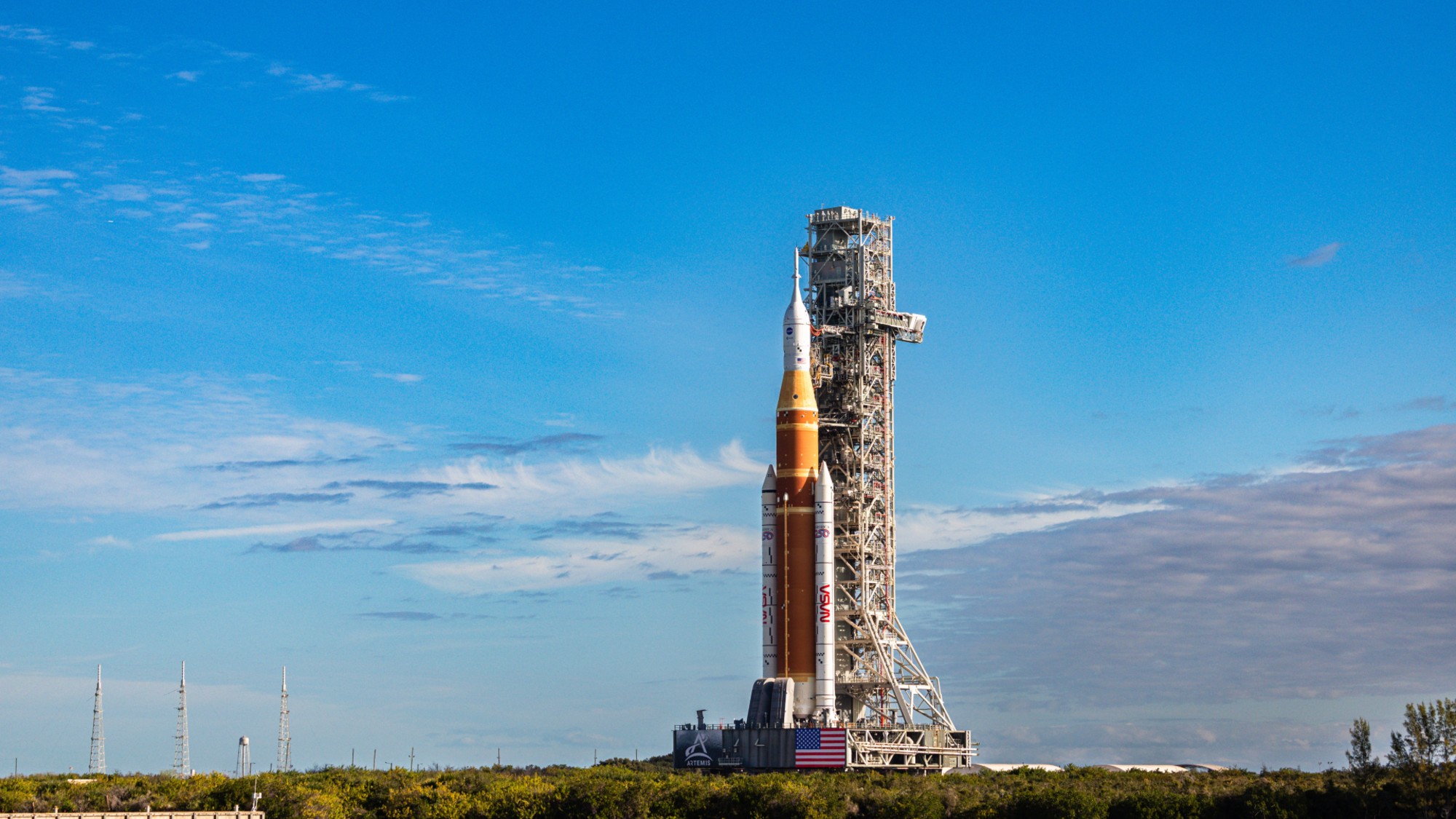
The Space Launch System (SLS) is the backbone of Artemis. It is also a Frankenstein’s monster of legacy parts. It uses Space Shuttle Main Engines (RS-25s) and solid rocket boosters that were designed when leaded gasoline was still common.
Worse, it is expendable. Every time an SLS launches, we throw $2 billion into the ocean.
In a world where SpaceX is landing boosters on autonomous barges and building Starship—a fully reusable system designed for actual colonization—the SLS looks like a rotary phone in an era of fiber optics. NASA isn't building a transportation system; they are building a jobs program for legacy aerospace contractors.
The physics of $SLS$ are sound, but the economics are terminal. If your cost per kilogram to orbit doesn't drop by an order of magnitude, you aren't "opening" space. You are just visiting an expensive museum.
The Safety Myth is Killing Innovation
The primary defense for this 10-day orbital mission is "crew safety." We are told that we must test every bolt, every heat shield tile, and every life support sensor in a high-earth orbit before we dare touch the lunar surface.
This sounds responsible. In reality, it is a symptom of Risk-Aversion Paralysis.
The Apollo 8 mission—the first to orbit the Moon—was a pivot. It wasn't the original plan. NASA saw a window, took a massive gamble, and jumped. Artemis II, by contrast, is the result of a decade of "safety reviews" that have served only to bloat the budget and push the timeline.
When you prioritize zero-risk over high-reward, you get stagnation. We have spent fifty years in Low Earth Orbit (LEO) because we became afraid of the "unpredictable." Artemis II is just LEO with a longer commute. It provides no new data on lunar dust mitigation, no new data on long-term habitat radiation, and no new data on in-situ resource utilization.
It is a flight test for a ship we should have had in the 90s.
The Lunar Gateway is a Toll Booth in the Middle of Nowhere
To justify the Artemis missions, NASA is pushing the Lunar Gateway—a small space station that will orbit the Moon.
If you ask a rocket scientist without a government contract about the Gateway, they will tell you it’s a "toll booth." It adds a massive amount of complexity and $Delta-v$ (the change in velocity required to perform maneuvers) to any landing mission.
Instead of going:
- Earth -> Moon.
We are now doing:
- Earth -> Gateway.
- Gateway -> Moon.
- Moon -> Gateway.
- Gateway -> Earth.
Every extra step is a point of failure. Every extra docking maneuver is a risk. Why do it? Because it justifies the existence of a permanent presence that requires constant resupply missions—which means more multi-billion dollar contracts.
We are building a suburb in lunar orbit before we have a house on the ground. It is backwards, inefficient, and arguably a distraction from the only goal that matters: becoming a multi-planetary species.
The False Narrative of "Inspiration"
"But it inspires the next generation!"
Does it? The "Apollo Generation" was inspired because they saw humans standing on another world in black-and-white. The "Artemis Generation" is watching a grainy livestream of a capsule floating in water—something they’ve seen a dozen times from private companies in the last three years.
Inspiration follows achievement, not repetition.
If you want to inspire the world, build a mass driver on the lunar surface. Start mining Helium-3. Show us a 3D-printed base made of moon regolith. Don't show us another splashdown. Splashdowns are a reminder of how we used to do things. They represent the "capsule" era of spaceflight, which is inherently limited. The future belongs to ships that land on pads, get refueled, and take off again.
The Opportunity Cost of the Status Quo
Every dollar spent on the "Artemis II victory lap" is a dollar not spent on:
- Nuclear Thermal Propulsion: The only way to get to Mars in a timeframe that doesn't fry the crew with cosmic rays.
- Orbital Manufacturing: Building the massive structures we actually need to live in space, rather than trying to cram everything into a tiny cone-shaped tin can.
- Deep Space Detection: Finding the rocks that might actually hit us before they do.
We are stuck in a cycle of "flags and footprints" nostalgia. Artemis II is the peak of this nostalgia. It is a mission designed to generate a "cool" photo op for a press release while keeping the fundamental architecture of space travel exactly where it was in 1969.
What an Actual Space Program Looks Like
If we were serious about the Moon, we wouldn't be celebrating a flyby. We would be aggressively pivoting toward a decentralized, commercial-first model.
- Stop building rockets. NASA should be a customer, not a manufacturer. Let the market drive the cost of $LEO$ down to $100/kg.
- Focus on the "Un-sexy" tech. Spend the billions on life support systems that don't break after six months and toilets that work in 1/6th gravity.
- Accept the Butcher's Bill. Space is dangerous. It will always be dangerous. If we wait for a 100% "safe" mission to Mars, we will never leave this planet.
Artemis II is a beautiful, expensive, unnecessary detour. It is a 10-day mission that took 20 years to happen. If this is the "pace" of modern exploration, we’ll reach the stars just in time for our own sun to go supernova.
Stop clapping for the splashdown. Start asking why it took so long and cost so much to do so little.
The moon is 238,000 miles away. We’ve been there before. Moving back into your parents' basement isn't a "bold new chapter." It's a failure to launch.
Go to Mars or go home.