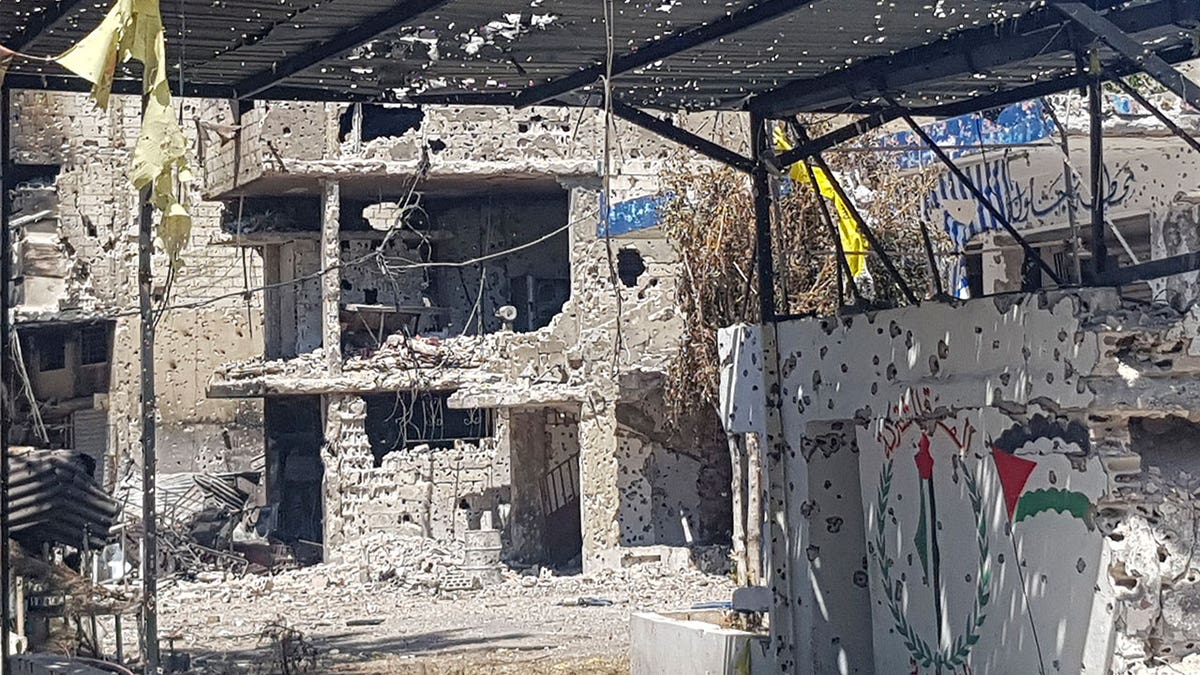
The recent drone-induced ignition at a UAE oil facility is not an isolated tactical failure; it is a manifestation of the widening gap between high-value stationary infrastructure and low-cost autonomous munitions. Traditional defense doctrines, built on the assumption of symmetric kinetic engagements, are failing to account for the economic and operational reality of the "Cost-to-Kill" ratio. When a $2,000 loitering munition can compromise a multibillion-dollar energy hub, the security of the global oil supply chain becomes a function of statistical probability rather than absolute deterrence.
The Triad of Vulnerability in Energy Infrastructure
To understand why Gulf oil sites remain susceptible despite massive investments in Western defense technology, one must categorize the risk into three distinct structural pillars.
1. The Geometry of Exposure
Energy facilities are characterized by a massive physical footprint. Refineries, tank farms, and pumping stations cannot be hardened in their entirety. The "Surface Area of Vulnerability" means that even with a 95% interception rate, the 5% that penetrates the perimeter is mathematically likely to strike a critical node—be it a distillation column or a pressurized storage sphere. Unlike military hardware, which is designed for mobility and concealment, energy infrastructure is a static, high-contrast target for satellite-guided or optical-recognition drones.
2. The Kinetic-to-Economic Imbalance
There is a fundamental misalignment in the cost of engagement. Standard air defense systems, such as the Patriot or THAAD, utilize interceptors costing between $2 million and $4 million per unit. These are being deployed against Iranian-designed or locally assembled drones that cost less than a mid-range motorcycle. A sustained swarming strategy—where dozens of low-cost decoys are launched alongside a few armed units—forces the defender into a "Budgetary Exhaustion Loop." The defender depletes high-end munitions stocks to neutralize low-end threats, eventually creating a window of total vulnerability.
3. The Cascading Failure Mechanism
The interconnected nature of hydrocarbon processing means that a single localized fire is rarely a contained event. The "Thermal Domino Effect" occurs when the heat from one ignited tank compromises the structural integrity of adjacent pressurized vessels. In the UAE context, the proximity of processing plants to export terminals creates a bottleneck where a single successful strike can halt the throughput of millions of barrels per day, impacting global spot prices far beyond the actual physical damage.
Logistics of the Iranian Proxy Model
The escalation of strikes in the Gulf must be analyzed through the lens of Iran’s decentralized warfare strategy. Rather than direct state-on-state confrontation, the model relies on "Dispersed Manufacturing" and "Plausible Technical Deniability."
Component Commoditization
The proliferation of dual-use technology—specifically brushless motors, GPS modules, and carbon-fiber frames—has removed the requirement for a sophisticated state-level aerospace industry to produce effective cruise-style missiles or loitering munitions. By smuggling sub-assemblies to proxy groups, the central actor reduces the logistical trail while maintaining a high degree of technical oversight. The "Delta-wing" design seen in many recent Gulf strikes is optimized for a low radar cross-section (RCS) and long-range flight at low altitudes, allowing the craft to hug the terrain and avoid detection by long-range radar arrays optimized for high-altitude ballistic threats.
Data-Driven Target Selection
Recent strikes demonstrate an increasing sophistication in target selection, moving away from symbolic hits toward "Operational Bottlenecks." By targeting specific valves, control rooms, or power substations rather than just large tanks, attackers maximize the duration of the outage. Repairing a tank is a matter of welding and cleaning; replacing a custom-built, long-lead-time control system can take months due to global supply chain constraints in industrial semiconductors and specialized alloys.
The Failure of Regional Deterrence
The persistent nature of these hits suggests that the "Deterrence by Punishment" model is broken. When the cost of the attack is negligible and the attribution is clouded by proxy involvement, the threat of a retaliatory strike loses its weight.
The shift toward "Deterrence by Denial"—the attempt to make an attack physically impossible—is also hitting a plateau. Electronic Warfare (EW) and signal jamming are often touted as the solution, yet modern autonomous systems are increasingly moving toward "Inertial Navigation" and "Terminal Optical Matching." Once a drone reaches the final phase of its flight, it no longer requires a GPS signal or a remote link to find its target. It compares the live camera feed to pre-loaded satellite imagery. This "Silent Arrival" bypasses traditional EW blankets, rendering current jamming umbrellas obsolete against high-end autonomous iterations.
Quantifying the Ripple Effect on Global Markets
Market volatility following a Gulf strike is not merely a reaction to lost volume; it is a pricing-in of "Insecurity Premiums."
- Insurance Escalation: For every successful strike, the War Risk Insurance premiums for tankers and facilities in the region see a non-linear spike. These costs are directly passed to the consumer.
- Strategic Stockpile Depletion: Continued threats force nations to maintain higher strategic reserves, locking up capital that could be used for energy transition or infrastructure modernization.
- The "Fear of the Unknown" Multiple: Traders apply a risk multiplier to oil prices based on the perceived inability of regional powers to protect their own production. A strike in the UAE is particularly sensitive because the Emirates have long been viewed as the "Safe Harbor" of the Middle East.
Technical Limitations of Current Defense Countermeasures
The current reliance on "Point Defense" is insufficient for the modern threat environment. To secure a site effectively, one must solve for three specific technical hurdles:
- Low-Slow-Small (LSS) Detection: Standard radar is designed to filter out birds and ground clutter. Drones operate in this exact "Clutter Zone." Increasing radar sensitivity leads to a high rate of false positives, which desensitizes operators and leads to system fatigue.
- Saturation Thresholds: Every defense system has a maximum number of targets it can track and engage simultaneously. Swarm logic is designed to exceed this "Processing Ceiling." Once the system is saturated, the remaining drones have an unimpeded path.
- Directed Energy Limitations: Laser and high-power microwave (HPM) systems are often proposed as the "Cost-Per-Shot" solution. However, these systems are highly dependent on atmospheric conditions. Dust, humidity, and smoke—all prevalent in a Gulf desert environment following an initial explosion—significantly degrade the beam’s energy density, reducing its effective range.
Strategic Realignment for Energy Giants
The transition from a reactive posture to a resilient one requires a total overhaul of how energy security is conceptualized. The current "Hard Shell" approach must be replaced by "Distributed Resilience."
Redundancy as a Defensive Asset
The most effective way to neutralize the impact of a drone strike is not to stop the drone, but to ensure that the loss of the target does not stop the system. This involves building significant bypass capabilities into the pipeline and processing networks. If a pumping station is hit, the flow should be automatically reroutable through secondary and tertiary nodes. This "Mesh Network" approach to industrial design reduces the strategic value of any single facility.
The Rise of Counter-Drone Autonomy
The only way to solve the cost-to-kill ratio is to meet the threat with a mirrored technology. Automated "Interceptor Drones"—small, fast, and expendable—can be launched in clouds to meet incoming threats. This shifts the economic burden back toward the attacker. Instead of a $2 million missile, the defender uses a $5,000 interceptor.
Modular Hardening
Critical components, such as transformers and control hubs, must be housed in modular, reinforced concrete or underground bunkers. The "Open-Air" design of 20th-century refineries is a liability in an era of precision aerial munitions. While the cost of retrofitting is high, the cost of a three-month shutdown of a primary export node is significantly higher.
The geopolitical reality is that the threshold for entering an aerial conflict has been permanently lowered. The "Democratization of Precision Strike" means that state-level energy security is now at the mercy of non-state actors and proxy forces with minimal overhead. For the UAE and its neighbors, the objective is no longer to achieve an impenetrable sky—which is a technical impossibility—but to build an industrial infrastructure that can absorb kinetic impacts without triggering a systemic collapse.
Immediate operational focus should shift toward the procurement of localized, high-rate-of-fire kinetic systems (C-RAM) and the implementation of automated fire-suppression networks that operate independently of central control rooms. The era of relying on "Over-the-Horizon" protection from Western allies is ending; the next phase of energy security is defined by internal hardened resilience and autonomous counter-measures.
Integrate "Passive Detection" arrays—acoustic sensors and infrared scanners—around the 50-mile perimeter of all Tier-1 assets to provide the 180 seconds of lead time necessary for emergency shutdowns and personnel evacuation. This is the minimum viable buffer required to prevent a tactical strike from becoming a strategic catastrophe.