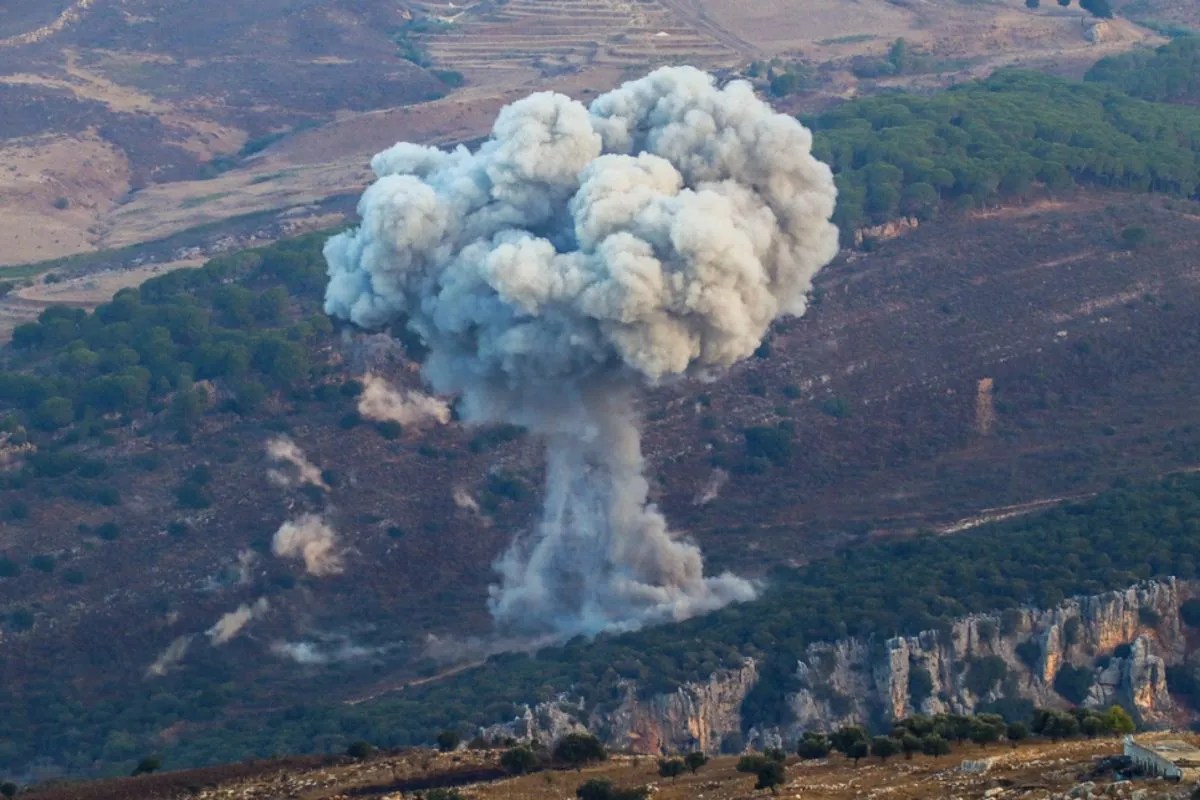
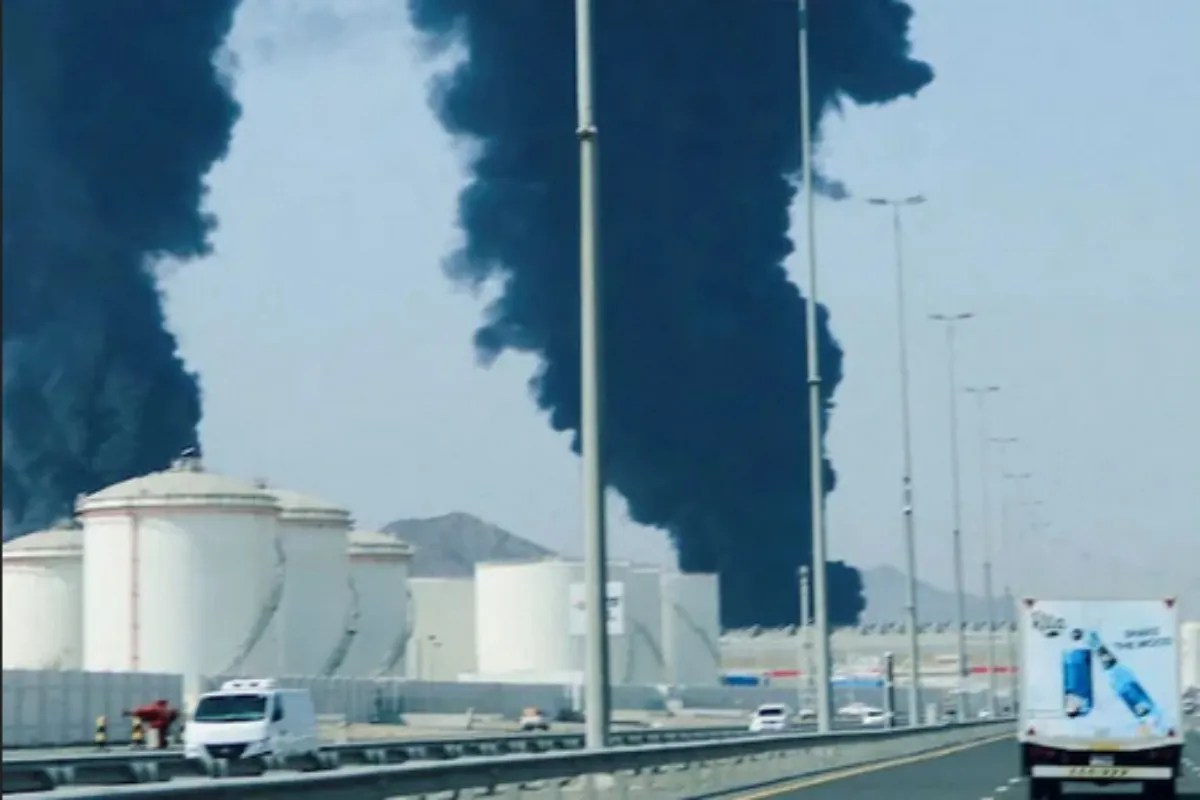
Overnight reciprocal drone strikes between Russia and Ukraine illustrate a structural shift in modern attrition warfare, moving away from traditional territorial conquest toward competitive economic disruption. The media frequently describes these engagements as simple tit-for-tat retaliation. In reality, these strikes represent a highly calculated optimization problem where both state actors attempt to exploit the vast imbalance between the cheap cost of offensive precision munitions and the exorbitant cost of integrated air defense systems (IADS).
To evaluate the strategic efficacy of these aerial campaigns, analysts must look past raw strike tallies and examine the underlying operational mechanics: the cost-exchange ratio, the logistical bottleneck of interceptor production, and the geographic distribution of critical infrastructure targets.
The Asymmetric Cost Function Matrix
The fundamental driver of ongoing drone campaigns is an economic imbalance that favors the attacker. When examining the cross-border strikes, the offensive assets primarily consist of long-range one-way attack (OWA) unmanned aerial vehicles (UAVs)—specifically the Shahed-136 architecture utilized by Russian forces and various domestic long-range iterations (such as the Lyutyi) deployed by Ukraine.
The financial and operational architecture of these engagements can be modeled through three distinct variables:
- Unit Cost Asset ($\text{C}_{\text{A}}$): The baseline manufacturing cost of the offensive drone, ranging between $20,000 and $50,000 per unit for mass-produced OWA platforms.
- Unit Cost Interception ($\text{C}_{\text{I}}$): The financial cost of the munition required to neutralize the asset. This ranges from virtually zero (electronic warfare or mobile anti-aircraft guns) to over $1,000,000 (Patriot, NASAMS, or S-400 interceptor missiles).
- Kinetic Kinetic Value ($\text{V}_{\text{K}}$): The economic or operational value of the target asset, such as an electrical substation, oil refinery fractionating column, or military ammunition depot.
When an offensive drone launch occurs, the defending nation faces a compounding dilemma. If the defender uses a high-tier surface-to-air missile (SAM) to secure an interception, they win the tactical engagement but lose the economic macro-battle. This relationship is expressed through a simple cost-exchange ratio:
$$\text{CER} = \frac{\text{C}{\text{I}}}{\text{C}{\text{A}}}$$
When the CER is significantly greater than 1.0, the offense achieves strategic attrition even if 100% of the incoming drones are destroyed. The attacker systematically depletes the defender's national treasury and, more critically, their finite stockpile of guided interceptor missiles.
Target Architecture and Kinetic Vulnerability
The two nations optimize their drone targeting strategies against fundamentally different systemic vulnerabilities.
Ukraine's Target Selection: Refineries and Depots
Ukraine’s strategic intent centers on degrading Russia’s economic engine—specifically its hydrocarbon processing capacity—and disrupting front-line logistics. Targeting oil refineries represents an optimization strategy aimed at highly concentrated, non-redundant industrial nodes.
An oil refinery covers a vast geographic footprint, but its operational continuity depends on specific high-value components, notably atmospheric distillation towers. If a $30,000 Ukrainian OWA drone penetrates local air defenses and strikes a distillation tower, it inflicts millions of dollars in direct capital damage and causes months of refining downtime. This represents a massive asymmetry, where $\text{V}{\text{K}}$ scales exponentially higher than $\text{C}{\text{A}}$.
Russia's Target Selection: Energy Grid and Military Logistics
Conversely, Russian drone strikes prioritize the systematic degradation of the Ukrainian civilian energy infrastructure and military distribution nodes. By targeting electrical substations, transformers, and generation plants, the strategy seeks to force a compounding logistical failure.
A degraded power grid slows down military manufacturing, halts rail-based supply lines, and forces Ukraine to divert precious Western-supplied IADS assets away from the front lines to protect urban centers.
Air Defense Saturation and Interception Bottlenecks
The tactical objective of an overnight drone raid is rarely to have every asset hit a target. Instead, operations are designed to achieve saturation. Saturation occurs when the number of incoming vectors simultaneously exceeding the tracking and engagement capacity of a localized air defense engagement radar.
[Incoming Salvo: OWA Drones + Decoys]
               │
               ▼
[Localized Engagement Radar] ──► Max Tracking Capacity Exceeded
               │
               ▼
[Air Defense Saturation] ──► Leakage: Kinetic Impacts on Target
During a typical overnight raid, attackers deploy mixed salvos. These salvos feature low-cost reconnaissance drones, cheap carbon-fiber decoys lacking warheads, and fully armed OWA drones. They are programmed to approach the target area simultaneously from multiple vectors and at varying altitudes. This creates a multi-layered operational bottleneck for the defender:
- Radar Discrimination Failure: Defensive radar operators must rapidly distinguish between high-risk armed variants and low-risk decoys. Incapacity to differentiate forces the defender to treat every incoming radar return as a lethal threat, prompting the expenditure of limited interceptor munitions.
- Kinetic Leakage: If a battery has four launchers with four missiles each, its maximum immediate engagement capacity is 16 targets. Launching a salvo of 25 low-cost assets guarantees that at least 9 vectors will penetrate the zone unengaged, assuming perfect intercept rates for the first 16.
- The Supply Chain Reality: The global production rate of advanced air defense interceptor missiles is orders of magnitude lower than the production rate of commercial-grade OWA drones. A manufacturing facility can scale drone production to thousands of units per month using commercial off-the-shelf electronic components and basic fiberglass hulls. Advanced SAMs require specialized solid-fuel rocket motors, high-grade optical or radar seekers, and complex guidance systems that take months to assemble.
The Role of Mobile Fire Teams and Electronic Warfare
To counter this negative cost-exchange ratio, both militaries have scaled lower-tier, cost-effective defense mechanisms. These secondary networks alter the saturation math.
Mobile Fire Teams
The deployment of mobile fire teams equipped with thermal imaging, searchlights, and twin-barrel heavy machine guns (such as the Soviet-era ZU-23-2 or Western-supplied Gepard systems) serves as a vital mitigation layer.
Using ballistic ammunition instead of guided missiles drives $\text{C}_{\text{I}}$ down to negligible levels, normalizing the cost-exchange ratio. However, these teams are constrained by line-of-sight dynamics and local terrain, making them effective only for point defense around specific high-value installations rather than wide-area denial.
Electronic Warfare (EW) Grid Neutralization
Wide-area disruption relies heavily on electronic warfare. GPS spoofing and jamming networks interrupt the civilian-grade GNSS (Global Navigation Satellite System) receivers found in low-cost drones. When jammed, a drone must rely purely on inertial navigation systems (INS).
Because cheap INS sensors suffer from positional drift over long distances, the drone's circular error probable (CEP) degrades rapidly, causing it to miss its intended target by kilometers. The limitation of EW is its inability to neutralize hard-coded, optically guided drones that use terrain contour matching or visual scene matching for terminal guidance, bypassing the radio frequency spectrum entirely.
Strategic Outlook and Force Posture Realignment
The continuation of overnight drone strikes indicates that neither side has achieved absolute domain denial. The current operational environment has stabilized into a predictable pattern of kinetic attrition.
For Ukraine, the strategic imperative demands the continuous scaling of long-range domestic production to maintain an asymmetric threat vector against Russian industrial capacity, forcing Moscow to pull air defense assets away from the active front lines to protect internal economic zones.
For Russia, the priority remains leveraging a larger defense industrial base to sustain high-volume salvos that steadily exhaust Ukraine's Western-supplied missile inventory before winter periods of peak energy demand.
The conflict has proven that long-range drone strikes are no longer merely supportive tactical operations. They are independent strategic campaigns capable of shaping national economic stability. Victory in this domain will not be determined by territorial gains reported on a map, but by the cold industrial metrics of factory output, component procurement velocity, and interceptor unit economics. Mapped out logically, the nation that optimizes its domestic industrial supply chain to produce cheap precision munitions faster than its adversary can build or buy the means to destroy them establishes a permanent structural advantage in modern warfare.