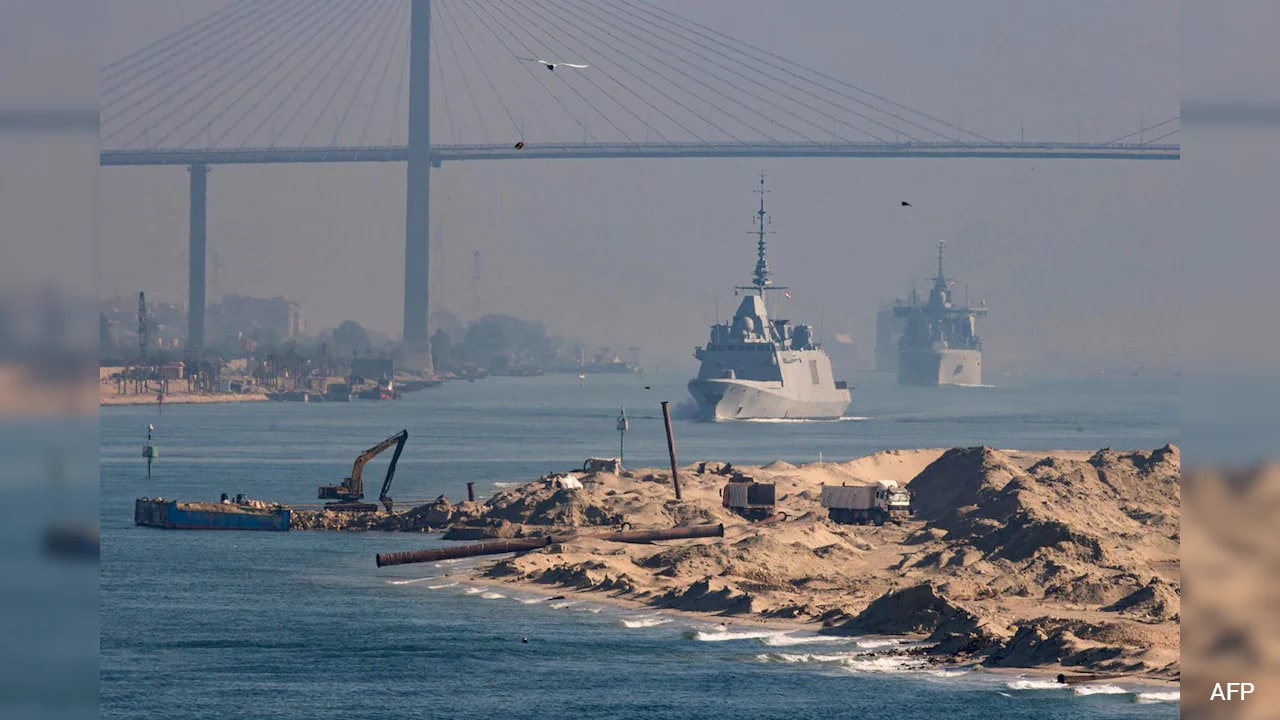
The convergence of direct US military kinetic strikes against Iranian assets and Houthi targeted maritime interdiction against Saudi commercial shipping represents a fundamental shift from localized proxy friction to systematic supply-chain containment. Fragmented news coverage treats these events as reactive, episodic tactical exchanges. They are not. They are the calculated application of asymmetric leverage designed to impose disproportionate economic friction on global energy transit while testing the operational threshold of Western maritime coalition defense.
Understanding the current trajectory of Middle Eastern military escalation requires mapping the operational incentives, trade-route vulnerability matrices, and structural cost asymmetries governing both state and non-state actors in the region.
The Tri-Level Structural Escalation Model
Military friction in the Southern Red Sea, the Bab el-Mandeb Strait, and the broader Arabian Peninsula operates across three distinct yet interdependent operational tiers. Standard news aggregation flattens these distinct dynamics into a single headline, obscuring the precise strategic incentives driving each participant.
       [ Tier 1: Geopolitical Sovereign Threshold ]
                      United States <---> Iran
                                 |
                                 v
       [ Tier 2: Maritime Trade Vulnerability ]
                   Coalition Navies <---> Houthis
                                 |
                                 v
       [ Tier 3: Critical Energy Infrastructure ]
                    Saudi Arabia <---> Maritime Shipping
Tier 1: The Sovereign Kinetic Feedback Loop
At the macro level, direct engagements between US forces and Iranian military infrastructure establish the sovereign boundary conditions. When US forces conduct kinetic strikes against Iranian-backed command-and-control hubs or launch platforms, the objective is degraded capability and deterrence signaling. However, deterrence functions on perceived risk rather than actual damage inflicted. Because sovereign state actors face asymmetric political constraints, high-precision Western strikes often fail to alter the strategic calculus of regional proxy networks operating with minimal fixed infrastructure.
Tier 2: Maritime Chokepoint Interdiction
At the operational level, Houthi forces leverage the geographic bottleneck of the Bab el-Mandeb Strait to project anti-access/area-denial (A2/AD) capabilities over commercial shipping lanes. Through an integrated reconnaissance-to-strike chain incorporating uncrewed aerial vehicles (UAVs), anti-ship cruise missiles (ASCMs), and uncrewed surface vessels (USVs), the Houthis create a hostile maritime corridor without requiring blue-water naval parity.
Tier 3: Regional Infrastructure Vulnerability
At the economic level, targeting energy assets—specifically Saudi crude tankers and energy transfer facilities—exerts systemic pressure on regional powers striving for localized economic stabilization. Saudi Arabia sits at the structural center of this target set: exposed geographically, politically constrained from full-scale military re-engagement, and economically incentivized to protect critical export channels.
The Cost-Asymmetry Equation in Maritime Defense
The primary operational constraint facing Western naval coalitions is not targeting accuracy or intercept probability; it is the radical asymmetry of the cost curve. Modern naval air-defense systems are optimized for high-end surface-to-air engagements against sophisticated peer threats. Employing these assets against low-cost, mass-produced offensive platforms introduces severe financial and inventory exhaustion risks over sustained operational timelines.
Operational Cost Calculus
- Offensive Strike Vector: Standard Houthi attack profiles utilize uncrewed aerial systems (e.g., Qasef-2K variants) costing between $10,000 and $20,000 per airframe, alongside anti-ship ballistic missiles costing under $100,000 per unit.
- Defensive Intercept Vector: Naval interception relies on advanced surface-to-air missile systems (such as the RIM-166 RAM, Aster 15/30, or SM-2/SM-6 family), where individual interceptor rounds range from $1 million to exceeding $4 million.
This ratio creates an operational cost imbalance favoring the aggressor by approximately 100:1 to 400:1 per engagement.
Inventory Depletion Dynamics
Monetary value is only a secondary metric; magazine depth represents the primary tactical constraint. Destroying a $15,000 drone with a $2 million missile is a viable defense tactic across ten engagements. Across eight hundred engagements, it drains finite naval missile stocks faster than defense industrial bases can manufacture replacements. A vessel's physical vertical launch system (VLS) cells cannot be reloaded at sea; returning to port for re-armament removes capital surface combatants from the operational theater for weeks, exposing commercial corridors to unmonitored transit windows.
Saudi Energy Infrastructure and the Red Sea Bottleneck
Saudi Arabia's strategic exposure stems from its dual-coast logistics reliance and the physical geography of global energy transit. Approximately 6.2 million barrels per day of crude oil and refined products historically flow through the Bab el-Mandeb Strait toward Western markets and Asian refining centers.
+-----------------------------------------------------------------------+
|                         GLOBAL ENERGY CORRIDORS                       |
+-----------------------------------------------------------------------+
|                                                                       |
|  [ Persian Gulf ] ---> Strait of Hormuz ---> Indian Ocean / Asia       |
|                                                                       |
|  [ Saudi Red Sea Ports ] ---> Bab el-Mandeb ---> Suez Canal ---> Med  |
|                                                                       |
+-----------------------------------------------------------------------+
When attack vectors actively target Saudi energy carriers inside the Southern Red Sea, three distinct economic transmission channels trigger simultaneously:
- Insurance Risk Premium Spike: War Risk Insurance premiums for maritime hulls operating along the Bab el-Mandeb route expand exponentially—rising from baseline rates under 0.05% of hull value to over 0.75%-1.0% during elevated threat windows. For an ultra-large crude carrier (ULCC) valued at $100 million, a single transit incurs an additional $1 million in insurance overhead alone.
- Suez Route Abandonment: To mitigate catastrophic hull loss, maritime operators reroute shipping around the Cape of Good Hope. This rerouting adds approximately 3,500 to 4,000 nautical miles to the transit between the Persian Gulf and Northern Europe, extending voyage durations by 10 to 14 days.
- Container Capacity Absorption: Longer voyages absorb physical shipping capacity from the global market. A 14-day delay in round-trip turnaround times effectively removes 8% to 12% of total active global container and tanker capacity from circulation, driving up spot freight rates across routes that do not geographically transit the Red Sea.
Deconstructing Houthi Strategic Objectives
Media narratives often characterize proxy offensive operations as mere opportunistic reactions to broader geopolitical tensions. A cold strategic breakdown reveals three clear, deliberate internal and regional goals driving Houthi maritime actions:
Consolidation of Domestic Political Dominance
Sustaining an external conflict posture enables internal mobilization across controlled territory in Yemen. Highlighting direct military engagements with major Western superpowers reinforces domestic legitimacy, suppresses local opposition, and reframes economic austerity measures under the umbrella of wartime defense.
Decoupling Regional Peace Accords
Targeting Saudi-flagged or Saudi-linked energy carriers disrupts ongoing normalization discussions between Riyadh and regional actors. By escalating maritime risks, Houthi command forces the Saudi leadership into a difficult policy choice: re-engage in direct kinetic operations in Yemen, or endure unmitigated economic damage along key export corridors.
Imposing Cost on Global Supply Chains
By threatening a high-density trade corridor, non-state actors achieve asymmetrical diplomatic visibility. Influencing global supply chains forces international naval powers to allocate disproportionate military intelligence, surveillance, and reconnaissance (ISR) resources to a localized geography, pulling focus away from other critical maritime theaters.
Western Kinetic Strikes: Tactical Success versus Strategic Neutralization
When the United States and coalition forces execute retaliatory strikes against target sets in Houthi-controlled territory—targeting radar installations, munitions storage depots, and launch sites—they operate within structural limitations that prevent total degradation of the threat.
The Problem of Distributed Infrastructure
Unlike conventional state militaries reliant on centralized command bases, airfields, and fixed logistics nodes, proxy forces employ highly mobile, decentralized launch systems. A light commercial truck modified to transport a anti-ship cruise missile or a mobile drone launcher can be concealed within civilian infrastructure, underground tunnels, or rugged topography within minutes of firing.
Target Type: Fixed Radar Installation
  - Detection Difficulty: Low
  - Degradation Rate: High
  - Strategic Impact: Temporary (replaced by mobile coastal units)

Target Type: Decentralized Mobile Launchers / Underground Assembly
  - Detection Difficulty: Extremely High
  - Degradation Rate: Low
  - Strategic Impact: Minimal long-term operational disruption
Retaliatory air strikes destroy hardware present at the time of impact, but they do not eliminate the knowledge transfer, technical components, or assembly pipelines flowing into the theater. As long as the re-supply chain remains functional, localized kinetic interdiction functions as a temporary maintenance control rather than a strategic neutralization tool.
Operational Framework for Maritime Defense Expansion
To address the maritime threat without exhausting high-tier missile inventories, coalition naval strategies must evolve beyond simple surface-to-air interdiction. Resolving the Red Sea security dilemma requires implementing a multi-layered defensive strategy built on three core operational shifts:
Directed-Energy Weapon Deployment
Integrating shipborne directed-energy systems (high-energy lasers) and high-power microwave weapons provides a virtually unlimited magazine capacity with a cost-per-shot under $10. These systems are suited to neutralize class-1 and class-2 uncrewed aerial vehicles within inner-tier point-defense zones, preserving vertical launch system cells for high-speed ballistic and anti-ship missile threats.
Unmanned Maritime Reconnaissance Mesh
Deploying persistent autonomous surface vessels equipped with passive electro-optical/infrared (EO/IR) and acoustic sensors along the coast establishes an continuous early-warning grid. Detecting launch signatures at the point of origin extends intercept decision windows, allowing defensive systems to engage targets at optimal ranges using lower-cost effectors.
Comprehensive Interdiction at Maritime Supply Lines
Denying target acquisition requires neutralizing the smuggling channels supplying specialized components—such as guidance systems, engine assemblies, and missile fuels. Shift focus from defensive interdiction at the terminal point of flight to aggressive maritime interdiction of unflagged dhows and covert transport vessels navigating regional waters.
The Operational Reality
The Red Sea crisis illustrates that conventional naval presence alone cannot secure commercial maritime corridors against low-cost, decentralized threat architectures. Western militaries can successfully intercept incoming threats, but doing so with multi-million-dollar missiles against cheap munitions creates a self-limiting defensive posture. At the same time, regional powers face severe economic exposure as energy supply routes remain vulnerable to disruption.
Until coalition operations transition from reactive air defense to systematically disrupting the supply networks and cost structures behind these attacks, the Bab el-Mandeb Strait will remain a high-risk maritime transit zone. Resolving this challenge requires deploying persistent surveillance, adopting cheaper point-defense technologies, and cutting off target acquisition data before weapons are ever launched.